Is Hyperinflation Coming?
TL;DR
Exploring inflation, hyperinflation, and their impacts on economies.
Transcript
inflation is something that we more or less take for granted these days the idea that five dollars a day is not going to be able to buy five dollars worth of stuff in the future and the fact that you used to be able to buy a family home for ten thousand dollars are all the result of inflation the idea that over time money becomes worth less and les... Read More
Key Insights
- Inflation is a common economic phenomenon where money loses value over time, influencing decisions like retirement planning and salary negotiations.
- Hyperinflation occurs when inflation spirals out of control, rendering money almost useless, as seen in Zimbabwe and Venezuela.
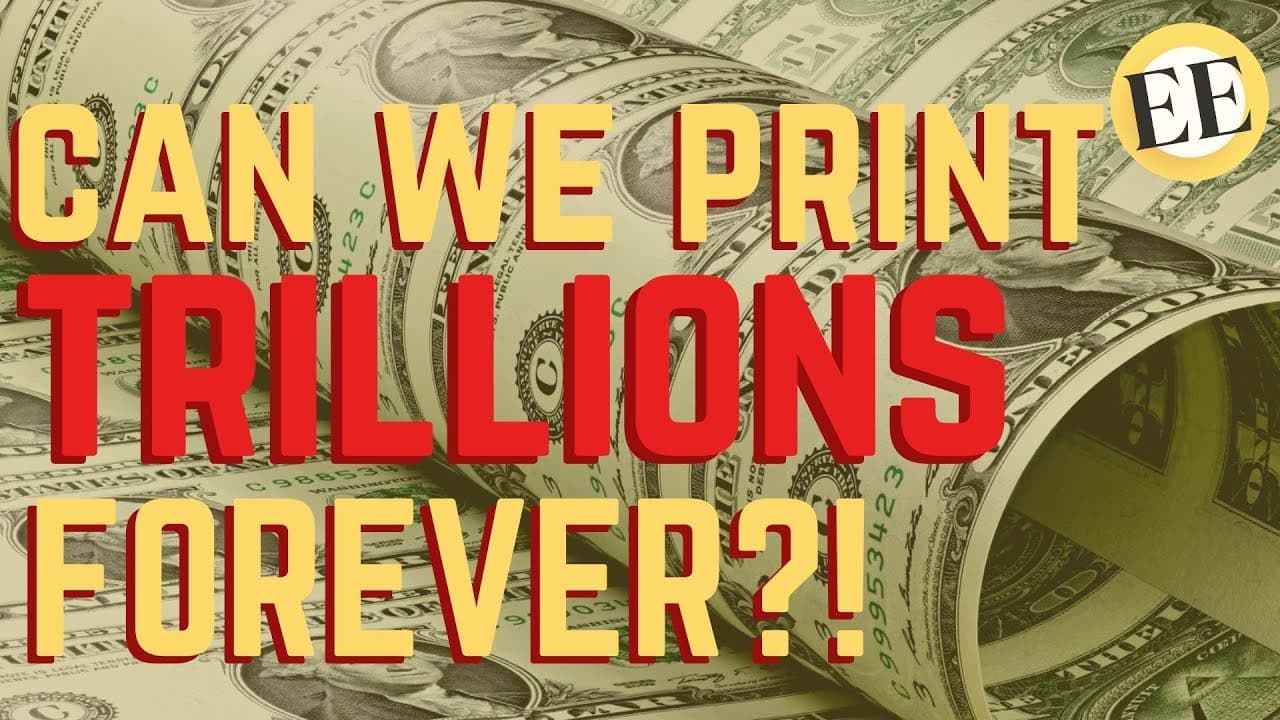
- The US increased its M2 money supply by over 20% in 2020, raising concerns about potential hyperinflation.
- Inflation is measured by the consumer price index, which can be skewed by government actions like taxes and subsidies.
- Deflation, the opposite of inflation, can be harmful by reducing consumption and increasing real debt burdens.
- Governments use fiscal and monetary policies to influence inflation, targeting a 1-3% rate for economic stability.
- Employment levels, money supply, and money velocity are key factors influencing inflation rates.
- The balance between downward and upward pressures on inflation is delicate, with future management crucial to prevent economic instability.
Install to Summarize YouTube Videos and Get Transcripts
Explore YouTube Video Summarizer or Get YouTube Transcript Extractor
Questions & Answers
Q: What is inflation?
Inflation is the rising price level of goods and services within an economy over time, which decreases the purchasing power of money. It is measured by indices like the Consumer Price Index (CPI), which tracks changes in the cost of a standard basket of goods and services.
Q: Why is hyperinflation a concern?
Hyperinflation is a concern because it can render a currency nearly worthless, leading to economic collapse. It often results from excessive money printing in an attempt to stimulate an unstable economy, causing prices to rise uncontrollably and eroding public confidence in the currency.
Q: How does the US money supply increase impact inflation?
The increase in the US money supply, especially in 2020, raises concerns about inflation as more money chases the same amount of goods and services. However, other factors like reduced consumer demand and employment levels have so far mitigated significant inflationary impacts.
Q: What are the consequences of deflation?
Deflation can lead to decreased consumption as people delay purchases, expecting lower prices in the future. It also increases the real burden of debt, as the value of money rises, making it harder to repay loans. Deflation can stifle economic growth and lead to unemployment.
Q: How do governments manage inflation?
Governments manage inflation using fiscal policies, like spending and taxation, and monetary policies, such as adjusting interest rates. These policies aim to influence factors like industrial output, employment, money supply, and money velocity to maintain a stable inflation rate.
Q: What is the velocity of money?
The velocity of money refers to the speed at which money circulates in the economy. It is higher in lower-income households, where money is spent quickly, and lower in wealthier households, where money is more likely to be saved or invested, affecting inflation dynamics.
Q: Why is moderate inflation preferred over deflation?
Moderate inflation is preferred because it encourages spending and investment, which drive economic growth. In contrast, deflation can lead to reduced consumption and increased real debt burdens, stifling economic activity and potentially leading to higher unemployment.
Q: What are the risks of current inflationary pressures?
Current inflationary pressures are balanced by factors like reduced consumer demand and employment levels. However, the risk remains that if these pressures shift, the economy could face challenges like hyperinflation or stagflation, requiring careful management to avoid instability.
Summary & Key Takeaways
-
Inflation is a gradual increase in prices over time, affecting purchasing power and economic decisions. Hyperinflation, however, is an extreme form where money becomes nearly worthless, often due to excessive money printing by governments.
-
The US significantly increased its money supply in 2020, raising concerns about hyperinflation. However, factors like reduced consumer demand and employment levels have so far counteracted these inflationary pressures.
-
Governments use fiscal and monetary policies to manage inflation, aiming for a stable rate. While inflation is generally preferred over deflation, careful management is crucial to avoid economic instability in the future.
Read in Other Languages (beta)
Share This Summary 📚
Summarize YouTube Videos and Get Video Transcripts with 1-Click
Try YouTube Summary with ChatGPT & Claude or YouTube Transcript Generator
Explore More Summaries from Economics Explained 📚





Summarize YouTube Videos and Get Video Transcripts with 1-Click
Try YouTube Summary with ChatGPT & Claude or YouTube Transcript Generator