8. Training and validation loops in PyTorch
TL;DR
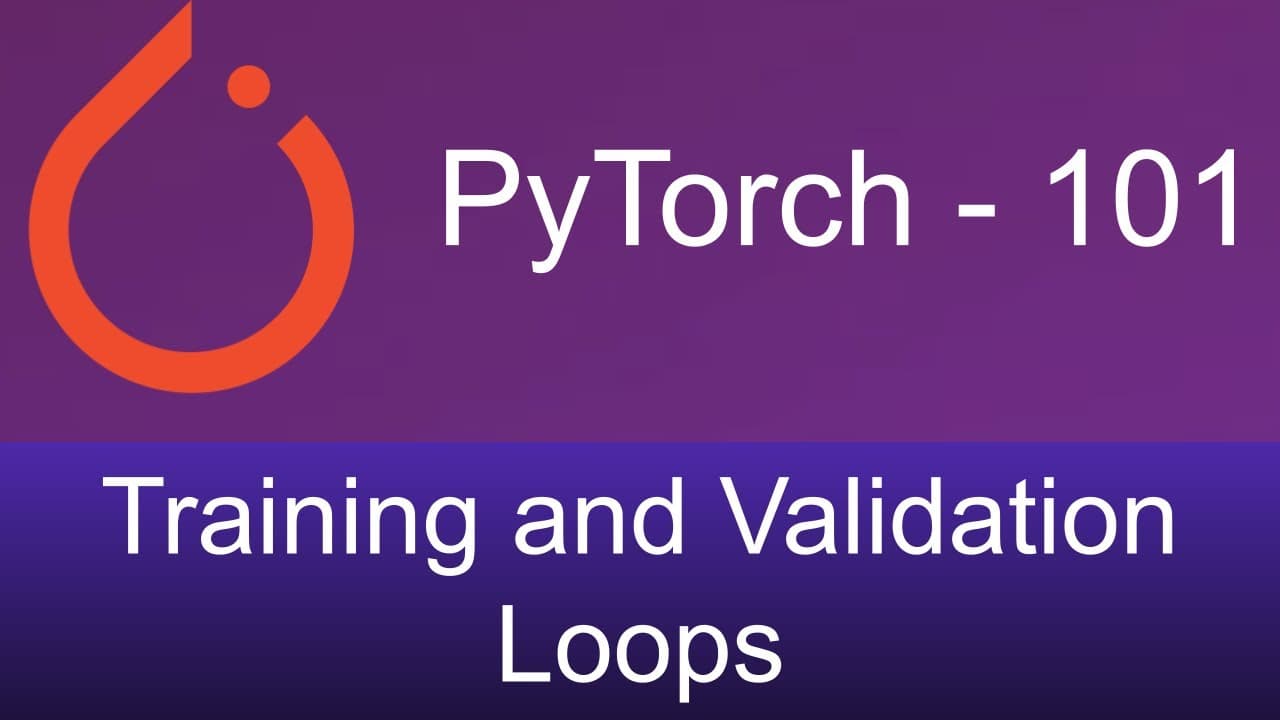
Learn how to write training and validation loops in PyTorch to have more control and flexibility in solving complex problems.
Transcript
hello everyone and in this video today we are going to learn how to write trading and validation loops in pytorch and it's very important to learn and understand how to write training and validation loops in pi dodge and not just use abstractions all the time because there's a lot of cool things that you can do and when you're presented with a comp... Read More
Key Insights
- 🎮 Writing training and validation loops in PyTorch provides more control and flexibility in solving complex problems.
- 🌸 The "train_one_epoch" function puts the model in train mode, iterates over the data loader, calculates the loss, performs backward propagation, and updates the optimizer.
- 🌸 The "train_one_step" function is used within the "train_one_epoch" function to calculate the loss for each step.
- ❓ The "validate_one_epoch" function is similar to the "train_one_epoch" function but is used to validate the model's performance on a separate dataset.
- ☠️ The scheduler can be used to adjust the learning rate during training, and its step can be placed appropriately.
Install to Summarize YouTube Videos and Get Transcripts
Explore YouTube Video Summarizer or Get YouTube Transcript Extractor
Questions & Answers
Q: Why is it important to learn how to write training and validation loops in PyTorch instead of relying on abstractions?
Understanding how to write these loops allows for more control and flexibility in manipulating the code when faced with complex problems. It enables easier debugging, customization, and experimentation with different techniques.
Q: What is the purpose of the "train_one_epoch" function?
The "train_one_epoch" function iterates over the data loader, calculates the loss for each batch using the model's forward function, performs backward propagation, updates the optimizer, and stores the total loss for the epoch.
Q: How is the loss calculated within the "train_one_step" function?
The loss is calculated by invoking the model's forward function with the input data. The data is converted to the appropriate format and device, and the loss value is returned.
Q: What is the role of the scheduler in the training process?
The scheduler can be used to adjust the learning rate during training. By stepping the scheduler after each epoch or step, the learning rate can be modified to improve training performance.
Q: How does the "validate_one_epoch" function differ from the "train_one_epoch" function?
The "validate_one_epoch" function is similar to the "train_one_epoch" function but is used for validating the model's performance on a separate dataset. It does not require an optimizer or scheduler since no model updates are performed.
Summary & Key Takeaways
-
The video demonstrates how to write the "train_one_epoch" function in PyTorch, which takes a model, data loader, and optimizer as arguments, puts the model in train mode, loops over the data loader, and calculates the loss for each batch.
-
The "train_one_step" function is introduced, which is called within the "train_one_epoch" function to calculate the loss for each step.
-
The video also shows how to write the "validate_one_epoch" function, which is similar to the "train_one_epoch" function but is used for validation and does not require an optimizer or scheduler.
Read in Other Languages (beta)
Share This Summary 📚
Summarize YouTube Videos and Get Video Transcripts with 1-Click
Try YouTube Summary with ChatGPT & Claude or YouTube Transcript Generator
Explore More Summaries from Abhishek Thakur 📚
Summarize YouTube Videos and Get Video Transcripts with 1-Click
Try YouTube Summary with ChatGPT & Claude or YouTube Transcript Generator