How Can We Improve Chronic Wound Healing with Technology?
TL;DR
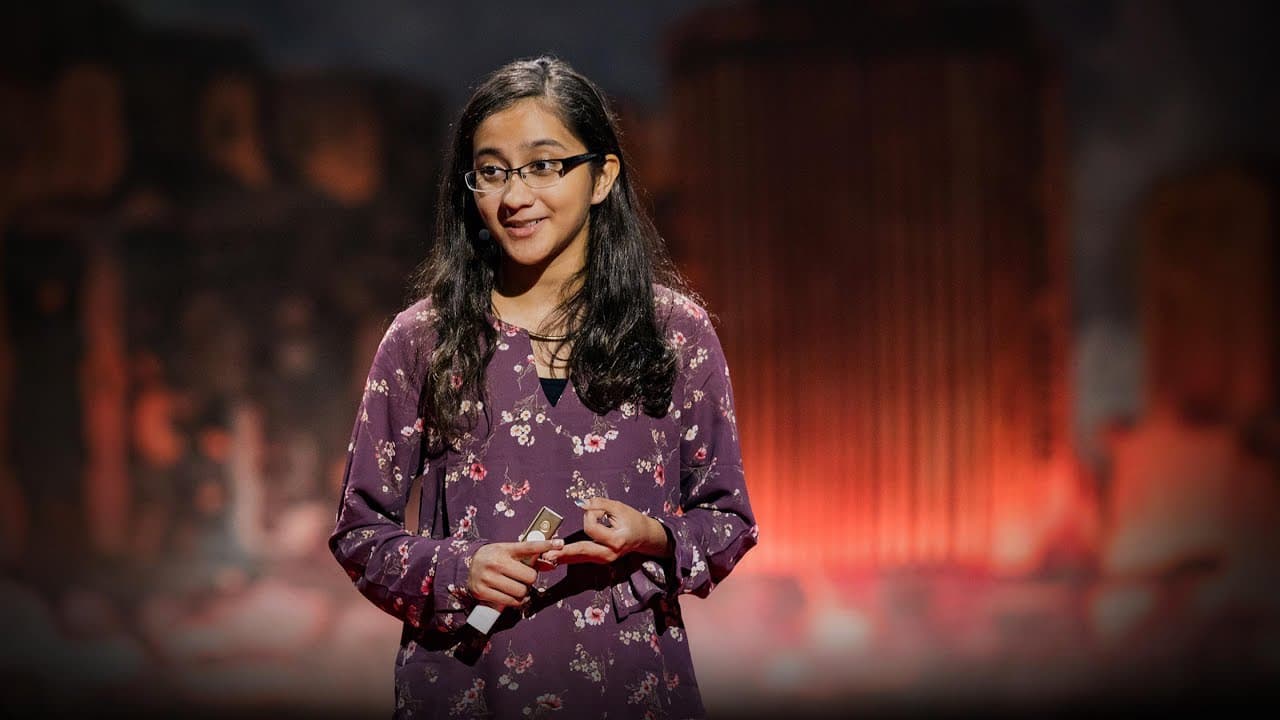
A young scientist designed a device to measure moisture levels in chronic wounds to enhance healing processes. Chronic wounds affect millions, and her innovation aims to aid doctors and patients in treatment by providing real-time data through wireless monitoring. Despite challenges, her work emphasizes that impactful contributions to science can come from anyone, regardless of age or experience.
Transcript
Ever since I was a young girl, I was always fascinated -- (Laughter) Oh! (Laughter) OK, I meant younger and more short. (Laughter) If that's possible to imagine. But ever since I was a young girl, I was always fascinated with how the world worked exactly how it did. So this, very early on, led me to the fields of mathematics and chemistry. I would ... Read More
Key Insights
- 🌍 Science is interconnected: The speaker's fascination with how the world worked led her to study mathematics and chemistry, realizing that all fields of science are interconnected and have value when combined.
- 💡 Chronic wounds are a major issue: The speaker discovered that chronic wounds are a significant problem, with more people in the US having chronic wounds than breast, colon, lung, and leukemia cancers combined. Chronic wounds fail to heal due to preexisting conditions, like diabetes.
- 💰 High cost of chronic wound treatment: In 2010, 50 billion dollars were spent worldwide on treating chronic wounds. Additionally, it's estimated that about two percent of the population will experience a chronic wound in their lifetime.
- 🔬 Developing a moisture measurement device: The speaker decided to design a device to measure moisture levels within chronic wounds, aiming to assist doctors and patients in treating wounds more effectively and expediting the healing process.
- ⚙️ Constraints and criteria for the device: Despite being a 14-year-old working in her garage, the speaker had budget and resource constraints. She aimed to design a low-cost, biocompatible, and mass-manufacturable product that could interact with the body safely.
- ✍️ Problem-solving through a space-filling curve: The speaker used a space-filling curve, controlled by a computer program, to solve problems with controlling sensor sensitivity and achieve desired results in her device design.
- 📲 Wireless monitoring and communication: The speaker connected her device to a Bluetooth chip, enabling wireless transmission of wound progress data to doctors, patients, or anyone who needs it. This allows for remote monitoring and communication.
- 🔬 Continued testing and refinement: While the speaker's design was successful, she emphasizes that science is an ongoing process. She highlights the importance of constantly improving and refining designs and encourages others to take on similar work.
- 💪 Making a difference regardless of age or expertise: The speaker's attitude, as a 14-year-old working on something she didn't completely understand, inspired her to make a difference and contribute to the field. She hopes her story inspires others to do the same, even if they are uncertain.
Install to Summarize YouTube Videos and Get Transcripts
Explore YouTube Video Summarizer or Get YouTube Transcript Extractor
Questions & Answers
Q: What led the speaker to become interested in science?
The speaker was always fascinated with how the world worked and this curiosity led her to pursue mathematics and chemistry at a young age.
Q: What did the speaker discover about chronic wounds?
The speaker found that chronic wounds are normal wounds that fail to heal properly due to a preexisting condition, usually diabetes. She also discovered that the number of people with chronic wounds in the United States exceeds the number of people with major cancers combined.
Q: Why did the speaker decide to design a device to measure the moisture level inside wounds?
The speaker wanted to help doctors and patients treat chronic wounds more effectively by expediting the healing process. She believed that measuring moisture levels could provide valuable information for better wound care.
Q: What were the constraints the speaker faced while designing the device?
As a 14-year-old working out of her garage, the speaker had limited resources, including a lack of grant funding and financial support. She also had specific criteria for the device, requiring it to be biocompatible, low-cost, and mass-manufacturable.
Q: How did the speaker solve the problems she encountered during her research?
The speaker solved the problem of handling nanoparticle ink by purchasing syringes on eBay and Amazon. She also addressed the sensitivity control issue of her sensors by utilizing a space-filling curve in her computer program, allowing her to predict and manipulate the results.
Q: How did the speaker connect the data from the device to be easily read?
The speaker interfaced the device with a Bluetooth chip, enabling the data to be transmitted wirelessly to doctors, patients, or anyone who needs to monitor the progress of the wound. This allowed for easy and convenient monitoring of the wound's healing process.
Summary & Key Takeaways
-
The speaker was fascinated by how the world worked and pursued mathematics and chemistry.
-
They discovered the prevalence and costs of chronic wounds and decided to design a device to measure moisture levels and expedite healing.
-
They faced constraints and problems, but overcame them through resourcefulness and innovation, leading to a successful design that can be monitored remotely.
Read in Other Languages (beta)
Share This Summary 📚
Summarize YouTube Videos and Get Video Transcripts with 1-Click
Try YouTube Summary with ChatGPT & Claude or YouTube Transcript Generator
Explore More Summaries from TED 📚
Summarize YouTube Videos and Get Video Transcripts with 1-Click
Try YouTube Summary with ChatGPT & Claude or YouTube Transcript Generator