What Is Energy and Why Is It Important in Science?
TL;DR
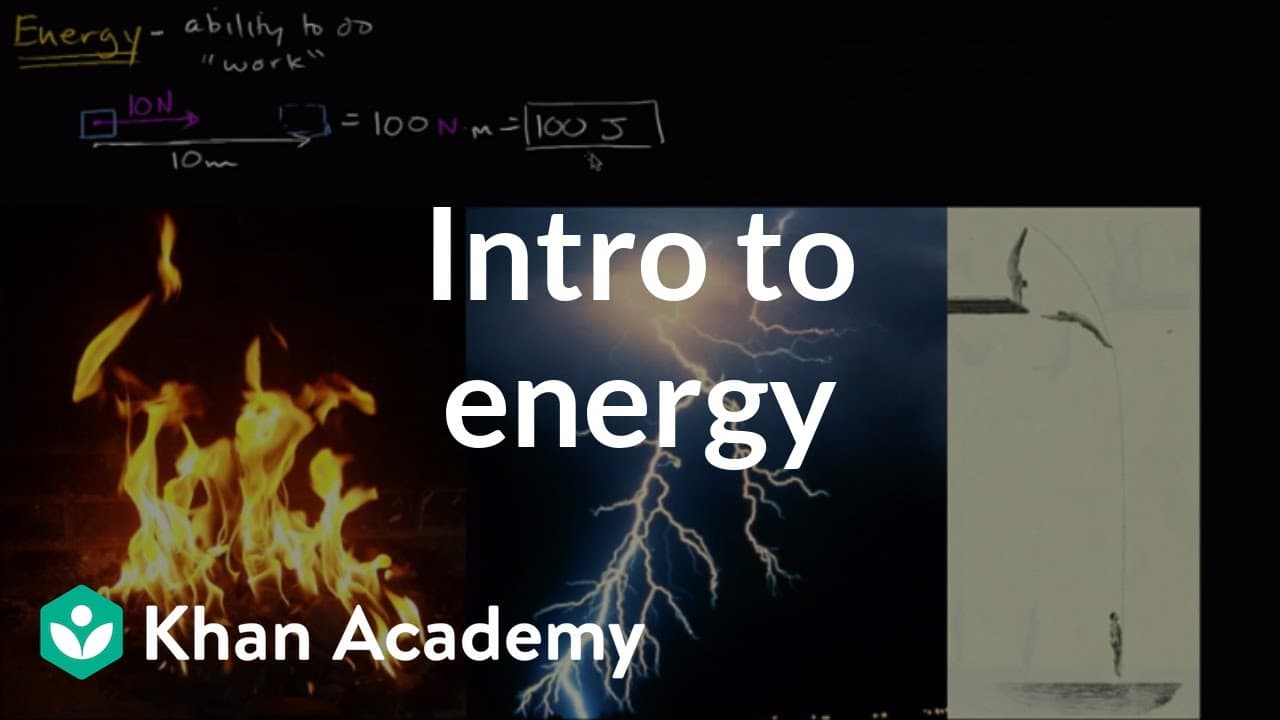
Energy is defined as the ability to do work, encompassing various forms such as thermal, radiant, and potential energy. It can be converted from one form to another, playing a crucial role in processes like combustion and electricity. The law of conservation of energy states that energy cannot be created or destroyed, only transformed.
Transcript
- [Tutor] Let's talk about one of the most fundamental ideas in science and that is the notion of energy and energy definitely has some meaning in our everyday life, if we kind of imagine things that are moving or hot or bright as being energetic, but what I wanna talk about in this video is a more formal definition of it, a more scientific definit... Read More
Key Insights
- 💦 Energy is a fundamental concept in science, defined as the ability to do work.
- 💁 Different forms of energy include thermal, radiant, and potential energy.
- ❓ Energy conversion occurs in various processes, such as combustion and electricity.
- 💦 Work is closely related to energy, and it involves the transfer or transformation of energy.
- 🚒 The concept of energy is applicable to everyday life, from the movement of objects to the functioning of engines and electronics.
- 💁 The law of conservation of energy states that energy cannot be created or destroyed, only converted from one form to another.
- 🏪 Potential energy is stored energy, while kinetic energy is energy in motion.
Install to Summarize YouTube Videos and Get Transcripts
Explore YouTube Video Summarizer or Get YouTube Transcript Extractor
Questions & Answers
Q: How is energy defined in science?
In science, energy is defined as the ability to do work. While it may not align with the everyday notion of work, it encompasses the capacity to cause displacement or create changes.
Q: What are the different forms of energy mentioned?
Some forms of energy discussed in the video include thermal energy (related to heat and movement of particles), radiant energy (such as light), and potential energy (stored in bonds).
Q: How is energy converted from one form to another?
Energy can be converted through various processes. For example, in combustion reactions, potential energy stored in chemical bonds is converted into thermal and radiant energy. Likewise, in electric circuits, electrical energy is converted into other forms, such as kinetic energy in motors.
Q: How does energy relate to the concept of work?
Energy is the basis for work. When work is performed, energy is transferred or transformed from one form to another. The ability of energy to cause displacement or create changes is what allows work to be done.
Summary & Key Takeaways
-
Energy is defined as the ability to do work, which is not the same as the everyday notion of work.
-
Different forms of energy include thermal (related to the movement of molecules), radiant (such as light), and potential (stored in bonds).
-
Energy can be converted from one form to another, and it is the basis for various processes, including combustion and electricity.
Read in Other Languages (beta)
Share This Summary 📚
Summarize YouTube Videos and Get Video Transcripts with 1-Click
Try YouTube Summary with ChatGPT & Claude or YouTube Transcript Generator
Explore More Summaries from Khan Academy 📚



Summarize YouTube Videos and Get Video Transcripts with 1-Click
Try YouTube Summary with ChatGPT & Claude or YouTube Transcript Generator