This microscope uses touch
TL;DR
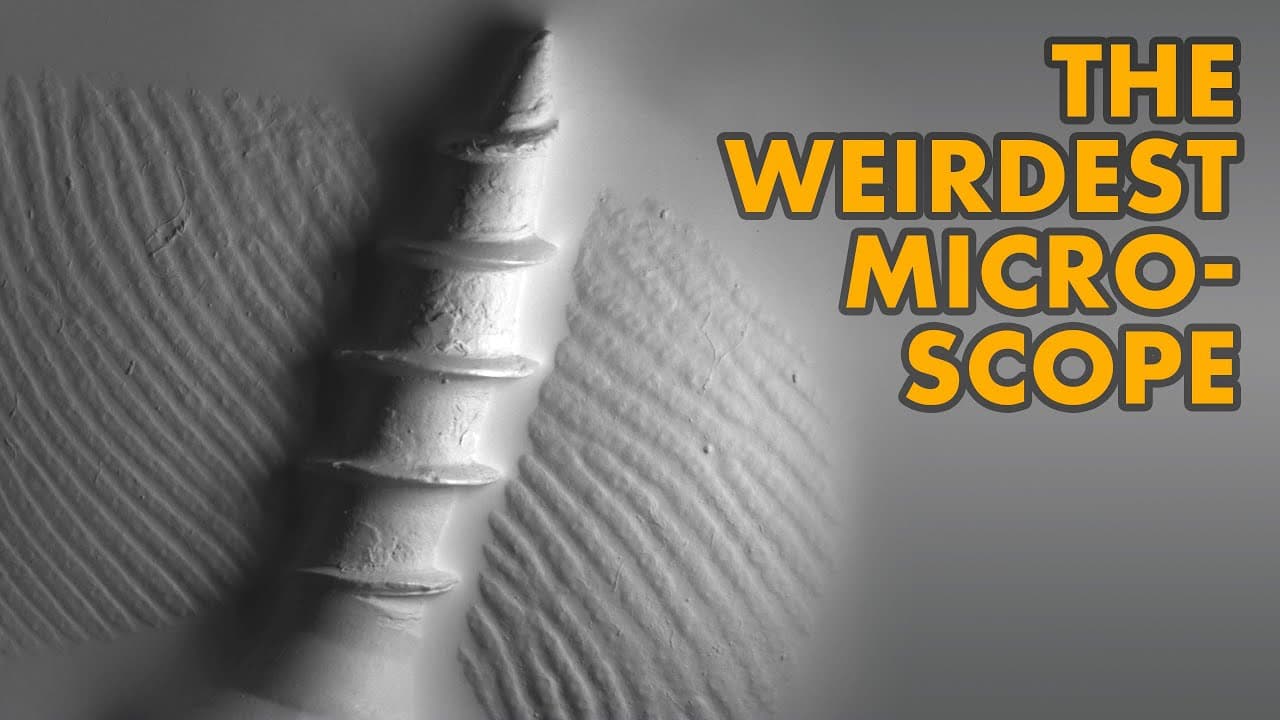
This video showcases a handheld microscope called Gel Site, which uses a gel pad and a ring of lights to remove color and transparency information from objects, allowing a geometric algorithm to create a 3D model with high accuracy.
Transcript
- This is a polo mint, the British equivalent of a Life Saver under a microscope, except it's a really weird microscope. Honestly, I'm not sure that you could even call it a microscope. I just don't know how to characterize this thing. Look, here's a Lego brick, and what about this thing? What is this? I'll tell you at the end of the video if you w... Read More
Key Insights
- ⚡ The Gel Site microscope uses a geometric algorithm to analyze images captured with different light sources, creating a 3D model with high accuracy.
- 👻 Removing color and transparency information allows the algorithm to focus on shape and improve accuracy.
- 🧠 Human brains can discern 3D information from flat images due to experience, while machine learning could potentially enable algorithms to do the same.
- 🙂 The algorithm can handle light and dark regions on objects but struggles with transparency, reflection, and glare, which the gel pad eliminates.
- 🔬 Practical applications of the Gel Site microscope include manufacturing, surface characterization, and object measurements.
- ⛑️ Human depth perception relies on various cues, such as binocular vision and parallax, to perceive depth.
- 🧠 Optical illusions can trick the human brain's assumptions about lighting and object shape.
Install to Summarize YouTube Videos and Get Transcripts
Explore YouTube Video Summarizer or Get YouTube Transcript Extractor
Questions & Answers
Q: How does the Gel Site microscope capture the shape of objects?
The microscope uses a gel pad, camera, and six lights. The gel pad deforms to capture the shape, while the camera captures the image, and the lights provide cues about light and shade for the algorithm to discern the shape.
Q: Why is color and transparency information removed from objects?
By removing color and transparency, the algorithm can focus on analyzing the shape based on light and shade cues, allowing for accurate 3D modeling. Color and transparency information can introduce complexities in interpreting the shape.
Q: What are the potential practical uses of the Gel Site microscope?
The microscope can be used for measuring the tolerances and surface roughness of manufactured objects, characterizing scratches on aircraft surfaces, and taking measurements quickly and conveniently.
Q: Can the algorithm handle objects with light, dark, and transparent regions?
The algorithm can handle objects with light and dark regions, but transparency, reflection, and glare can pose challenges. The gel pad removes these effects, allowing the algorithm to focus on shape analysis.
Key Insights:
- The Gel Site microscope uses a geometric algorithm to analyze images captured with different light sources, creating a 3D model with high accuracy.
- Removing color and transparency information allows the algorithm to focus on shape and improve accuracy.
- Human brains can discern 3D information from flat images due to experience, while machine learning could potentially enable algorithms to do the same.
- The algorithm can handle light and dark regions on objects but struggles with transparency, reflection, and glare, which the gel pad eliminates.
- Practical applications of the Gel Site microscope include manufacturing, surface characterization, and object measurements.
- Human depth perception relies on various cues, such as binocular vision and parallax, to perceive depth.
- Optical illusions can trick the human brain's assumptions about lighting and object shape.
- The Gel Site microscope offers a practical and convenient solution for quick measurements and surface characterization.
Summary & Key Takeaways
-
The Gel Site microscope uses a gel pad, a camera, and six lights to remove color information and capture the shape of objects.
-
The photometric stereo technique, combined with a geometric algorithm, analyzes the images taken with different light sources to create a 3D model accurate to plus or minus four microns.
-
The device has practical applications in manufacturing, surface characterization, and object measurements.
Read in Other Languages (beta)
Share This Summary 📚
Summarize YouTube Videos and Get Video Transcripts with 1-Click
Try YouTube Summary with ChatGPT & Claude or YouTube Transcript Generator
Explore More Summaries from Steve Mould 📚
Summarize YouTube Videos and Get Video Transcripts with 1-Click
Try YouTube Summary with ChatGPT & Claude or YouTube Transcript Generator