State and Local Officials Webinar: Elections in the AI Era
TL;DR
Officials discuss AI's impact on election security and voter trust.
Transcript
FASKIANOS: Thank you. Welcome to the Council on Foreign Relations State and Local Officials Webinar. I’m Irina Faskianos, vice president of the National Program and Outreach at CFR. CFR is an independent and nonpartisan membership organization, think tank, and publisher focused on U.S. foreign policy. We’re also the publisher of Foreign Affai... Read More
Key Insights
- AI poses new challenges to election security, including potential voter misinformation and manipulation, necessitating proactive measures by election officials.
- Emerging technologies like AI can be used to create confusion, chaos, and fear among voters, which are tactics adversaries might employ to undermine democracy.
- Legislation at both state and federal levels is needed to require disclaimers on AI-generated content and to impose penalties for deceptive practices.
- Educating voters about AI's potential impacts on elections is crucial to empower them to identify and report misinformation.
- AI can be used to generate misleading content, such as falsified claims about polling conditions, to suppress voter turnout.
- Transparency and accountability are essential in the use of AI in campaigns, including clear disclosure when AI tools are used in political communications.
- Election officials should establish themselves as trusted sources of information to counter misinformation and maintain public trust in the electoral process.
- Generative AI can both mimic and manipulate human behavior, posing unique challenges for ensuring election integrity and voter trust.
Install to Summarize YouTube Videos and Get Transcripts
Explore YouTube Video Summarizer or Get YouTube Transcript Extractor
Questions & Answers
Q: What are the main threats posed by AI in elections?
AI can be used to create confusion, chaos, and fear among voters, which are tactics adversaries might employ to undermine democracy. This includes spreading misinformation about voting procedures or election outcomes, potentially suppressing voter turnout and eroding public trust in the electoral process.
Q: What legislative measures are being considered to address AI in elections?
Legislation at both state and federal levels is being considered to require disclaimers on AI-generated content and to impose penalties for deceptive practices. This includes criminalizing the intentional use of AI to deceive voters about election-related information and mandating transparency in political communications involving AI.
Q: How can local officials combat AI-driven misinformation?
Local officials play a critical role in combating AI-driven misinformation by educating voters about the potential impacts of AI on elections and providing clear channels for reporting misinformation. They can also act as trusted sources of information, helping to debunk false claims and maintain public confidence in the electoral process.
Q: What role does transparency play in using AI in campaigns?
Transparency is crucial in using AI in campaigns to ensure voters are aware when AI tools are used in political communications. This includes clear disclosure of AI-generated content, enabling voters to critically assess the information they receive and reducing the likelihood of manipulation or misinformation.
Q: Can AI be used productively in elections?
Yes, AI can be used productively in elections to enhance voter engagement and streamline communication. For example, candidates can use AI to draft talking points or engage with voters online. However, it's important to ensure these tools are used ethically and transparently to avoid potential abuses.
Q: What are the challenges of using AI in vote tabulation?
AI in vote tabulation poses challenges related to security and reliability. While AI can potentially streamline the process, it also increases the risk of manipulation and mischief. Ensuring robust verification methods, such as paper ballots, remains essential to maintain election integrity and voter confidence.
Q: How can election officials prepare for AI-related challenges?
Election officials can prepare for AI-related challenges by establishing themselves as trusted sources of information, implementing rapid response networks to counter misinformation, and collaborating with federal and state partners to develop comprehensive strategies for AI governance and voter education.
Q: What is the importance of voter education in the context of AI?
Voter education is crucial in the context of AI to empower citizens to identify and report misinformation. Educating voters about AI's potential impacts on elections helps them critically assess the information they receive and reduces the likelihood of manipulation, ultimately safeguarding the democratic process.
Summary & Key Takeaways
-
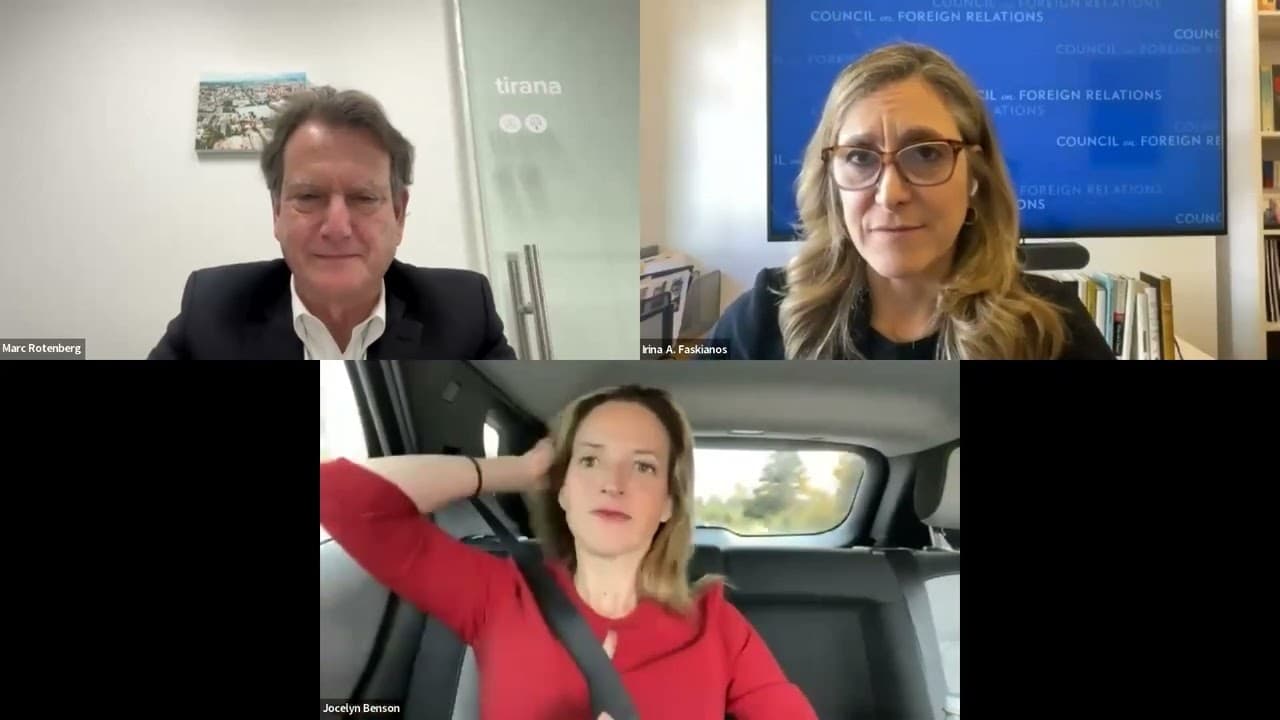
Secretary Jocelyn Benson and Professor Marc Rotenberg discussed the implications of AI on election security, emphasizing the need for proactive measures to counter misinformation. They highlighted the importance of legislation requiring AI content disclaimers and penalties for deceptive practices. Voter education and trusted information sources are vital to combat AI-driven misinformation.
-
AI technologies offer both challenges and opportunities in elections. While they can streamline communication and engagement, they also pose risks of misinformation and manipulation. Officials must balance leveraging AI's benefits with implementing safeguards against potential abuses, ensuring transparency and accountability in political communications.
-
The discussion underscored the importance of collaboration among federal, state, and local officials, as well as the private sector, to address AI's impact on elections. Establishing a robust framework for AI governance, including technical standards and regulatory measures, is crucial to maintaining election integrity and public trust.
Read in Other Languages (beta)
Share This Summary 📚
Summarize YouTube Videos and Get Video Transcripts with 1-Click
Try YouTube Summary with ChatGPT & Claude or YouTube Transcript Generator
Explore More Summaries from Council on Foreign Relations 📚


Summarize YouTube Videos and Get Video Transcripts with 1-Click
Try YouTube Summary with ChatGPT & Claude or YouTube Transcript Generator