The Metal shearing process - Sheet Metal Forming - Production Process 2
TL;DR
Shearing and tearing of sheet metal explained, highlighting the importance of clearance and shear angle in reducing cutting forces.
Transcript
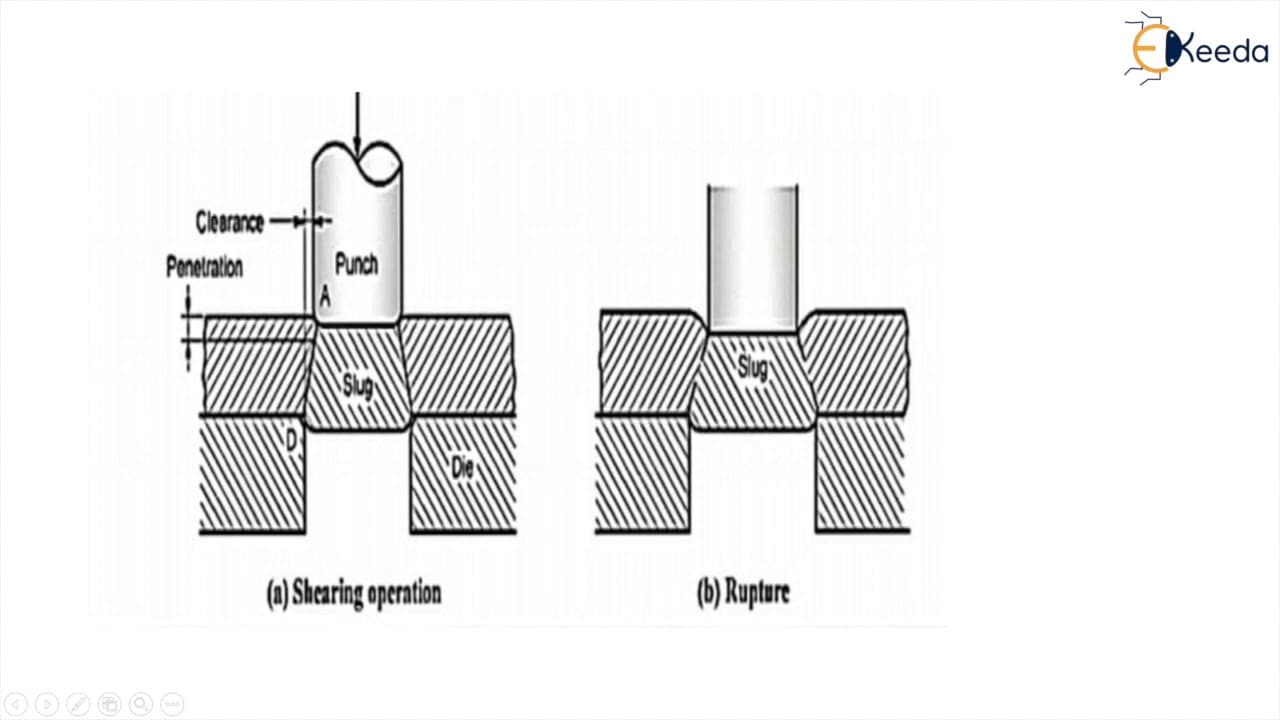
the metal shearing process now we can also call it as the mechanics of sheet metal operation so shear when the forces are not by the punch on the top of the sheet what is going to happen the top of the sheet is basically compressing elastically where at the bottom portion of the is getting elongating elastically Simone so but the difference between... Read More
Key Insights
- 👊 Shearing process induces shear stresses causing cracking or shearing at punch and die corners.
- 🍘 Optimum clearance is vital for cracks to meet for successful shearing operations.
- 💇 Shear angle helps reduce cutting forces by distributing shearing action over time.
- 🕳️ Stripping force calculation considers sheet thickness, hole size, and number of punches.
- 💇 Incorrect clearance can result in multiple cuts or forming operations instead of clean cuts.
- 🤘 Shearing and tearing are essential processes in sheet metal operations for part separation.
- 👊 Shear angle helps in reducing the length of punch in contact with the sheet at a single time.
Install to Summarize YouTube Videos and Get Transcripts
Explore YouTube Video Summarizer or Get YouTube Transcript Extractor
Questions & Answers
Q: What is the difference between shearing and tearing in sheet metal operations?
Shearing refers to crack formation at punch and die corners, while tearing is the propagation of cracks meeting within the material to cut the part.
Q: Why is clearance crucial in shearing operations?
Optimum clearance ensures that cracks from punch and die meet for successful shearing. Incorrect clearance can lead to multiple cuts or forming operations instead of cutting.
Q: How does shear angle affect cutting forces in sheet metal operations?
Shear angle on punch or die helps distribute shearing action over time, reducing cutting forces and minimizing total work required for shearing.
Q: How is stripping force calculated in sheet metal operations?
Stripping force depends on sheet thickness, hole size, location, and number of punches. It is calculated using the stripping constant, perimeter of the cut, sheet thickness, and length of the cut.
Summary & Key Takeaways
-
Shearing process explained as the top compresses while the bottom elongates due to punch force inducing shear stresses.
-
Shearing leads to cracking or shearing at the corners of punch and die, with the crack propagating further.
-
Importance of clearance for proper shearing operation highlighted with examples of correct and incorrect clearances.
Read in Other Languages (beta)
Share This Summary 📚
Summarize YouTube Videos and Get Video Transcripts with 1-Click
Try YouTube Summary with ChatGPT & Claude or YouTube Transcript Generator
Explore More Summaries from Ekeeda 📚




Summarize YouTube Videos and Get Video Transcripts with 1-Click
Try YouTube Summary with ChatGPT & Claude or YouTube Transcript Generator