What Are Role-Playing Games?
TL;DR
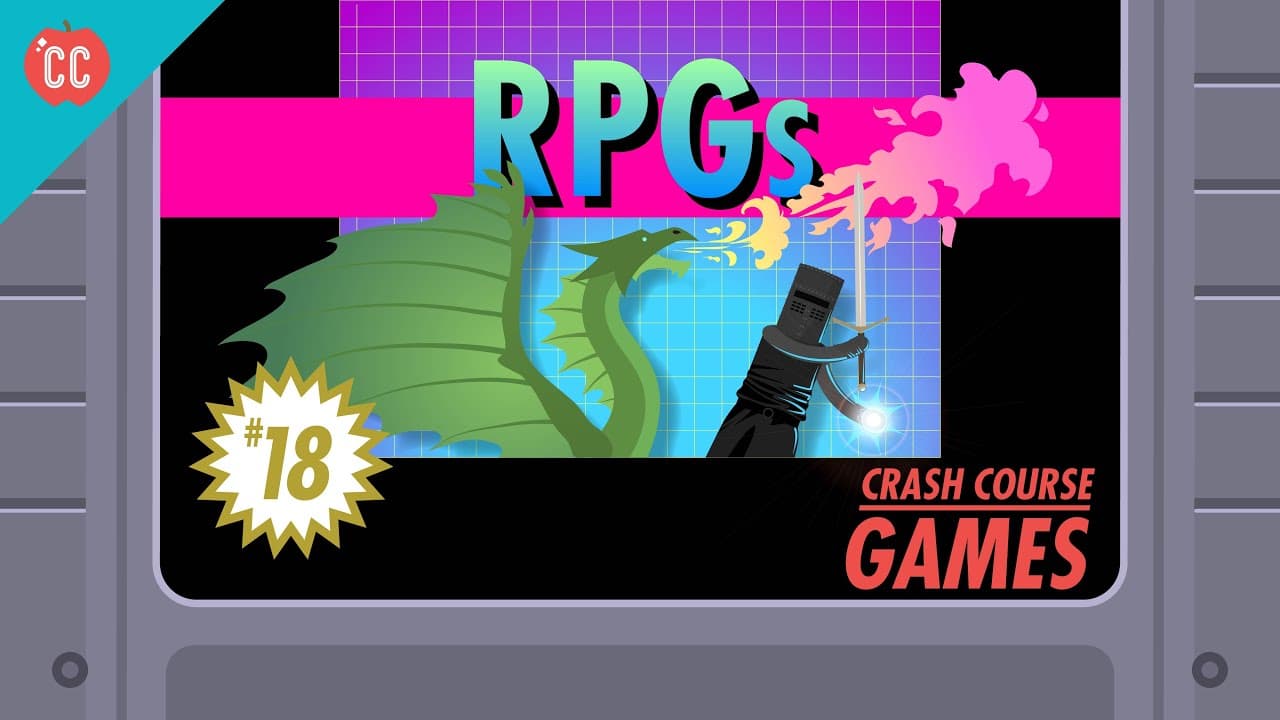
Role-playing games (RPGs) are interactive storytelling experiences where players assume characters' roles in a fictional setting, guided by a game master. Originating from war games, they gained popularity in the 1970s with games like Dungeons & Dragons. Despite past controversies linking them to negative influences, studies show RPGs foster social skills and teamwork.
Transcript
Hi, I'm Andre Meadows, and this is Crash Course Games. You and your party are standing outside the decrepit tomb of the demilich acererack. Acererack built this looming temple to an unknown, evil deity, and slayed ever worker, excavator, and priest, as it neared completetion to consecrate it in evil. It's a horrible place, but it's perfect for you ... Read More
Key Insights
- Role-playing games are a form of interactive group storytelling where players assume characters' roles.
- The game master or dungeon master guides the RPG, creating scenarios and controlling non-player characters.
- RPGs originated from war gaming, evolving into fantasy-based games like Dungeons & Dragons in the 1970s.
- Dungeons & Dragons set the standard for modern RPGs, combining strategy war gaming with fantasy storytelling.
- RPGs faced controversy in the 1970s and 80s, being accused of promoting satanism and moral decay.
- Studies indicate RPGs enhance social skills, teamwork, and problem-solving abilities among players.
- RPGs allow players to explore various settings, from medieval worlds to futuristic environments.
- Despite initial moral panic, RPGs are now recognized for their positive impact on players' emotional stability.
Install to Summarize YouTube Videos and Get Transcripts
Explore YouTube Video Summarizer or Get YouTube Transcript Extractor
Questions & Answers
Q: What are role-playing games (RPGs)?
Role-playing games (RPGs) are a type of interactive storytelling where players assume the roles of characters in a fictional setting. Guided by a game master, players navigate scenarios, make decisions, and interact with the game world. The flexibility and creativity involved make RPGs unique compared to traditional games.
Q: How did role-playing games originate?
Role-playing games originated from war gaming, a practice that involved simulating battles with miniatures and maps. In the 1970s, this concept evolved into fantasy-based games like Dungeons & Dragons, which combined strategy elements with storytelling, creating a new genre of gaming focused on character development and narrative.
Q: What role does the game master play in RPGs?
The game master, or dungeon master, plays a crucial role in RPGs by creating the game's scenarios, controlling non-player characters, and guiding the story. They act as the mediator between players and the game world, ensuring the narrative progresses smoothly and adjusting challenges to maintain player engagement.
Q: Why did RPGs face controversy in the 1970s and 80s?
RPGs faced controversy in the 1970s and 80s due to moral panic, with critics accusing them of promoting satanism and moral decay. The fantasy elements, such as magic and fictional deities, were perceived as threats to religious values, leading to negative media attention and public outcry against games like Dungeons & Dragons.
Q: How do RPGs benefit players?
RPGs benefit players by enhancing social skills, teamwork, and problem-solving abilities. The collaborative nature of RPGs encourages players to communicate, negotiate, and strategize together, fostering a sense of community and cooperation. Studies have shown that RPGs can also promote creativity and emotional stability among participants.
Q: What is Dungeons & Dragons?
Dungeons & Dragons (D&D) is a pioneering role-playing game created by Gary Gygax and Dave Arneson in the 1970s. It combines elements of strategy war gaming with fantasy storytelling, allowing players to create characters and embark on adventures in a fictional world. D&D set the standard for modern RPGs and remains influential today.
Q: What types of settings can players explore in RPGs?
Players can explore a wide variety of settings in RPGs, from medieval fantasy worlds filled with magic and knights to futuristic sci-fi landscapes with advanced technology. Other settings include historical periods, horror themes, or entirely fictional universes, allowing players to experience diverse narratives and character roles.
Q: How have perceptions of RPGs changed over time?
Perceptions of RPGs have shifted from initial moral panic to recognition of their positive impact. While once criticized for alleged negative influences, RPGs are now appreciated for promoting social interaction, creativity, and teamwork. Studies debunking earlier claims have contributed to their acceptance as a beneficial form of entertainment.
Summary & Key Takeaways
-
Role-playing games (RPGs) are interactive storytelling experiences where players assume characters' roles in a fictional setting, guided by a game master. Originating from war games, they gained popularity in the 1970s with games like Dungeons & Dragons. Despite past controversies linking them to negative influences, studies show RPGs foster social skills and teamwork.
-
Dungeons & Dragons, created by Gary Gygax and Dave Arneson, revolutionized the RPG genre by combining war gaming elements with fantasy storytelling. Released in 1974, it became the benchmark for RPGs and inspired numerous similar games, despite facing moral panic and accusations of promoting satanism during the 1970s and 80s.
-
RPGs offer players the chance to explore diverse worlds and characters, enhancing creativity and imagination. Studies have shown that RPGs can improve social skills, teamwork, and problem-solving abilities, contradicting earlier claims of their negative impact. They continue to be a popular and beneficial form of entertainment.
Read in Other Languages (beta)
Share This Summary 📚
Summarize YouTube Videos and Get Video Transcripts with 1-Click
Try YouTube Summary with ChatGPT & Claude or YouTube Transcript Generator
Explore More Summaries from CrashCourse 📚

Summarize YouTube Videos and Get Video Transcripts with 1-Click
Try YouTube Summary with ChatGPT & Claude or YouTube Transcript Generator