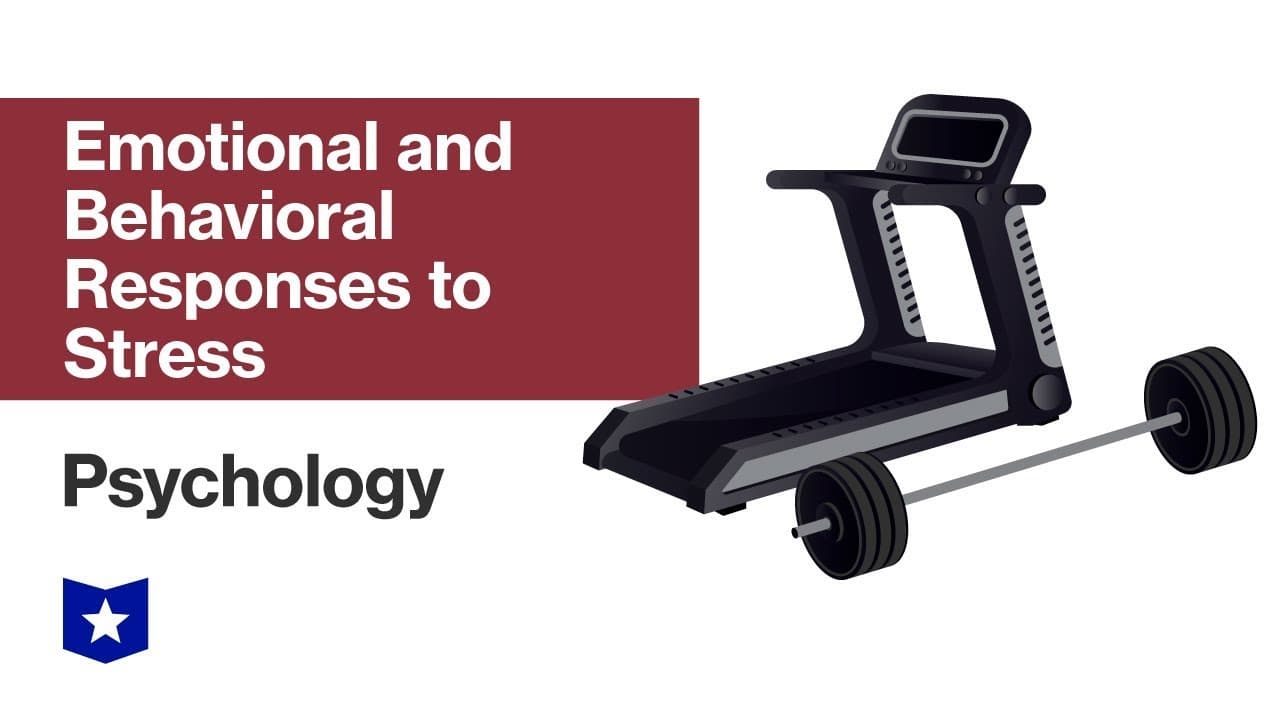
Emotional and Behavioral Responses to Stress | Psychology
TL;DR
Stress responses can be positive or negative; coping strategies vary from problem-focused to emotion-focused.
Transcript
although stress often produces distress stress can also have some positive effects in the short-term it can motivate a person to take action and enhance performance in a long-term exposure to minor stressors can make people more resilient handling small problems less people develop cognitive skills for coping and even experiencing major stressors c... Read More
Key Insights
- ❎ Stress responses can be both positive and negative, depending on how they are managed.
- 🔬 Coping strategies vary from problem-focused to emotion-focused approaches.
- ❓ Social support can have a protective effect and promote personal growth.
- ❓ Personality traits like Type A characteristics and neuroticism can influence stress responses.
- 🎮 Explanatory style and locus of control play a role in how individuals perceive and deal with stress.
- 🖤 Learned helplessness can result from a lack of perceived control over stressors.
- 😒 Individuals may use multiple coping strategies to manage stress effectively.
Install to Summarize YouTube Videos and Get Transcripts
Explore YouTube Video Summarizer or Get YouTube Transcript Extractor
Questions & Answers
Q: How can stress responses be both positive and negative?
Stress can motivate action and enhance performance in the short-term, but can also lead to maladaptive behaviors and negative emotional responses if not managed effectively.
Q: What are the different coping strategies for stress?
Coping strategies include problem-focused coping (addressing the stressor) and emotion-focused coping (regulating emotional responses).
Q: How does social support influence stress responses?
Social support can reduce physical and emotional consequences of stress, strengthen relationships, and lead to personal growth and recovery.
Q: What role do personality traits play in stress responses?
Type A personalities tend to have angrier responses to stress, while personality traits like neuroticism can lead to stronger reactions to stressful situations.
Summary & Key Takeaways
-
Stress can have positive effects by motivating action and enhancing performance in the short-term.
-
Exposure to minor stressors can increase resilience and improve coping skills.
-
Different coping strategies, including problem-focused and emotion-focused, can lead to varying levels of stress.
Read in Other Languages (beta)
Share This Summary 📚
Summarize YouTube Videos and Get Video Transcripts with 1-Click
Try YouTube Summary with ChatGPT & Claude or YouTube Transcript Generator
Explore More Summaries from Course Hero 📚

Summarize YouTube Videos and Get Video Transcripts with 1-Click
Try YouTube Summary with ChatGPT & Claude or YouTube Transcript Generator