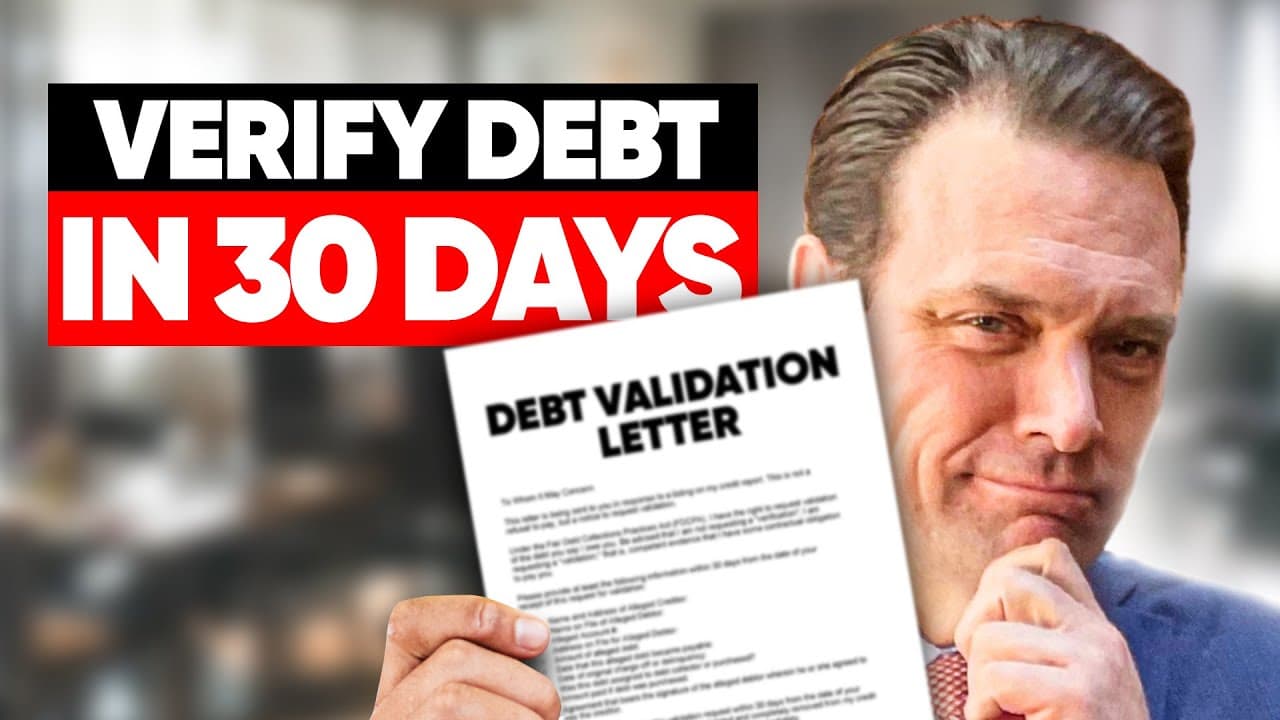
Debt Validation Letter: Attorney’s Guide on How to GET OUT OF DEBT
TL;DR
Debt verification letters are essential in dealing with debt issues, ensuring that creditors follow the rules outlined in the Fair Debt Collection Practices Act.
Transcript
hey everybody John skiba here from the consumer Warrior YouTube channel in today's video we're going to talk about debt verification letters or debt validation letters is what some people call them why they're important really what they are and how you can use them to help you to resolve your serious debt problem but if this is your first time here... Read More
Key Insights
- 💌 Debt verification letters are crucial for consumers dealing with debt issues, as they ensure compliance with the FDCPA and provide an opportunity to dispute and gather necessary information.
- 🆘 Errors in the debt collection process are common, and requesting debt verification can help avoid potential mistakes.
- 💌 Sending a dispute letter within 30 days of receiving the debt verification letter forces debt collectors to halt all collections until the debt is verified.
Install to Summarize YouTube Videos and Get Transcripts
Explore YouTube Video Summarizer or Get YouTube Transcript Extractor
Questions & Answers
Q: What are debt verification letters, and why are they important?
Debt verification letters are written requests to debt collectors, asking them to provide necessary information about the debt they are claiming. They are essential because they ensure that debt collectors comply with the FDCPA and offer consumers a chance to dispute and gather information about the debt.
Q: How do debt verification letters work?
Debt verification letters work by requesting specific information from debt collectors, such as the amount of debt, the original creditor's identity, and proof of the debt's validity. Once the letter is sent, the debt collector must cease all collections until the debt is verified.
Q: What are some reasons to dispute a debt?
There are several reasons why a consumer may want to dispute a debt, including errors in the debt collection process, such as wrong identity or incorrect amounts, issues with the statute of limitations, and the need for better information to make an informed decision about dealing with the debt.
Q: What happens if a debt collector fails to provide the requested verification?
If a debt collector fails to provide the requested verification within the stipulated timeframe, the consumer may have grounds to pursue legal action under the FDCPA. This could lead to the debt being forgiven and the consumer potentially receiving compensation up to $1,000.
Summary & Key Takeaways
-
Debt verification letters are governed by the Fair Debt Collection Practices Act (FDCPA), requiring debt collectors to send a verification letter within five days of initial communication.
-
The letter must include information such as the amount of debt, the name of the creditor, a statement that the debt is considered valid if not disputed within 30 days, verification of the debt upon dispute, and the name and address of the original creditor if requested.
-
Sending a dispute letter within 30 days will halt all collections until the debt is verified, providing an opportunity to settle the debt or gather more information.
Read in Other Languages (beta)
Share This Summary 📚
Summarize YouTube Videos and Get Video Transcripts with 1-Click
Try YouTube Summary with ChatGPT & Claude or YouTube Transcript Generator
Explore More Summaries from Consumer Warrior 📚

Summarize YouTube Videos and Get Video Transcripts with 1-Click
Try YouTube Summary with ChatGPT & Claude or YouTube Transcript Generator