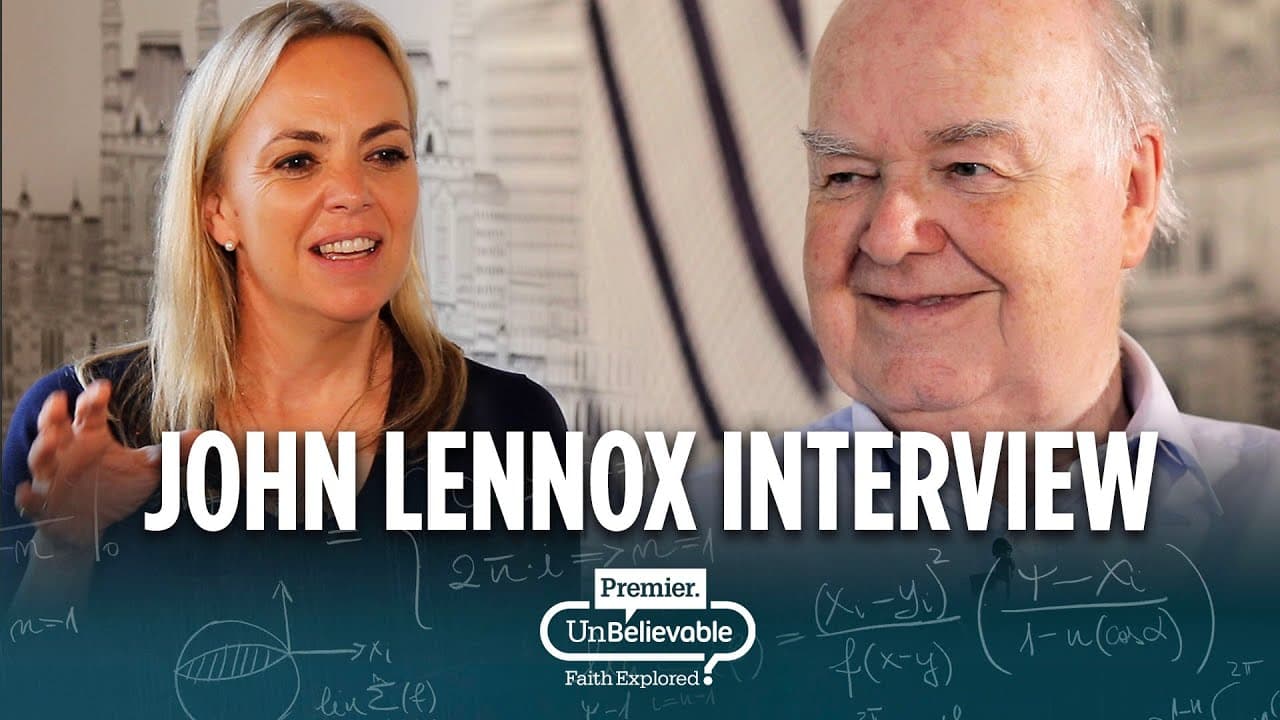
Why I believe in God | Dr. John Lennox interviewed by Dr. Amy Orr-Ewing
TL;DR
Dr. John Lennox discusses faith, science, and debates with atheists.
Transcript
the problem with technology is it advances and develops far more rapidly than any ethical underpinning and that's why there's a scrambling among companies and Nations how are we going to police this because it was Vladimir Putin who said some years ago the person of the country that is the leader in AI will control the world evidenc... Read More
Key Insights
- Dr. John Lennox's upbringing in Northern Ireland influenced his understanding of Christianity, emphasizing ethical living and open-mindedness.
- Lennox's academic journey at Cambridge was marked by challenges to his faith, which only strengthened his resolve and commitment to Christianity.
- His interactions with prominent atheists like Richard Dawkins and Peter Singer highlight the ongoing dialogue between faith and science.
- Lennox emphasizes the importance of evidence-based faith and the role of apologetics in defending Christian beliefs.
- The interview explores the impact of AI on society, highlighting both its potential and ethical concerns.
- Lennox's experiences behind the Iron Curtain illustrate the challenges and opportunities of sharing the Gospel in communist regimes.
- The discussion addresses the problem of suffering, offering a Christian perspective on hope and the role of God in a suffering world.
- Lennox argues against the notion that miracles violate natural laws, emphasizing their role as divine interventions.
Install to Summarize YouTube Videos and Get Transcripts
Explore YouTube Video Summarizer or Get YouTube Transcript Extractor
Questions & Answers
Q: How did Dr. John Lennox's upbringing influence his faith?
Dr. Lennox's upbringing in Northern Ireland played a significant role in shaping his understanding of Christianity. His father's ethical and non-sectarian approach to employing people from different backgrounds left a deep impression on him. This upbringing emphasized living out one's faith ethically and morally, encouraging open-mindedness and critical thinking about different worldviews.
Q: What challenges did Lennox face in academia regarding his faith?
During his time at Cambridge, Lennox faced significant challenges to his faith, notably from a Nobel Prize-winning scientist who advised him to abandon his Christian beliefs for the sake of his scientific career. These experiences only strengthened his resolve to defend his faith and engage with differing worldviews, ultimately shaping his approach to apologetics and his public debates with atheists.
Q: What is Lennox's stance on the relationship between faith and science?
Lennox advocates for evidence-based faith, arguing that Christianity is compatible with scientific inquiry. He emphasizes that faith should be based on evidence and reason, not blind belief. Lennox believes that the complexity and order of the universe point to a rational mind behind creation, and he encourages Christians to engage with scientific questions and challenges.
Q: How does Lennox view the role of AI in society?
Lennox acknowledges the significant impact of AI on society, recognizing both its potential benefits and ethical concerns. He draws parallels between AI's capabilities and divine attributes, cautioning against the deification of technology. Lennox stresses the importance of ethical considerations in AI development and encourages Christians to engage in this field to ensure that technology serves humanity's best interests.
Q: What insights does Lennox offer on the problem of suffering?
Lennox approaches the problem of suffering with sensitivity, acknowledging it as a complex issue for any worldview. He suggests that while suffering raises difficult questions, the Christian faith offers hope through the narrative of Jesus Christ's suffering, death, and resurrection. Lennox believes that God's involvement in human suffering provides a basis for trust and hope in the face of life's challenges.
Q: How does Lennox address the concept of miracles?
Lennox argues against the idea that miracles are violations of natural laws. Instead, he views them as divine interventions that do not contradict the laws of nature but rather highlight God's involvement in the world. He emphasizes that understanding natural laws allows us to recognize when God acts in extraordinary ways, reinforcing the credibility of miracles within a Christian framework.
Q: What was Lennox's experience like behind the Iron Curtain?
Lennox's experiences in Eastern Europe during the communist era involved encouraging Christians and engaging with atheistic ideologies. He witnessed firsthand the challenges faced by believers under oppressive regimes and used his academic background to connect with intellectuals interested in the intersection of science and faith. These experiences deepened his commitment to sharing the Gospel and defending Christian beliefs.
Q: How has Lennox engaged with prominent atheists in public debates?
Lennox has participated in public debates with prominent atheists like Richard Dawkins, Peter Singer, and Christopher Hitchens. These debates have provided a platform for him to present a credible alternative to atheism, emphasizing the rational basis of Christian faith. Lennox's approach is characterized by respect and a focus on presenting evidence and reasoned arguments in defense of Christianity.
Summary & Key Takeaways
-
Dr. John Lennox shares his personal journey from childhood in Northern Ireland to becoming a renowned Christian apologist and mathematician. He discusses how his upbringing influenced his faith and ethical views.
-
The interview delves into Lennox's academic experiences at Cambridge, including challenges to his faith by prominent academics, and his encounters with well-known atheists in public debates.
-
Lennox explores contemporary issues such as the impact of AI on society, the problem of suffering, and the nature of miracles, offering insights from a Christian perspective.
Read in Other Languages (beta)
Share This Summary 📚
Summarize YouTube Videos and Get Video Transcripts with 1-Click
Try YouTube Summary with ChatGPT & Claude or YouTube Transcript Generator
Explore More Summaries from Premier Unbelievable? 📚


Summarize YouTube Videos and Get Video Transcripts with 1-Click
Try YouTube Summary with ChatGPT & Claude or YouTube Transcript Generator