What Role Do Brain Hemispheres Play in Consciousness?
TL;DR
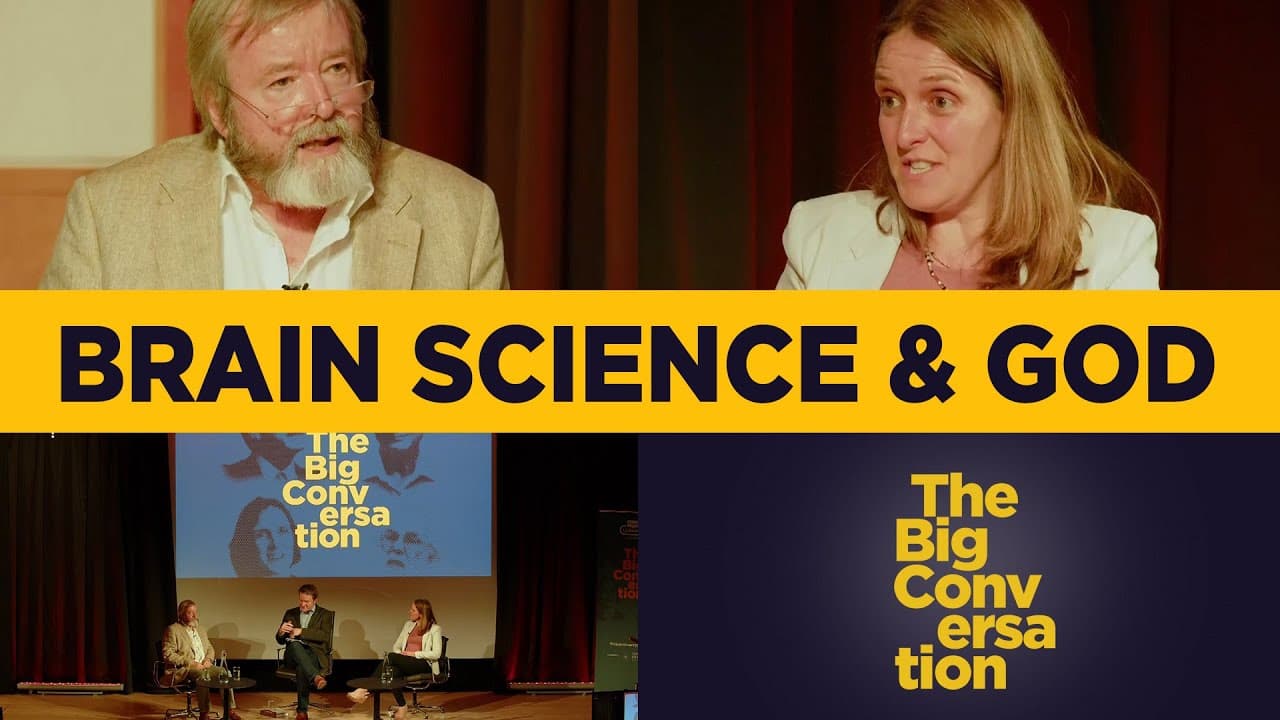
Hemispheric differences in the brain significantly shape our understanding of consciousness and reality. Ian McGilchrist argues against a purely reductionist view, suggesting that consciousness transcends mere neurobiology and is deeply connected to imagination. Meanwhile, Sharon Dirckx emphasises the distinction between scientific inquiry and philosophical questions about existence and divinity.
Transcript
if you ask people in this country do you follow a religion i think about 11 or 12 say yes but if you ask people do you think there's more to the cosmos than is contained within the reductionist materialist position about 95 of them say yes that is not a scientific statement there is nothing in any study that will get you to the conclusion that neur... Read More
Key Insights
- ↔️ The right hemisphere of the brain is responsible for understanding metaphor, meaning, and embodiment, while the left hemisphere focuses on analysis, categorization, and literal interpretation.
- 🖐️ Consciousness cannot be fully explained by neurobiological processes, and the imagination plays a vital role in our understanding of reality.
- 💗 There is a growing movement towards panpsychism, which suggests that everything in the universe is conscious in some way.
- 🌍 The relationship between science and spirituality is not adversarial, as they both offer different perspectives and can enrich our understanding of the world.
- 🥹 The concept of God and divinity is complex, and different perspectives offer different insights. Ian holds a panentheistic view, while Sharon presents a Christian understanding of God's transcendence and immanence.
Install to Summarize YouTube Videos and Get Transcripts
Explore YouTube Video Summarizer or Get YouTube Transcript Extractor
Questions & Answers
Q: Can the brain fully explain consciousness, or is there more to it?
Ian argues that the brain is not solely responsible for consciousness, as there are aspects of experience that cannot be measured or reduced to physical processes. Sharon agrees, stating that while the brain plays a role in consciousness, it does not provide a complete explanation.
Q: Is there room for both science and spirituality in our understanding of reality?
Both Ian and Sharon believe that there is a place for science and spirituality to coexist. They argue that scientific exploration can help us understand how things work, while spirituality delves into the deeper questions of meaning and purpose.
Q: How do we define God and understand the concept of divinity?
Ian cautions against language that tries to define God, suggesting that the divine is beyond human comprehension. He believes that the cosmos itself is conscious and sees God as the ground of all being. Sharon shares a Christian perspective, where God is seen as a relational being who created the universe out of love and continues to be involved in human history.
Q: What is the role of miracles and prayer in a world governed by natural laws?
Sharon believes that miracles are not necessarily a violation of natural laws, but rather a rare occurrence that challenges our understanding of what is possible. Ian sees miracles as moments where the laws of nature are suspended, but acknowledges that his personal experience and knowledge do not align with the frequency of miracles reported by others.
Key Insights:
- The right hemisphere of the brain is responsible for understanding metaphor, meaning, and embodiment, while the left hemisphere focuses on analysis, categorization, and literal interpretation.
- Consciousness cannot be fully explained by neurobiological processes, and the imagination plays a vital role in our understanding of reality.
- There is a growing movement towards panpsychism, which suggests that everything in the universe is conscious in some way.
- The relationship between science and spirituality is not adversarial, as they both offer different perspectives and can enrich our understanding of the world.
- The concept of God and divinity is complex, and different perspectives offer different insights. Ian holds a panentheistic view, while Sharon presents a Christian understanding of God's transcendence and immanence.
- Miracles challenge our understanding of natural laws, and prayer is a personal and transformative practice that involves listening and opening oneself to the divine.
Summary & Key Takeaways
-
The conversation delves into the differences between the left and right hemispheres of the brain and their impact on how we perceive and understand the world.
-
Ian highlights the limitations of a reductionist and materialistic perspective, arguing that consciousness is not solely a product of neurons and that the imagination plays a crucial role in our understanding of reality.
-
Sharon discusses her background in neuroscience and the connection between the mind and brain, emphasizing the need to distinguish between what science can explain and the philosophical questions that remain unanswered.
-
The conversation then turns towards the topic of God, with Ian proposing a panentheistic view that sees the divine as immanent in all things, while Sharon shares a Christian perspective that emphasizes God's transcendence and active involvement in human history.
Read in Other Languages (beta)
Share This Summary 📚
Summarize YouTube Videos and Get Video Transcripts with 1-Click
Try YouTube Summary with ChatGPT & Claude or YouTube Transcript Generator
Explore More Summaries from Premier Unbelievable? 📚

Summarize YouTube Videos and Get Video Transcripts with 1-Click
Try YouTube Summary with ChatGPT & Claude or YouTube Transcript Generator