How Do Electric Transmission Lines Carry Power Efficiently?
TL;DR
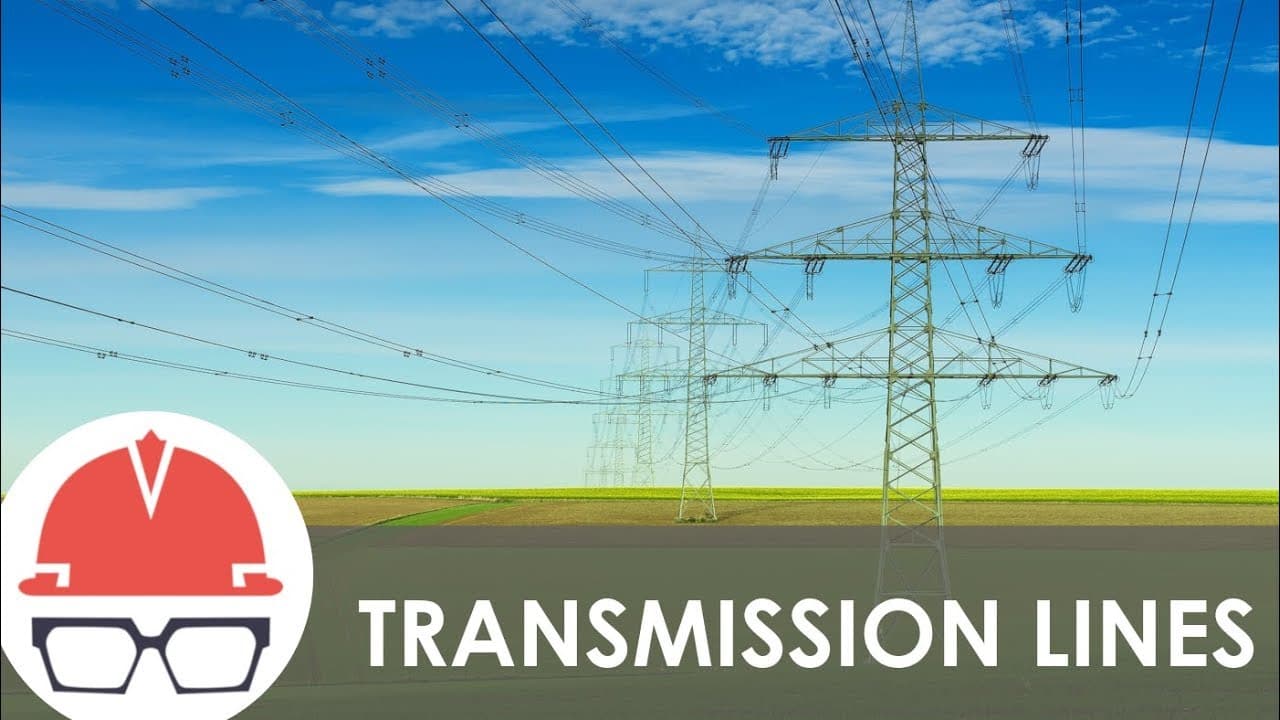
Electric transmission lines transport electricity from power plants to consumers by using high voltage to reduce current, which minimizes energy loss due to resistance. Engineers design these lines to prevent arcing and ensure safety, employing features like air gaps and spacing rather than insulation. The grids are evolving with increased local generation and energy trading.
Transcript
In the past, power generating plants were only able to serve their local areas. Electricity didn’t have far to travel between where it was created and where it was used. Since then, things have changed, and most of us get our electricity from the grid, huge interconnected areas of power producers and users. As power plants grew larger and further a... Read More
Key Insights
- Electricity generation has evolved from local plants to interconnected grids, necessitating efficient long-distance transmission solutions.
- Power lines transport electricity from remote power plants to populated areas, using conductors to minimize energy loss.
- Resistance in conductors causes energy loss as heat, necessitating the use of high-voltage transmission to reduce current and increase efficiency.
- Transformers boost voltage to over 100,000 volts for transmission, reducing current and minimizing energy loss over long distances.
- High-voltage transmission lines are designed to prevent arcing and ensure safety, using air gaps and spacing rather than insulation.
- Transmission lines use three-phase systems, with conductors spaced to prevent arcing and insulators to maintain distance from grounded pylons.
- Conductors are chosen based on strength and resistance, balancing cost and performance, with considerations for temperature rise and wind effects.
- The power grid is evolving with local generation and energy trading, impacting traditional transmission line usage and design.
Install to Summarize YouTube Videos and Get Transcripts
Explore YouTube Video Summarizer or Get YouTube Transcript Extractor
Questions & Answers
Q: Why are power plants typically located far from populated areas?
Power plants are often situated in remote areas due to cheaper land costs and the need for large cooling ponds. Additionally, many people prefer not to live near large industrial facilities. This distance necessitates the efficient transmission of electricity over long distances to reach populated areas.
Q: How does high-voltage transmission improve efficiency?
High-voltage transmission reduces the current flowing through power lines, which in turn decreases energy loss due to resistance. By boosting voltage, transformers allow for the same amount of power to be transmitted with less current, minimizing energy loss as heat and improving overall efficiency.
Q: What safety measures are in place for high-voltage transmission lines?
High-voltage transmission lines utilize air gaps and spacing to prevent arcing and ensure safety. Conductors are spaced apart to avoid arcing between phases, and insulators maintain distance from grounded pylons. Towers are tall to prevent accidental contact with conductors, and static wires protect against lightning strikes.
Q: How do engineers choose the right conductors for transmission lines?
Engineers select conductors based on a balance of strength, resistance, and cost. Conductors are rated by their current-carrying capacity for a given temperature rise. Factors such as wind effects, temperature changes, and potential sagging during peak demand are considered to ensure reliable and efficient transmission.
Q: What role do transformers play in power transmission?
Transformers at power plants boost the voltage of electricity before it is transmitted over long distances. By increasing the voltage, transformers reduce the current flowing through conductors, minimizing energy loss due to resistance. This process ensures that more power reaches the end users efficiently.
Q: Why don't high-voltage lines use insulation around conductors?
High-voltage lines don't use insulation around conductors because the required insulation would be prohibitively thick and costly. Instead, safety is achieved through air gaps and spacing. Conductors are spaced apart to prevent arcing, and insulators maintain distance from grounded structures, ensuring safe transmission.
Q: How do magnetic fields affect transmission line design?
Transmission lines generate magnetic fields that can induce currents in parallel conductors, such as fences, and interfere with magnetic devices. To minimize electromagnetic interference (EMF) at the edge of the right-of-way, tower heights and conductor spacing are carefully designed, balancing safety and performance.
Q: How is the power grid evolving with local generation?
The power grid is evolving as the cost of solar panels decreases, enabling local generation of electricity. Consumers can produce electricity at home or businesses and export excess energy back into the grid. This shift reduces reliance on large transmission lines and changes the dynamics of electricity distribution and trading.
Summary & Key Takeaways
-
Electricity generation has shifted from local plants to interconnected grids, requiring efficient long-distance transmission methods. Power lines, or conductors, transport electricity from remote power plants to populated areas, minimizing energy loss through resistance. High-voltage transmission is crucial for reducing current and increasing efficiency.
-
Transformers boost voltage for transmission, reducing current and minimizing energy loss over distances. High-voltage lines are designed to prevent arcing and ensure safety, using air gaps and spacing instead of insulation. Conductors are selected based on strength, resistance, and cost, with considerations for temperature rise and wind effects.
-
The power grid is evolving with local generation and energy trading, impacting traditional transmission line usage. High-voltage lines use three-phase systems, with conductors spaced to prevent arcing. Insulators maintain distance from grounded pylons, while static wires protect against lightning. Engineers also consider magnetic fields and audible noise.
Read in Other Languages (beta)
Share This Summary 📚
Summarize YouTube Videos and Get Video Transcripts with 1-Click
Try YouTube Summary with ChatGPT & Claude or YouTube Transcript Generator
Explore More Summaries from Practical Engineering 📚




Summarize YouTube Videos and Get Video Transcripts with 1-Click
Try YouTube Summary with ChatGPT & Claude or YouTube Transcript Generator