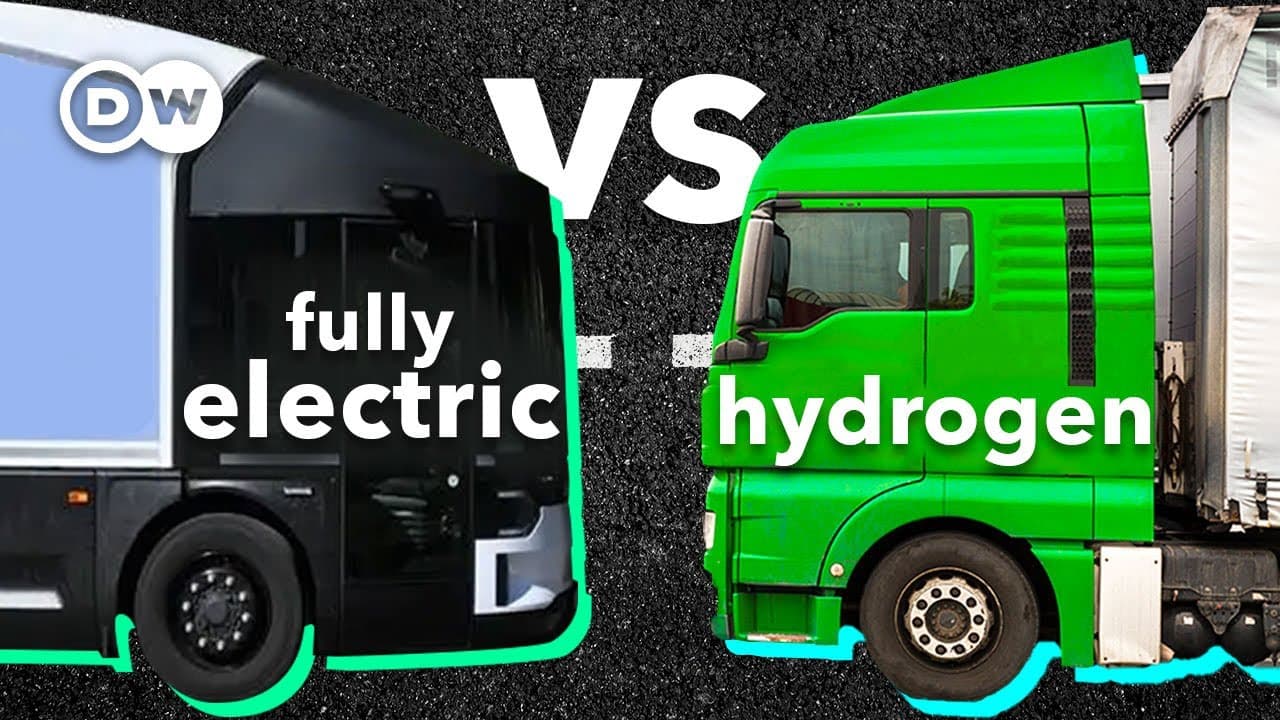
Which will be the engine of the future?
TL;DR
The future of trucks may depend on both electric and hydrogen solutions.
Transcript
Think of all the stuff you come into contact within one day. This stuff didn't come out of nowhere. In most cases, it made a journey that crossed city limits or even country borders. And one leg of the trip likely involved one of these. You could call trucks the backbone of commerce. Unfortunately, the way they work right now is very unheal... Read More
Key Insights
- Trucks are crucial for commerce but are major contributors to transport emissions, necessitating a shift to zero-emission solutions.
- Electric motors, powered by batteries or hydrogen, offer potential solutions, but face unique challenges compared to passenger cars.
- Hydrogen trucks offer quick refueling and maintain cargo capacity but currently suffer from high energy production costs.
- Battery technology has rapidly improved, becoming cheaper and more energy-dense, making electric trucks increasingly viable.
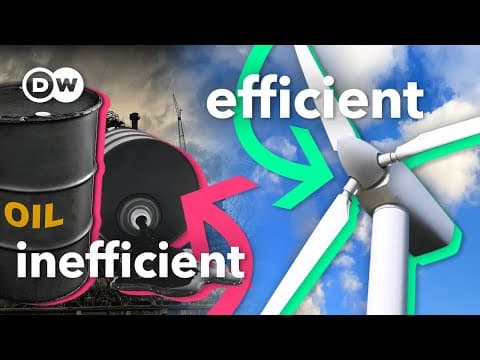
- Battery-powered trucks are more efficient, losing only 20% of energy compared to hydrogen's 60% energy loss in conversion processes.
- Infrastructure for both hydrogen and electric trucks is lacking, with significant expansion required to support either technology.
- Regulatory frameworks and investments are crucial to signaling the future direction of truck technology and reducing transition risks.
- The debate continues as to whether a dual approach with both hydrogen and electric solutions is necessary, particularly for heavy cargo.
Install to Summarize YouTube Videos and Get Transcripts
Explore YouTube Video Summarizer or Get YouTube Transcript Extractor
Questions & Answers
Q: What are the main challenges faced by electric trucks compared to passenger cars?
Electric trucks face unique challenges compared to passenger cars due to their need to drive longer distances and carry heavier loads. This requires larger and more expensive batteries, which can compromise cargo capacity. Additionally, the infrastructure for charging heavy-duty trucks is underdeveloped, with high-power charging stations largely missing.
Q: Why are hydrogen trucks considered beneficial despite their high energy production costs?
Hydrogen trucks are beneficial because they offer quick refueling times similar to diesel trucks and do not compromise cargo capacity. They emit only heat and water, reducing lifecycle emissions by up to 33% compared to diesel. However, the high energy costs for producing hydrogen, especially when not using renewable energy, remain a significant challenge.
Q: How has battery technology improved to benefit electric trucks?
Battery technology has significantly improved, becoming cheaper and more energy-dense. This allows electric trucks to achieve greater range with smaller battery packs. Researchers are also developing megawatt charging systems to reduce charging times, potentially allowing trucks to charge during mandatory breaks, improving the viability of electric trucks for long-distance travel.
Q: What is the current state of infrastructure for hydrogen and electric trucks?
The infrastructure for hydrogen and electric trucks is currently inadequate. Hydrogen refueling stations are scarce, with some regions lacking any stations. While there is more infrastructure for electric vehicle charging, it primarily supports passenger cars, and high-power charging stations for trucks are almost nonexistent, necessitating significant expansion for both technologies.
Q: What role do regulations play in the transition to zero-emission trucks?
Regulations play a crucial role by providing certainty and reducing risks for businesses investing in zero-emission truck technologies. They signal the future direction of the industry, encouraging manufacturers to develop and mass-produce zero-emission vehicles. For example, the EU's proposed CO2 standards aim for a 90% reduction in emissions from new heavy-duty vehicles by 2040.
Q: Why might a dual approach of both hydrogen and electric trucks be necessary?
A dual approach may be necessary due to the distinct advantages each technology offers. Hydrogen trucks are better suited for extremely heavy loads and long-distance travel, while electric trucks are more efficient and cheaper to operate. This complementary approach can address the diverse needs of the trucking industry, particularly for niche applications requiring heavy cargo transportation.
Q: What are the potential benefits of battery swapping and electric road systems for electric trucks?
Battery swapping could reduce downtime by allowing operators to quickly replace depleted batteries, requiring industry-wide cooperation for standardized systems. Electric road systems could provide continuous power through overhead lines, similar to trains, enabling trucks to travel through remote areas without charging stations. Both solutions could enhance the viability of electric trucks for long journeys.
Q: What are the uncertainties surrounding the future of hydrogen fuel prices?
The future of hydrogen fuel prices is uncertain due to varying projections. While some estimates suggest costs will decrease with increased production scale, others predict that hydrogen will remain expensive for decades. The commercialization of green hydrogen production is crucial to lowering prices, but this transition is still in its early stages, contributing to the uncertainty.
Summary & Key Takeaways
-
Trucks play a vital role in commerce but are significant contributors to emissions, prompting a shift to zero-emission technologies. Electric motors, whether battery or hydrogen-powered, present promising solutions but face distinct challenges compared to passenger vehicles.
-
Hydrogen trucks offer benefits like quick refueling and maintaining cargo capacity, yet they are hindered by high costs associated with energy production. Meanwhile, battery technology has seen rapid advancements, becoming cheaper and more energy-efficient, making electric trucks increasingly competitive.
-
Infrastructure development for both hydrogen and electric trucks is crucial, with current systems inadequate for large-scale adoption. Regulatory support and investments are essential to guide the industry towards sustainable solutions, with ongoing debates about the necessity of a dual approach for different trucking needs.
Read in Other Languages (beta)
Share This Summary 📚
Summarize YouTube Videos and Get Video Transcripts with 1-Click
Try YouTube Summary with ChatGPT & Claude or YouTube Transcript Generator
Explore More Summaries from DW Planet A 📚


Summarize YouTube Videos and Get Video Transcripts with 1-Click
Try YouTube Summary with ChatGPT & Claude or YouTube Transcript Generator