The dawn of battery-powered urban flight | Challengers
TL;DR
The race to bring flying taxis to cities is heating up, with companies like Archer betting on their technological approach to make it a reality.
Transcript
- Watch this: I'm about to witness the future of urban transportation- one we've been dreaming about for decades. - Arch one, clear for takeoff. - But first, let me paint a picture for you: You're in an Uber to downtown Manhattan. You travel 10 minutes to the local 'vertiport' where flying taxi T379 is waiting for you. You lift off. Seven minutes l... Read More
Key Insights
- 👳 Electric motors and improved battery technology have enabled the development of eVTOL aircraft for urban transportation.
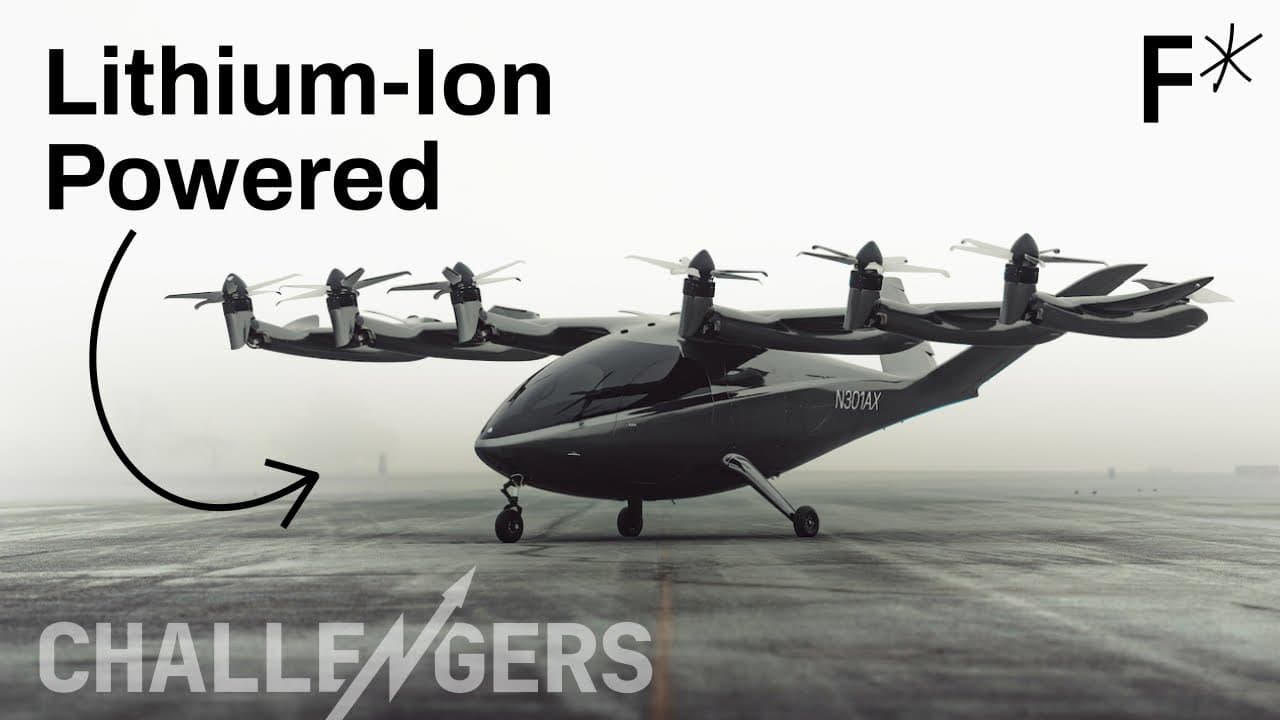
- ✈️ Archer's prototype aircraft, "Maker," is being used to gather valuable data and improve flight control systems before entering production.
- 🐕🦺 Archer aims to have their full-scale aircraft, "Midnight," certified with the FAA by 2024 for commercial service in the following year.
- 👱 Building the supporting infrastructure, including vertiports, is crucial for the success of urban air mobility and will require community buy-in and significant investment.
Install to Summarize YouTube Videos and Get Transcripts
Explore YouTube Video Summarizer or Get YouTube Transcript Extractor
Questions & Answers
Q: How have advancements in electric motors and batteries made flying taxis possible?
Advances in electric motors and batteries have made it feasible to build eVTOL aircraft, which rely on lightweight battery systems to provide power and energy for takeoff, landing, and long-distance flights.
Q: Why is Archer choosing to pilot their aircraft initially instead of using autonomous flight technology?
Archer believes that piloting their aircraft initially will help them achieve certification sooner, as they work with the FAA to ensure the safety and regulatory compliance of their aircraft.
Q: How will eVTOLs impact existing helicopter routes and infrastructure?
Initially, eVTOLs are expected to fly within existing helicopter routes designated by the FAA. However, as the industry scales, more routes and vertiport infrastructure will be needed, requiring significant investment and community support.
Q: How affordable will urban air mobility be for consumers?
The target cost for consumers is a $3 to $4 passenger-mile price. While there may be debates and factors impacting the final cost, the aim is to make urban air mobility accessible and competitive with other transportation options.
Key Insights:
- Electric motors and improved battery technology have enabled the development of eVTOL aircraft for urban transportation.
- Archer's prototype aircraft, "Maker," is being used to gather valuable data and improve flight control systems before entering production.
- Archer aims to have their full-scale aircraft, "Midnight," certified with the FAA by 2024 for commercial service in the following year.
- Building the supporting infrastructure, including vertiports, is crucial for the success of urban air mobility and will require community buy-in and significant investment.
- While there are still uncertainties, the influx of funding, technological progress, and regulatory support suggest that flying taxis will become a reality in the near future.
Summary & Key Takeaways
-
Archer is a leading company in the race to develop flying taxis for urban transportation, using Electric Vertical Takeoff and Landing (eVTOL) aircraft.
-
Their prototype aircraft, "Maker," is being used to gather data and improve flight control systems before entering production.
-
Archer's 500-person team is also working on a full-scale aircraft called "Midnight" for certification with the FAA by 2024.
Read in Other Languages (beta)
Share This Summary 📚
Summarize YouTube Videos and Get Video Transcripts with 1-Click
Try YouTube Summary with ChatGPT & Claude or YouTube Transcript Generator
Explore More Summaries from Freethink 📚






Summarize YouTube Videos and Get Video Transcripts with 1-Click
Try YouTube Summary with ChatGPT & Claude or YouTube Transcript Generator