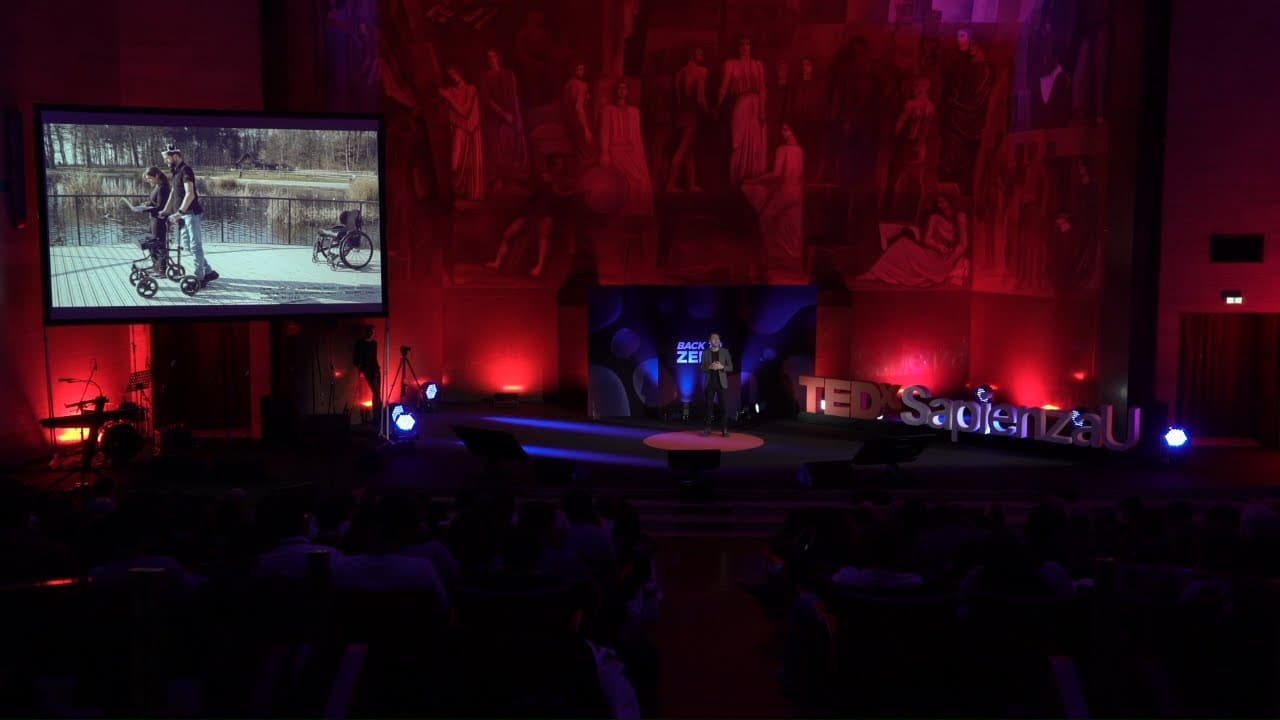
Human-AI Symbiosis and the Quest for Neurorights | Marcello Ienca | TEDxSapienzaU
TL;DR
Neural interfaces merge human brains with AI, raising ethical concerns and the potential for enhancing human capabilities.
Transcript
Sal picture two scenarios with me first we meet Sarah our remarkable woman living with quadriplegia for most of her life she could not move any of Limbs due to a car accident but she can now finally wear a Sleek robotic exoskeleton that she controls with her brain allowing her to walk freely once again she just needs to think about going in a certa... Read More
Key Insights
- 🧠 Neural interfaces merge human brains with machines through AI translation, enabling new capabilities.
- 👏 Widespread use of non-medical neural interfaces raises ethical concerns about privacy, manipulation, and discrimination.
- 🛄 Proposed "neuro rights" aim to protect individuals' control over their thoughts, minds, and identities in the age of human-AI symbiosis.
- ❓ AI integration through neural interfaces challenges concepts of identity, privacy, and ethical responsibility.
- ❓ The decision to embrace neural interfaces with wisdom and ethical considerations reflects the future direction of human-AI interactions.
- 🗯️ International efforts and initiatives are underway to address ethical challenges and ensure human rights in the context of neural interfaces.
- 🥹 Neural interfaces hold the potential to enhance human capabilities while requiring responsible decision-making and safeguarding against potential harms.
Install to Summarize YouTube Videos and Get Transcripts
Explore YouTube Video Summarizer or Get YouTube Transcript Extractor
Questions & Answers
Q: How do neural interfaces like the robotic exoskeleton benefit individuals with limited mobility?
Neural interfaces interpret neural signals to enable physical actions, allowing those with limited mobility to regain independence and freedom by controlling external devices like robotic exoskeletons.
Q: What ethical challenges arise from the widespread use of non-medical neural interfaces in various domains?
Non-medical neural interfaces monitor brain activity in fields like marketing and the military, raising concerns about privacy, manipulation, and the potential for discrimination based on neural data.
Q: What are the proposed "neuro rights" and their significance in the age of human-AI symbiosis?
"Neuro rights" include cognitive liberty, mental privacy, mental integrity, and psychological continuity, aiming to protect individuals' control over their thoughts, minds, and identities in the context of neural interfaces and AI integration.
Q: How can the interaction between humans and AI through neural interfaces be compared to symbiotic relationships in nature?
The concept of "neuroids" ensures mutualistic symbiosis, like the beneficial interaction between bees and flowers, where both parties benefit, emphasizing the importance of ethical use and control over neural interface technologies.
Summary & Key Takeaways
-
AI-generated images illustrate the potential of neural interfaces for people like Sarah and Alex.
-
Neural interfaces bridge the gap between human brains and machines through AI translation.
-
Ethical challenges arise as neural interfaces move beyond medical use to affect privacy, manipulation, and socioeconomic inequalities.
Read in Other Languages (beta)
Share This Summary 📚
Summarize YouTube Videos and Get Video Transcripts with 1-Click
Try YouTube Summary with ChatGPT & Claude or YouTube Transcript Generator
Explore More Summaries from TEDx Talks 📚



Summarize YouTube Videos and Get Video Transcripts with 1-Click
Try YouTube Summary with ChatGPT & Claude or YouTube Transcript Generator