David M. Kreps Symposium: Roundtable Discussion, moderated by Professor Jonathan Bendor
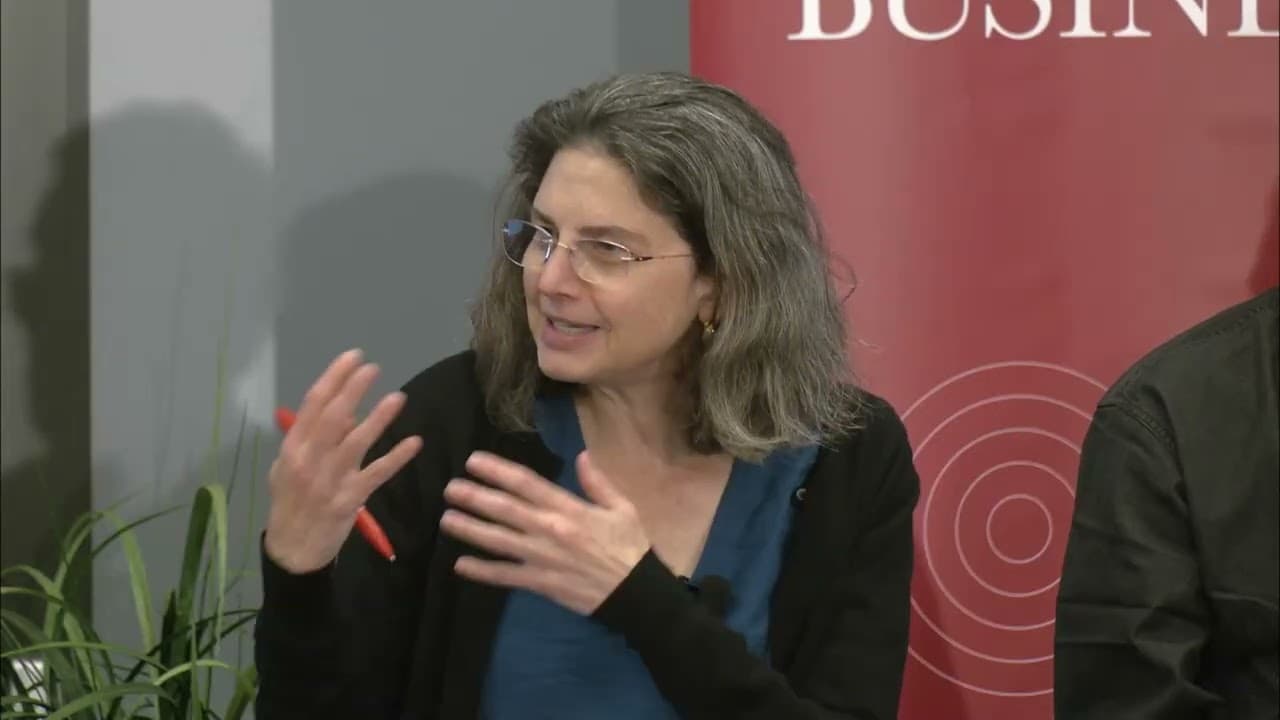
TL;DR
Economic theories and models, based on the concept of Homo Economicus, are being challenged due to their limitations in explaining real-world behavior and dynamics.
Transcript
[MUSIC] I'm going to give a suggestion about how to think about the relationship among the different papers. Just taking a lot of notes when all for the panelists where we're speaking and it's pretty complicated to do, but I think a very simple heuristic as is the following. It was take a scaly talk as the starting point and he presents a wide vari... Read More
Key Insights
- 🌍 The concept of Homo Economicus has shaped economic theory for decades but is now being challenged due to its limitations in explaining real-world dynamics.
- 🧡 Economic analysis needs to incorporate interdisciplinary approaches and consider a broader range of factors, such as social, psychological, and moral influences.
- ❓ Efforts to enhance economic analysis involve collaborations with other disciplines and a reevaluation of the traditional assumptions underlying economic models.
- ❓ The focus should shift towards a more comprehensive understanding of human behavior and its impact on economic outcomes.
Install to Summarize YouTube Videos and Get Transcripts
Explore YouTube Video Summarizer or Get YouTube Transcript Extractor
Questions & Answers
Q: What is the traditional concept of Homo Economicus and why is it being criticized?
Homo Economicus is the assumption that individuals act rationally and in their self-interest in economic decision-making. It is being criticized because real-world behaviors often deviate from this assumption, and the concept fails to account for other aspects of human behavior.
Q: What are the limitations of Homo Economicus in explaining real-world dynamics?
The concept of Homo Economicus overlooks social, psychological, and moral factors that influence economic decisions. It fails to explain phenomena such as altruism, cooperation, and the impact of social norms on economic behavior.
Q: How can economics incorporate a more comprehensive view of human behavior?
To incorporate a more comprehensive view, economics needs to embrace interdisciplinary approaches, collaborate with other social sciences, and consider a broader range of factors in economic analysis, such as identity, social relations, and morality.
Q: How can insights from other disciplines, such as philosophy and psychology, enhance economic analysis?
Insights from other disciplines can provide a more holistic understanding of economic behavior. Philosophy can help in examining ethical dimensions and normative aspects, while psychology can contribute to a deeper understanding of human decision-making processes and cognitive biases.
Summary & Key Takeaways
-
The concept of Homo Economicus, which assumes individuals act rationally and solely in pursuit of self-interest, has been the foundation of economics for decades.
-
However, recent discussions and research suggest that this narrow view of human behavior is insufficient in explaining real-world phenomena and societal complexities.
-
Scholars argue for a more interdisciplinary approach that considers social, psychological, and moral factors in economic analysis.
Read in Other Languages (beta)
Share This Summary 📚
Summarize YouTube Videos and Get Video Transcripts with 1-Click
Try YouTube Summary with ChatGPT & Claude or YouTube Transcript Generator
Explore More Summaries from Stanford Graduate School of Business 📚



Summarize YouTube Videos and Get Video Transcripts with 1-Click
Try YouTube Summary with ChatGPT & Claude or YouTube Transcript Generator