Comparing the Eastern and Western fronts in WWI | The 20th century | World history | Khan Academy
TL;DR
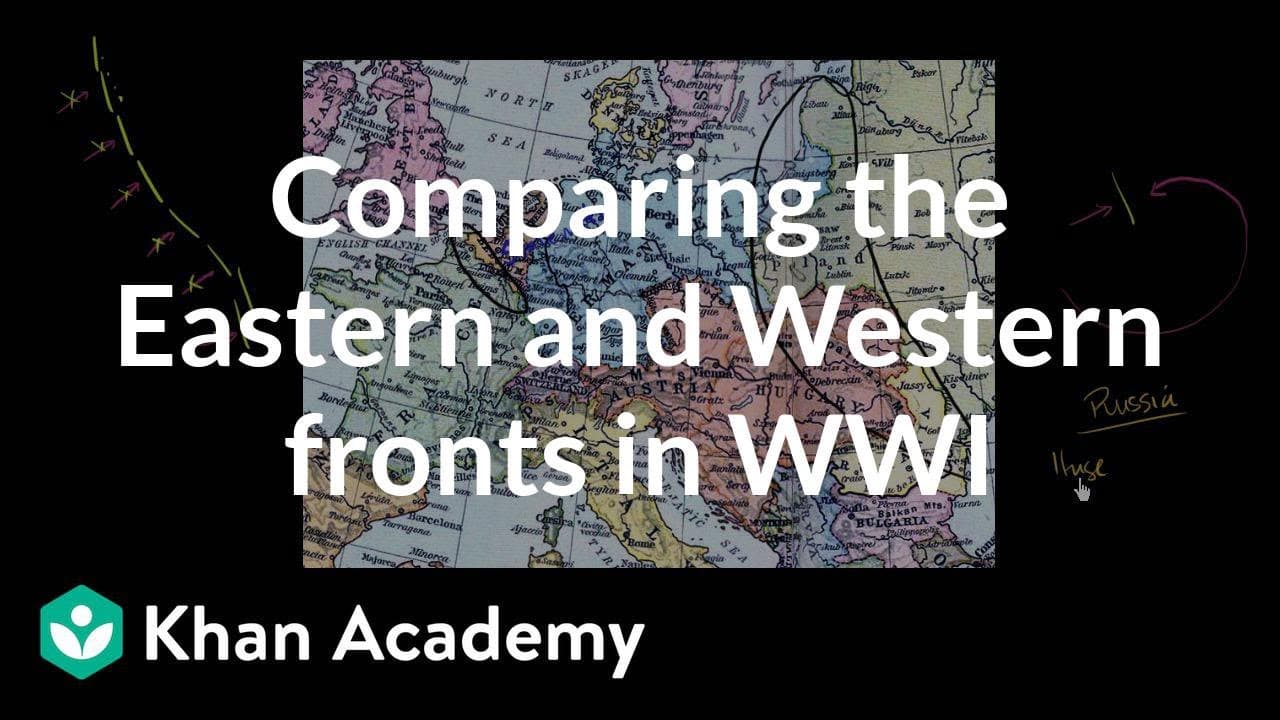
The Western Front became a stalemate due to trench warfare, while the Eastern Front was more fluid and eventually withdrew from the war.
Transcript
The Eastern and Western fronts, even though they were fronts of the same war, were very different in character. And a lot of it came out of the fact of who was fighting it and especially how big the actual fronts were. So the Western Front, which was generally this region right over here, was a much smaller front than the Eastern Front. The Eastern... Read More
Key Insights
- 🇪🇭 The Western and Eastern Fronts in World War I had different characteristics and outcomes.
- 🖐️ Trench warfare played a major role on the Western Front but was not as significant on the Eastern Front due to its size.
- 🫱 Russia's internal problems, including industry, communication, and morale issues, contributed to its withdrawal from the war through a treaty.
Install to Summarize YouTube Videos and Get Transcripts
Explore YouTube Video Summarizer or Get YouTube Transcript Extractor
Questions & Answers
Q: Why did trench warfare become a major factor on the Western Front but not the Eastern Front?
Trench warfare became a major factor on the Western Front because the defending armies could block off the entire region with trenches, making it difficult for attacking armies. However, the Eastern Front was too large to dig trenches across the entire front, allowing for more fluid movement.
Q: What were the main differences between the Western and Eastern Fronts in World War I?
The main differences were the size of the fronts and the extent of trench warfare. The Western Front was smaller and experienced a stalemate due to entrenched defending armies. On the other hand, the Eastern Front was larger and had less trench warfare, leading to more fluid offensives.
Q: How did Russia's internal problems affect its participation in the war?
Russia had a large army but faced issues with industry, communication, and morale. These problems, exacerbated by the economic and human cost of the war, led to the February Revolution and the abdication of Tsar Nicholas II. The Russian military and Bolsheviks were in no mood to continue fighting, ultimately leading to a treaty and withdrawal from the war.
Q: Why did the Western Front turn into a stalemate?
The Western Front turned into a stalemate primarily because of trench warfare. Defending armies had a significant advantage with machine guns and the ability to mow down attacking armies. This, coupled with the slow execution of the Schlieffen Plan, resulted in a defensive stalemate.
Summary & Key Takeaways
-
The Western Front, a smaller front, became a stalemate due to trench warfare, with defending armies having a significant advantage.
-
The Eastern Front, a larger front, had less trench warfare, allowing for more fluid offensives and counter-offensives between the German, Austrian, and Russian armies.
-
Russia's internal problems, including a large army but issues with industry, communication, and morale, led to its eventual withdrawal from the war through a treaty with the Central Powers.
Read in Other Languages (beta)
Share This Summary 📚
Summarize YouTube Videos and Get Video Transcripts with 1-Click
Try YouTube Summary with ChatGPT & Claude or YouTube Transcript Generator
Explore More Summaries from Khan Academy 📚



Summarize YouTube Videos and Get Video Transcripts with 1-Click
Try YouTube Summary with ChatGPT & Claude or YouTube Transcript Generator