What Are Trump's Trade Policies and Their Impact?
TL;DR
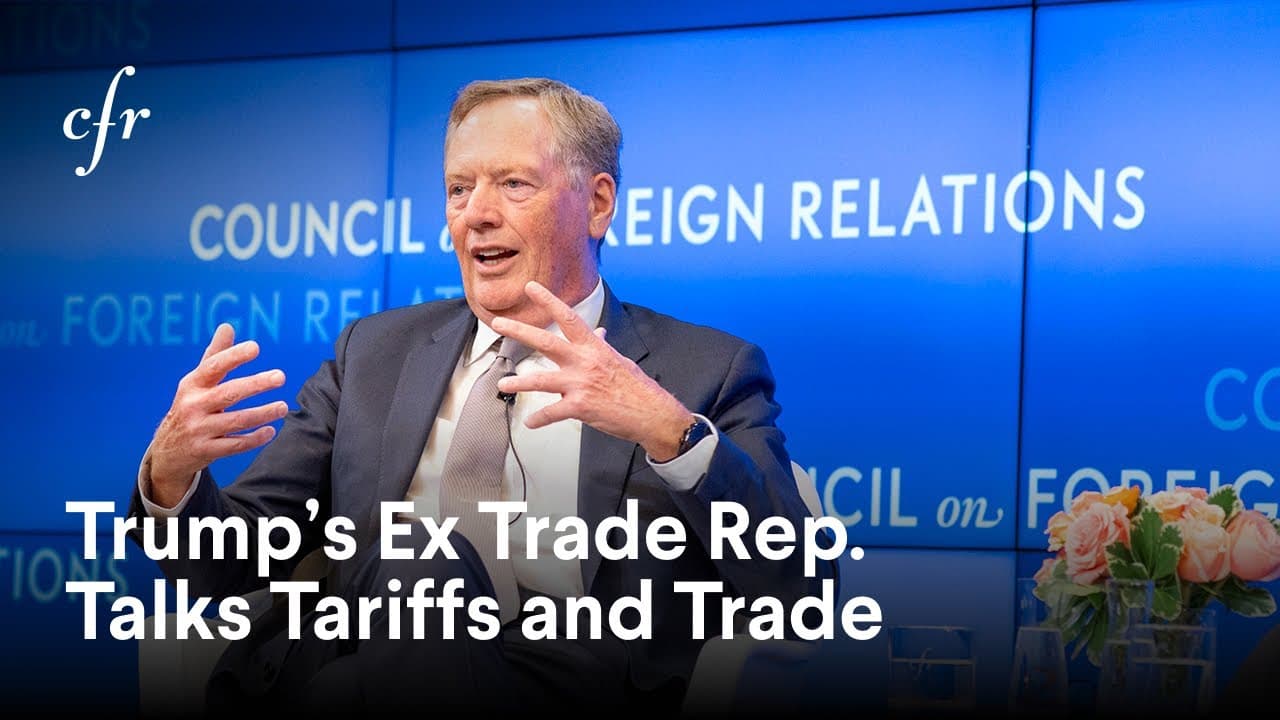
Trump's trade policies, led by former Trade Representative Robert Lighthizer, aim to address trade deficits and protect American manufacturing through tariffs. Lighthizer argues that these tariffs are necessary to counter foreign industrial policies that harm the U.S. economy, as trade deficits have transferred significant wealth overseas and diminished manufacturing jobs. He emphasizes the importance of manufacturing for economic growth and innovation.
Transcript
FROMAN: Well, good evening, everybody. It is really a great pleasure to have you here tonight. This is part of the C. Peter McColough Series on International Economics. And it’s a real personal pleasure to be able to invite Ambassador Robert Lighthizer to join us, a member of the Council. All of you know he served as U.S. trade rep in the fir... Read More
Key Insights
- Robert Lighthizer, former U.S. Trade Representative, discusses the Trump administration's trade strategies, emphasizing the need for tariffs and industrial policy to combat trade imbalances.
- Lighthizer argues that the U.S. has experienced significant economic decline due to trade deficits, which have transferred American wealth overseas and reduced manufacturing jobs.
- He highlights the importance of manufacturing to the U.S. economy, noting its role in productivity, innovation, and employment, particularly for the working class.
- Lighthizer criticizes the notion that trade deficits are harmless, asserting that they result in the loss of national wealth and future earnings to other countries.
- The discussion touches on the impact of tariffs, with Lighthizer defending them as necessary tools to counteract foreign industrial policies and protect U.S. industries.
- He acknowledges the challenges in implementing tariffs but argues they are politically feasible and necessary for rebalancing global trade.
- The conversation explores the role of the U.S. dollar, with Lighthizer suggesting its overvaluation harms manufacturing but benefits financial sectors.
- Lighthizer supports industrial policies like the CHIPS Act, arguing that subsidies are essential to compete with countries that heavily invest in their industries.
Install to Summarize YouTube Videos and Get Transcripts
Explore YouTube Video Summarizer or Get YouTube Transcript Extractor
Questions & Answers
Q: What is Robert Lighthizer's view on trade deficits?
Lighthizer views trade deficits as a significant problem for the U.S. economy. He argues that they result in the transfer of American wealth and future earnings overseas, making the country poorer. He believes that trade deficits have led to a decline in manufacturing jobs and economic growth, contributing to income inequality and reduced innovation.
Q: How does Lighthizer justify the use of tariffs?
Lighthizer justifies tariffs as a necessary tool to counteract foreign industrial policies that disadvantage U.S. industries. He argues that tariffs help protect American manufacturing jobs and prevent the loss of national wealth. Lighthizer believes that tariffs are politically feasible and essential for rebalancing global trade, despite criticisms of their impact on downstream industries.
Q: What is Lighthizer's stance on manufacturing vs. service jobs?
Lighthizer emphasizes the importance of manufacturing jobs over service jobs, particularly for the working class. He argues that manufacturing is crucial for economic growth, innovation, and productivity. Lighthizer believes that the decline in manufacturing has led to stagnating wages and reduced opportunities for many Americans, contributing to income inequality.
Q: How does Lighthizer view the role of the U.S. dollar in trade?
Lighthizer suggests that the U.S. dollar's overvaluation harms manufacturing while benefiting financial sectors. He argues that the strong dollar, driven by its role as a reserve currency and safe haven, makes U.S. exports less competitive. Lighthizer believes that a weaker dollar could benefit manufacturing and help address trade imbalances.
Q: What are Lighthizer's thoughts on industrial policy?
Lighthizer supports industrial policies like the CHIPS Act, arguing that subsidies are essential to compete with countries that heavily invest in their industries. He believes that without such policies, the U.S. will struggle to maintain its manufacturing base and technological leadership. Lighthizer sees industrial policy as a necessary complement to tariffs in addressing global trade challenges.
Q: Does Lighthizer believe the U.S. can catch up to China in critical technologies?
Lighthizer acknowledges that China has made significant advancements in critical technologies due to its longstanding industrial policies. However, he believes it is not too late for the U.S. to catch up. Lighthizer argues that the U.S. must act quickly and implement both tariffs and industrial policies to address the threat posed by China's technological rise.
Q: What is Lighthizer's perspective on Chinese investment in the U.S.?
Lighthizer is wary of Chinese investment in the U.S., particularly in sectors related to technology and data. He views China as a national security threat and believes that allowing Chinese companies to invest in critical industries could lead to espionage and data security risks. Lighthizer advocates for treating Chinese investment differently from other foreign investments in sensitive areas.
Q: How does Lighthizer respond to criticisms of tariff implementation?
Lighthizer acknowledges that implementing tariffs is challenging and may have flaws. However, he argues that significant changes are never without difficulties. Lighthizer believes that tariffs are necessary to address trade imbalances and protect U.S. industries. He suggests that over time, the implementation of tariffs can be refined to achieve the desired outcomes while minimizing negative impacts.
Summary & Key Takeaways
-
Robert Lighthizer, former U.S. Trade Representative, discusses the Trump administration's trade policies, focusing on tariffs and their role in addressing trade imbalances. He argues that trade deficits have harmed the U.S. economy by transferring wealth overseas and reducing manufacturing jobs.
-
Lighthizer emphasizes the importance of manufacturing for economic growth and innovation, criticizing the shift towards service jobs. He defends tariffs as necessary to counteract foreign industrial policies and protect U.S. industries, despite criticisms of their impact on downstream sectors.
-
The discussion also covers the U.S. dollar's role in global trade, with Lighthizer suggesting its overvaluation benefits financial sectors but harms manufacturing. He supports industrial policies like the CHIPS Act, arguing that subsidies are necessary to compete globally.
Read in Other Languages (beta)
Share This Summary 📚
Summarize YouTube Videos and Get Video Transcripts with 1-Click
Try YouTube Summary with ChatGPT & Claude or YouTube Transcript Generator
Explore More Summaries from Council on Foreign Relations 📚


Summarize YouTube Videos and Get Video Transcripts with 1-Click
Try YouTube Summary with ChatGPT & Claude or YouTube Transcript Generator