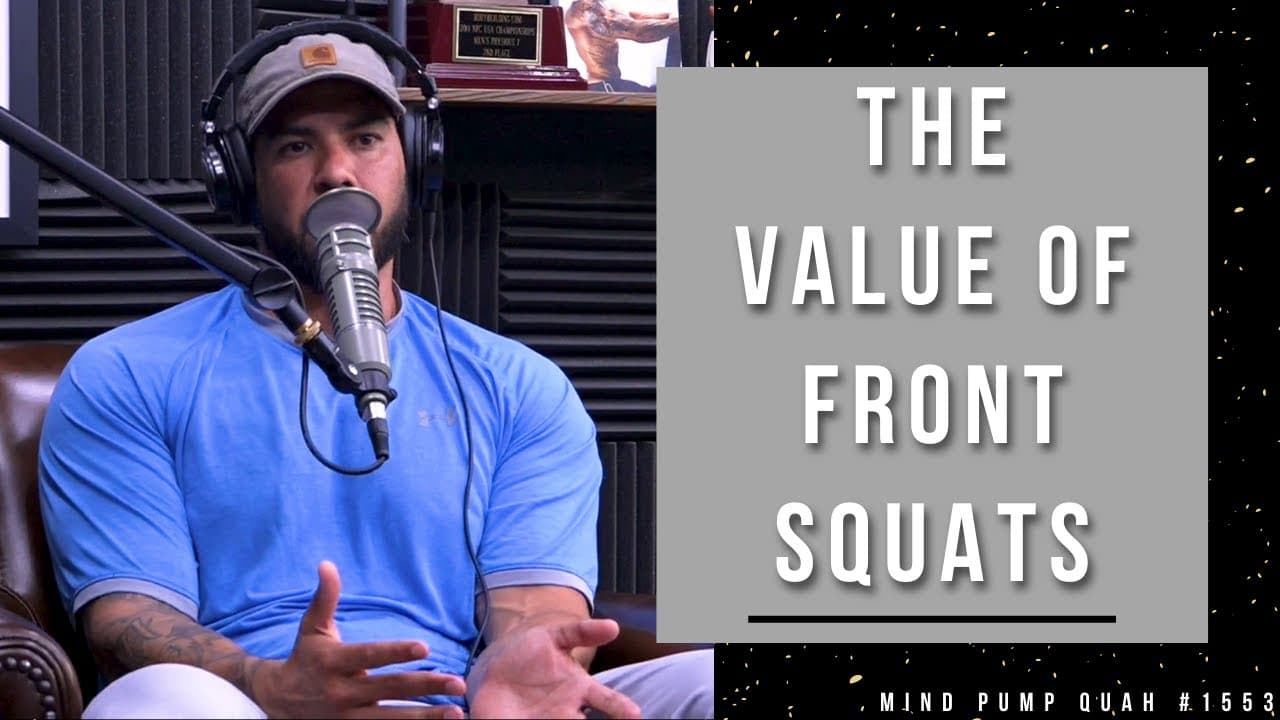
Should You Be Able To Front Squat The Same Weight As Back Squat
TL;DR
Front and back squats are different exercises with unique benefits.
Transcript
next question is from joe d fury are front squats the incline bench for legs and should you be able to front squat the same weight as back squat yeah i don't understand the first part of that are front squats the incline bench oh i see i see what's going on yeah like basically getting a different angle yeah yeah you kind of say that yeah yeah yeah ... Read More
Key Insights
- Front squats and back squats, while both squat exercises, engage different muscle groups and have distinct benefits, similar to how incline and flat bench presses differ.
- Front squats require an upright posture and emphasize the quads and upper mid-back stabilization, making them a valuable tool for developing proper form in beginners.
- Back squats involve the posterior chain, including the glutes, allowing for heavier lifting due to the engagement of larger muscle groups.
- Combining front and back squats in a single workout can lead to significant leg development, as each exercise targets different muscle areas effectively.
- Olympic lifters, known for their superior technique, often incorporate front squats into their routines, whereas powerlifters focus more on back squats due to the heavier weights involved.
- Regularly incorporating front squats into a workout routine can provide substantial benefits, though they may not be as frequent as back squats.
- Challenging oneself to improve front squat performance relative to back squats, akin to matching incline and flat bench presses, can lead to enhanced overall strength and muscle development.
- Front squats can be particularly beneficial for those involved in exercises like power cleans, as they improve the catch position and overall lifting efficiency.
Install to Summarize YouTube Videos and Get Transcripts
Explore YouTube Video Summarizer or Get YouTube Transcript Extractor
Questions & Answers
Q: Why are front squats compared to incline bench presses?
Front squats are compared to incline bench presses because both exercises offer a different angle and muscle engagement compared to their more traditional counterparts, back squats and flat bench presses. This analogy highlights how each exercise targets different muscle groups and emphasizes different aspects of form and technique, providing unique benefits.
Q: What are the primary muscle groups targeted by front squats?
Front squats primarily target the quadriceps and require significant upper mid-back stabilization. The exercise demands an upright posture, which engages the core and upper back muscles. This focus on posture and stabilization makes front squats particularly beneficial for developing proper form and strength in the quads and upper body.
Q: How do back squats differ in muscle engagement compared to front squats?
Back squats engage the posterior chain, including the glutes and lower back, allowing for heavier lifting due to the involvement of larger muscle groups. This exercise involves more forward bending, which shifts the focus to the back of the body, unlike front squats, which emphasize the quads and upright posture.
Q: What is the benefit of combining front and back squats in a workout?
Combining front and back squats in a workout provides comprehensive leg development by targeting different muscle areas. Front squats focus on quads and upper back stabilization, while back squats engage the posterior chain. This combination allows for balanced muscle growth and improved overall leg strength, enhancing the effectiveness of a workout.
Q: Why are Olympic lifters considered the best squatters?
Olympic lifters are considered the best squatters due to their superior technique, form, and strength. They often incorporate front squats to refine their lifting skills and improve efficiency in exercises like power cleans. Their focus on technique and power makes them exemplary in executing squats with precision and effectiveness.
Q: How often should front squats be included in a workout routine?
Front squats should be included in a workout routine regularly, though not as frequently as back squats. Incorporating them every two to three months can provide substantial benefits, including improved posture, quad strength, and overall muscle development. Regular inclusion ensures balanced leg training and enhances overall lifting performance.
Q: What is the challenge of matching front squat performance to back squats?
Matching front squat performance to back squats is challenging due to the different muscle engagements and lifting mechanics. Front squats emphasize quads and upright posture, while back squats involve larger muscle groups like the glutes, allowing for heavier weights. Despite the challenge, striving to improve front squat performance can lead to enhanced strength and muscle growth.
Q: Why are front squats beneficial for exercises like power cleans?
Front squats are beneficial for exercises like power cleans as they improve the catch position and overall lifting efficiency. The upright posture and quad engagement required in front squats enhance the ability to transition into the catch phase of power cleans, making them a valuable exercise for improving technique and strength in Olympic lifts.
Summary & Key Takeaways
-
Front squats and back squats serve different purposes in a workout routine, similar to the difference between incline and flat bench presses. Front squats focus on posture and quad engagement, while back squats target the posterior chain.
-
Incorporating both front and back squats into a workout can lead to comprehensive leg development. Front squats emphasize quads and upper back stabilization, while back squats allow for heavier lifting by engaging larger muscle groups.
-
Olympic lifters often use front squats to refine their technique, whereas powerlifters focus on back squats for lifting heavier weights. Regular inclusion of front squats in workouts can enhance strength and muscle growth.
Read in Other Languages (beta)
Share This Summary 📚
Summarize YouTube Videos and Get Video Transcripts with 1-Click
Try YouTube Summary with ChatGPT & Claude or YouTube Transcript Generator
Explore More Summaries from Mind Pump Show 📚



Summarize YouTube Videos and Get Video Transcripts with 1-Click
Try YouTube Summary with ChatGPT & Claude or YouTube Transcript Generator