Was Roman Concrete Better?
TL;DR
Exploring why Roman concrete lasts longer than modern concrete.
Transcript
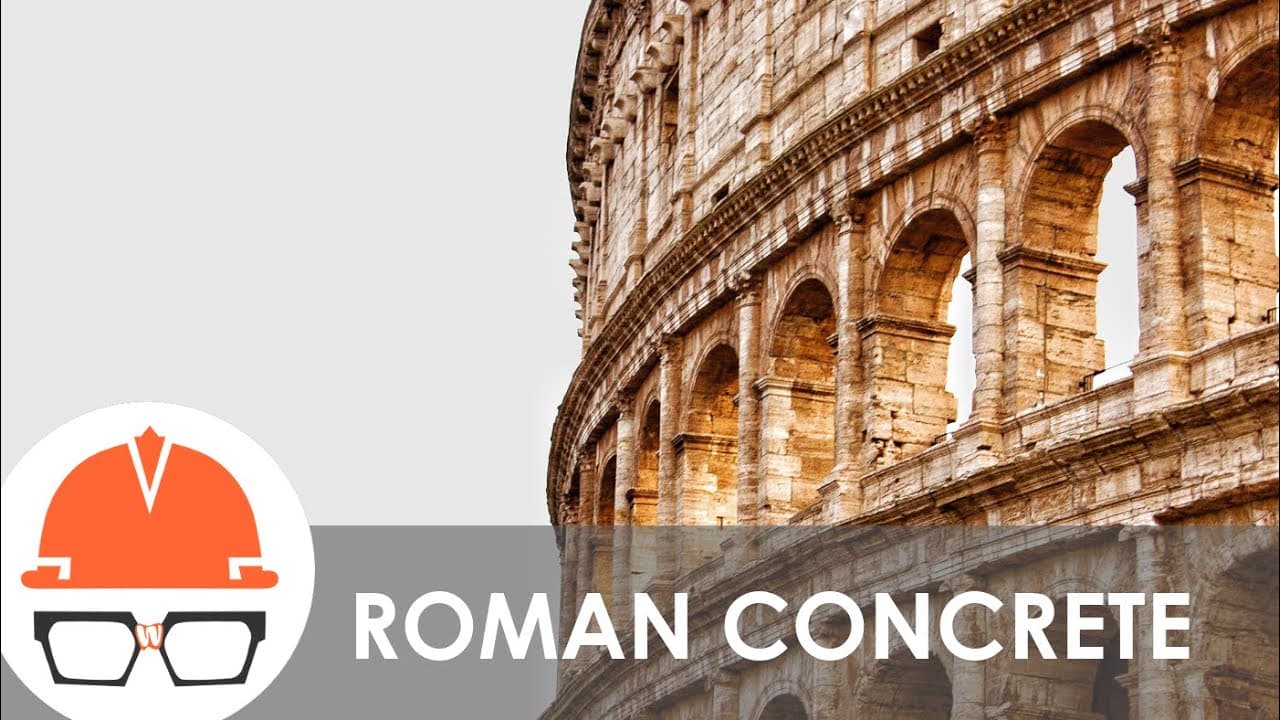
The largest unreinforced concrete dome in world is on the Pantheon. It’s not a modern marvel, but rather an ancient Roman temple built almost two thousand years ago. So, if concrete structures from the western Roman Empire can last for thousands of years, why does modern infrastructure look like this after only a couple of decades? Hey I’m Grady an... Read More
Key Insights
- The Pantheon in Rome, built almost two thousand years ago, has the largest unreinforced concrete dome, showcasing the durability of Roman concrete.
- Modern concrete structures often deteriorate due to the corrosion of steel reinforcement, which expands and causes cracking and spalling.
- Romans avoided steel reinforcement by using architectural techniques like arches and domes to keep concrete in compression, minimizing tensile stress.
- Roman concrete's durability is partly due to its unique chemistry, including the use of seawater and volcanic ash, which creates durable minerals.
- Modern concrete can be made more durable with advanced mix designs and chemical admixtures, such as superplasticizers, which reduce water content while maintaining workability.
- Roller Compacted Concrete (RCC) is a modern technique that mimics Roman methods, using less water and compacting the mix to increase strength.
- Economic factors influence modern infrastructure design, often prioritizing cost over longevity, unlike Roman structures built to last centuries.
- The science of concrete continues to advance, and modern techniques may result in structures that eventually outlast Roman ones.
Install to Summarize YouTube Videos and Get Transcripts
Explore YouTube Video Summarizer or Get YouTube Transcript Extractor
Questions & Answers
Q: Why does Roman concrete last longer than modern concrete?
Roman concrete lasts longer primarily due to its unique chemistry and design techniques. The Romans used volcanic ash and seawater, which created durable minerals. They also avoided steel reinforcement, using architectural designs like arches to keep concrete in compression, reducing the risk of deterioration from tensile stress.
Q: What is the main cause of deterioration in modern concrete structures?
The main cause of deterioration in modern concrete structures is the corrosion of steel reinforcement. When steel rusts, it expands, causing cracks and spalling in the concrete. This problem is exacerbated by environmental factors and the presence of water, which accelerates the corrosion process.
Q: How did the Romans keep their concrete structures durable without reinforcement?
The Romans used architectural techniques to keep their concrete structures in compression, minimizing tensile stress and the need for reinforcement. They employed designs like arches and domes, which naturally resisted compressive forces. Additionally, the massive size of their structures contributed to their stability and durability.
Q: What modern techniques improve the design life of concrete?
Modern techniques to improve the design life of concrete include advanced mix designs and chemical admixtures like superplasticizers, which reduce water content while maintaining workability. Roller Compacted Concrete (RCC) is another technique that uses less water and compacts the mix, similar to Roman methods, enhancing strength and durability.
Q: What role does chemistry play in the durability of concrete?
Chemistry plays a crucial role in concrete durability. The ratio of water to cement affects strength; less water generally results in stronger concrete. Roman concrete's use of volcanic ash and seawater created durable minerals, while modern concrete benefits from chemical admixtures that improve properties like workability and strength.
Q: Why is cost a factor in the longevity of modern concrete structures?
Cost is a factor because infrastructure is often funded by taxes, and building to last centuries, like Roman structures, can be expensive. Engineers must balance longevity with economic feasibility, often leading to designs that meet minimum requirements rather than maximizing lifespan. This economic constraint impacts the durability of modern structures.
Q: How does Roller Compacted Concrete (RCC) mimic Roman methods?
Roller Compacted Concrete (RCC) mimics Roman methods by using a dry mix with less water, similar to Roman practices. RCC is compacted into place using vibratory rollers, enhancing its strength and durability. It often includes ash, akin to Roman concrete, and is used in large, unreinforced structures like dams.
Q: What advancements in concrete technology could lead to longer-lasting structures?
Advancements in concrete technology, such as improved mix designs and chemical admixtures like superplasticizers, can lead to longer-lasting structures. These innovations allow for stronger, more durable concrete with lower water content. Continued research and development in concrete chemistry and engineering techniques may result in structures that surpass the longevity of Roman concrete.
Summary & Key Takeaways
-
The video explores why Roman concrete structures, such as the Pantheon, have lasted for centuries, while modern concrete often deteriorates quickly. The Romans used architectural techniques to keep concrete in compression, avoiding the need for steel reinforcement, which corrodes and weakens modern structures.
-
Roman concrete's unique chemistry, including the use of seawater and volcanic ash, contributed to its durability. Modern concrete can achieve similar strength with advanced mix designs and chemical admixtures, such as superplasticizers, which allow for lower water content while maintaining workability.
-
Economic considerations often lead modern engineers to prioritize cost over longevity in infrastructure design. Despite this, advancements in concrete technology may result in modern structures that eventually outlast those of the Romans. The video also discusses Roller Compacted Concrete, a modern technique inspired by Roman methods.
Read in Other Languages (beta)
Share This Summary 📚
Summarize YouTube Videos and Get Video Transcripts with 1-Click
Try YouTube Summary with ChatGPT & Claude or YouTube Transcript Generator
Explore More Summaries from Practical Engineering 📚

Summarize YouTube Videos and Get Video Transcripts with 1-Click
Try YouTube Summary with ChatGPT & Claude or YouTube Transcript Generator