How Can Shrinking Cities Thrive Despite Decline?
TL;DR
Shrinking cities can thrive by adopting smart shrinkage strategies that focus on leveraging their unique advantages, such as reduced congestion and affordable housing. By repurposing urban spaces and emphasizing quality of life improvements, these cities can maintain economic vitality even with declining populations. Proximity to larger metropolitan areas can also enhance their growth potential.
Transcript
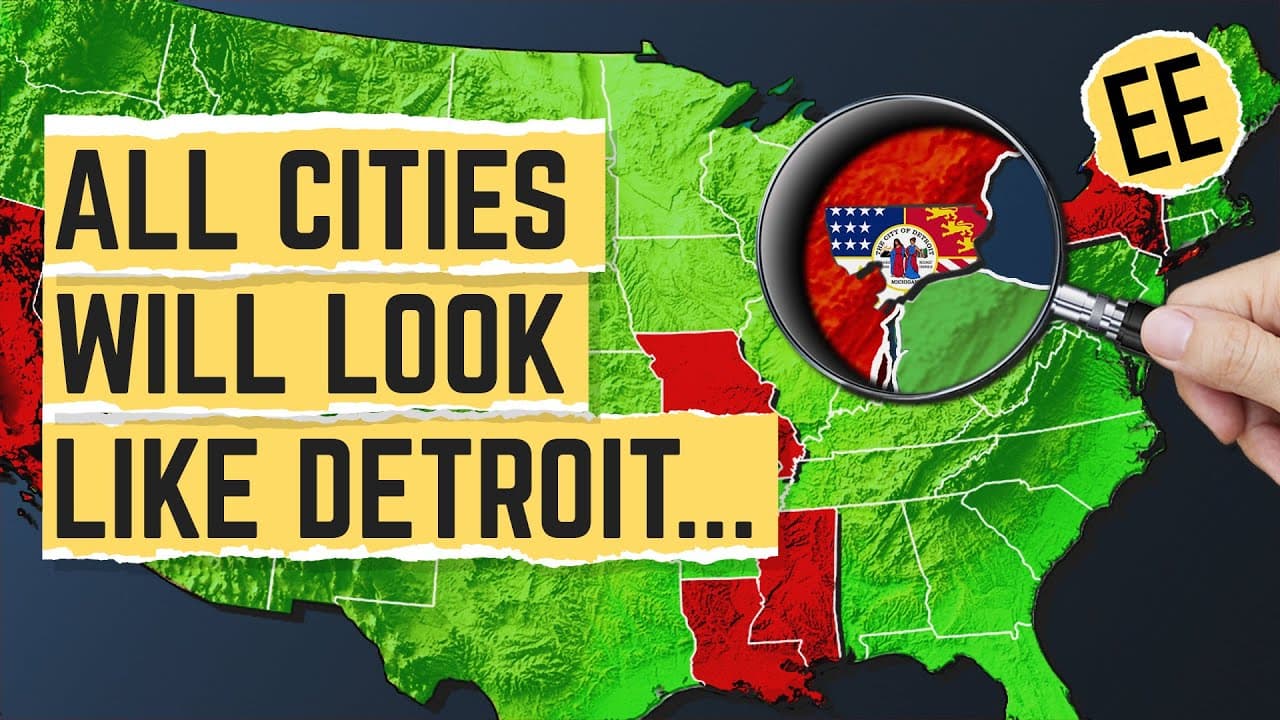
this is Detroit a previously wealthy city that has now become the poster CH for the places that economic Prosperity has left behind the story of Detroit's decline from an economic Powerhouse to a city where roughly 35% of its residents live below the poverty line is so well documented that will receive very little value from rehashing it here to ov... Read More
Key Insights
- Detroit's decline exemplifies how once-thriving cities can struggle economically due to industrial shifts and population loss.
- A significant portion of cities worldwide are experiencing population decline, with projections indicating this trend will grow.
- Shrinking cities face reduced property tax revenue and government funding, complicating infrastructure maintenance and public services.
- Employment opportunities diminish in shrinking cities, leading to further economic challenges and resident outmigration.
- Incentives like housing subsidies may attract residents but are not always sustainable solutions for long-term growth.
- Smart shrinkage proposes adapting cities to smaller populations by repurposing spaces and focusing on quality of life improvements.
- Some shrinking cities, like New Orleans, maintain economic vitality despite population loss, highlighting potential for smart urban planning.
- Proximity to larger metropolitan areas can benefit shrinking cities, providing economic support and opportunities for collaboration.
Install to Summarize YouTube Videos and Get Transcripts
Explore YouTube Video Summarizer or Get YouTube Transcript Extractor
Questions & Answers
Q: What caused Detroit to lose a significant portion of its population?
Detroit's population decline is primarily attributed to the collapse of its auto manufacturing industry, which faced competition from foreign manufacturers. As jobs became scarce, residents who could afford to leave did so, resulting in a significant population decrease. The city struggled to pivot to new industries, exacerbating the economic downturn.
Q: How do shrinking cities impact local economies?
Shrinking cities experience a reduction in property tax revenue and government funding, which are critical for maintaining infrastructure and public services. As populations decline, the demand for housing decreases, leading to lower property values and further reducing tax revenue. This financial strain makes it challenging to provide essential services and attract new residents or businesses.
Q: What are some strategies cities use to attract new residents?
Cities implement various strategies to attract new residents, ranging from tax breaks and improved amenities to more creative solutions like offering free homes. However, these incentives may not always address underlying issues such as low fertility rates or limited immigration and may not be sustainable in the long term for cities with significant population decline.
Q: Can shrinking cities maintain economic prosperity?
Yes, some shrinking cities manage to maintain economic prosperity despite population loss. This is often achieved through smart urban planning, which focuses on adapting to smaller populations by repurposing spaces and investing in quality of life improvements. Cities like New Orleans demonstrate that economic vitality can be sustained even as populations decline.
Q: What is smart shrinkage in urban planning?
Smart shrinkage is an urban planning approach that embraces population decline by repurposing existing urban spaces to promote environmental and social goals. Instead of expanding infrastructure, cities focus on maintaining and improving current facilities, creating green spaces, and enhancing quality of life. This strategy aims to leverage the advantages of smaller populations, such as reduced congestion and more affordable housing.
Q: How does proximity to larger metropolitan areas benefit shrinking cities?
Proximity to larger metropolitan areas provides economic support and opportunities for collaboration, which can benefit shrinking cities. These larger cities can serve as economic anchors, offering employment opportunities, resources, and connectivity that smaller cities can leverage. This relationship can help smaller cities maintain economic vitality and improve quality of life for residents.
Q: What are the challenges of maintaining infrastructure in shrinking cities?
Maintaining infrastructure in shrinking cities is challenging due to reduced tax revenue and government funding. As populations decline, the financial resources available to maintain roads, utilities, and public services diminish. This often leads to deteriorating infrastructure, abandoned buildings, and inadequate services, which can further discourage new residents and businesses from moving to the city.
Q: How does urban depopulation affect public services in shrinking cities?
Urban depopulation affects public services by reducing the financial resources available to maintain and improve them. As populations decline, cities receive less tax revenue and government funding, making it difficult to provide essential services such as education, healthcare, and public safety. This can lead to a decline in service quality, further exacerbating the challenges faced by shrinking cities.
Summary & Key Takeaways
-
Detroit's decline from an economic powerhouse to a city with significant poverty is emblematic of the challenges faced by shrinking cities. These cities experience reduced tax revenue and employment opportunities, leading to further economic difficulties and population loss.
-
Urban depopulation is a growing trend, with projections indicating that a significant percentage of cities will continue to shrink. This necessitates a shift in urban planning strategies to focus on adapting to smaller populations and improving quality of life.
-
Smart shrinkage is an approach that emphasizes the benefits of smaller populations, such as reduced congestion and more affordable housing, while repurposing urban spaces for environmental and social goals. This strategy can help cities maintain economic vitality despite population decline.
Read in Other Languages (beta)
Share This Summary 📚
Summarize YouTube Videos and Get Video Transcripts with 1-Click
Try YouTube Summary with ChatGPT & Claude or YouTube Transcript Generator
Explore More Summaries from Economics Explained 📚



Summarize YouTube Videos and Get Video Transcripts with 1-Click
Try YouTube Summary with ChatGPT & Claude or YouTube Transcript Generator