The Taliban, explained
TL;DR
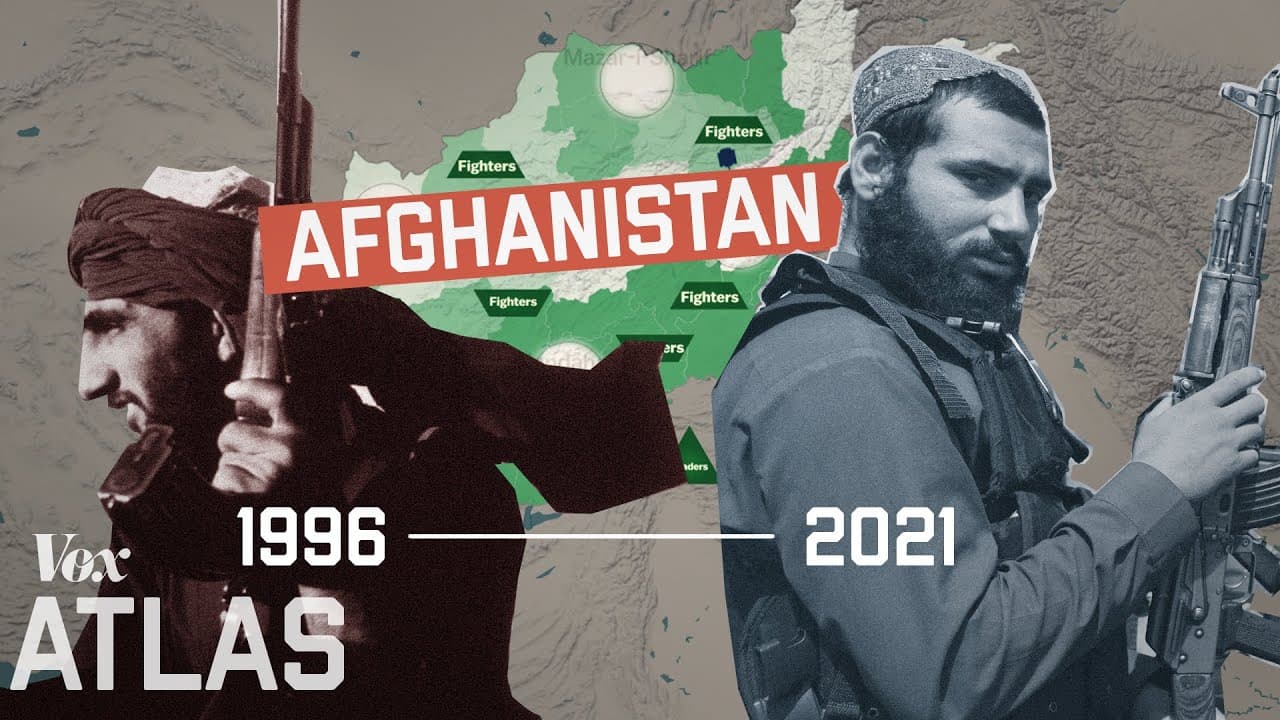
The Taliban regained control of Afghanistan due to historical and geopolitical factors.
Transcript
The one that was really dangerous for me was the time that we needed to distribute the books and notebooks to the very far village. I was working with an international organization teaching the girls out there. So we put all the books in the back of the car. Of course, my father-in-law and a driver accompany me. During the way, crossing the road,... Read More
Key Insights
- The Taliban initially emerged from chaos in Afghanistan during the 1990s, formed by Islamic teachers and students who imposed strict order amidst civil war.
- The Soviet invasion in 1979 led to the formation of mujahideen groups, which eventually resisted Soviet forces and later fractured, paving the way for the Taliban's rise.
- The Taliban's initial rule from 1996 to 2001 was marked by strict religious governance, including severe restrictions on women and cultural practices.
- Support from Pakistan and involvement in the opium trade significantly bolstered the Taliban's resources and influence, facilitating their territorial expansion.
- US intervention post-9/11 toppled the Taliban regime, but efforts to rebuild Afghanistan were marred by corruption and misallocation of resources, particularly neglecting rural areas.
- The Taliban capitalized on local grievances, including US military actions that harmed civilians, to recruit fighters and regain territory over the years.
- The 2020 US-Taliban deal and subsequent withdrawal of US troops in 2021 enabled the Taliban to swiftly retake control of Afghanistan.
- The current Taliban regime is diverse and unpredictable, with potential internal conflicts over governance and interpretations of Islam.
Install to Summarize YouTube Videos and Get Transcripts
Explore YouTube Video Summarizer or Get YouTube Transcript Extractor
Questions & Answers
Q: How did the Taliban initially come to power in Afghanistan?
The Taliban emerged from the chaos of civil war in Afghanistan during the 1990s. Initially formed by Islamic teachers and students, they capitalized on the disarray and instability left by the fracturing mujahideen groups. With support from local populations seeking stability and backing from Pakistan, the Taliban imposed strict order and took control of the capital, Kabul, in 1996.
Q: What role did the Soviet invasion play in the rise of the Taliban?
The Soviet invasion of Afghanistan in 1979 led to the formation of mujahideen groups that resisted Soviet forces. These groups were initially united in their opposition but later fractured after the Soviets withdrew, leading to civil war. The resulting chaos and instability created a power vacuum that the Taliban exploited to rise to power in the 1990s.
Q: What were the key characteristics of the Taliban's rule from 1996 to 2001?
During their rule from 1996 to 2001, the Taliban enforced a strict interpretation of Islamic law, heavily influenced by Pashtun culture. They imposed severe restrictions on women, banning them from education and work, and prohibited cultural activities like music and television. Their governance was marked by harsh punishments, including public executions, which led to limited international recognition.
Q: How did the Taliban manage to regain power in 2021?
The Taliban's resurgence in 2021 was facilitated by several factors, including the US-Taliban deal in 2020, which promised the withdrawal of US troops. The Afghan government, weakened by corruption and lack of public trust, collapsed as the Taliban launched a swift offensive. The withdrawal of international forces left a power vacuum that the Taliban quickly filled, taking control of Kabul with little resistance.
Q: What impact did US intervention have on Afghanistan post-9/11?
US intervention post-9/11 toppled the Taliban regime and aimed to rebuild Afghanistan. However, efforts were undermined by corruption within the Afghan government and misallocation of resources, particularly neglecting rural areas. US military actions, including drone strikes, often harmed civilians, fostering resentment and aiding Taliban recruitment efforts. The intervention had mixed outcomes, with urban reforms but persistent rural instability.
Q: What strategies did the Taliban use to fund their operations?
The Taliban funded their operations through several strategies, including taxing highways and engaging in the illegal opium trade. They also received substantial support from Pakistan, which provided weapons, training, and safe havens for Taliban leaders. These resources enabled the Taliban to expand their influence and sustain their insurgency against Afghan and international forces.
Q: How did local grievances contribute to the Taliban's resurgence?
Local grievances played a significant role in the Taliban's resurgence. Many rural Afghans were disillusioned with the corrupt Afghan government and suffered from US military actions that harmed civilians. These grievances made the Taliban an attractive alternative for many, as they promised protection and governance, even if it was under a strict religious framework. The Taliban's ability to exploit these grievances helped them recruit fighters and regain territory.
Q: What challenges does the current Taliban regime face in governing Afghanistan?
The current Taliban regime faces several challenges, including internal divisions over governance and interpretations of Islam. Their leadership is predominantly Pashtun, but their base is more diverse, which could lead to conflicts. Additionally, the international community's pressure for human rights, particularly women's rights, poses a challenge. The regime's ability to maintain cohesion and address these issues will significantly impact Afghanistan's future stability.
Summary & Key Takeaways
-
The Taliban's roots trace back to the Soviet invasion of Afghanistan in 1979, which prompted the formation of mujahideen groups. These groups later fractured, leading to civil war and the rise of the Taliban in the 1990s.
-
The Taliban's initial rule was characterized by strict religious policies, severe restrictions on women, and a lack of international recognition. Support from Pakistan and involvement in the opium trade aided their expansion.
-
US intervention post-9/11 displaced the Taliban, but subsequent efforts to rebuild Afghanistan were undermined by corruption and neglect of rural areas. The Taliban capitalized on local grievances to regain power, culminating in their 2021 resurgence.
Read in Other Languages (beta)
Share This Summary 📚
Summarize YouTube Videos and Get Video Transcripts with 1-Click
Try YouTube Summary with ChatGPT & Claude or YouTube Transcript Generator
Explore More Summaries from Vox 📚




Summarize YouTube Videos and Get Video Transcripts with 1-Click
Try YouTube Summary with ChatGPT & Claude or YouTube Transcript Generator