Digestive System, Part 2: Crash Course Anatomy & Physiology #34
TL;DR
Explores digestion from mouth to stomach, using historical insights.
Transcript
In the summer of 1822, a French-Canadian fur-trapper named Alexis St. Martin was going about his business near Lake Michigan, when he was shot by a hunter, right in the stomach. The wound was severe, and everyone expected St. Martin to die that night. But…he didn’t. A local army doctor named William Beaumont kept him alive. In fact, Beaumont perfor... Read More
Key Insights
- William Beaumont's experiments on Alexis St. Martin revealed crucial insights into the digestive process, including the role of stomach acids and muscular contractions in breaking down food.
- The digestive process begins in the mouth with mechanical and chemical breakdown of food through chewing and enzyme action, facilitated by saliva and teeth.
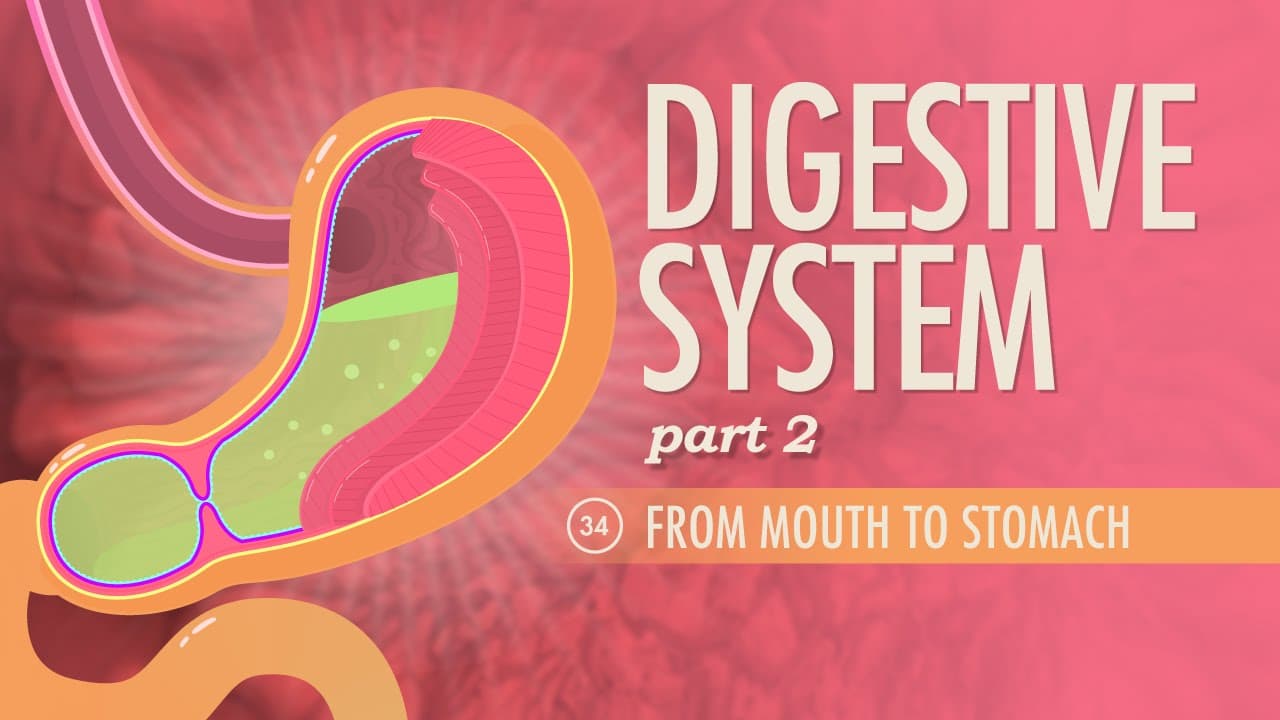
- The stomach's structure, including its layers and gastric glands, is specialized to perform both storage and active digestion, using strong acids and enzymes.
- The cephalic, gastric, and intestinal phases of digestion regulation demonstrate the interplay between neural and hormonal signals in preparing and processing food.
- Beaumont observed that the brain can influence digestion, with stress or illness affecting stomach activity, highlighting the mind-stomach connection.
- Vomiting can be triggered by various factors, including overeating, ingesting toxins, or emotional stress, as a protective mechanism to expel harmful substances.
- The stomach's role is not only to digest food but also to decontaminate it, preventing pathogens from entering the body through the digestive tract.
- The historical case of Alexis St. Martin provided a unique opportunity to study the digestive system, leading to significant advancements in physiology.
Install to Summarize YouTube Videos and Get Transcripts
Explore YouTube Video Summarizer or Get YouTube Transcript Extractor
Questions & Answers
Q: What were William Beaumont's contributions to the understanding of digestion?
William Beaumont conducted pioneering experiments on Alexis St. Martin, who had a stomach wound that allowed direct observation of digestion. Beaumont's work revealed the role of stomach acids and muscular contractions in breaking down food, the influence of the brain on digestion, and the varying digestibility of different foods. His methods revolutionized physiology.
Q: How does digestion begin in the mouth?
Digestion starts in the mouth with mechanical and chemical breakdown. Teeth and the tongue work together to chew food, forming a bolus. Salivary glands produce saliva containing enzymes like amylase, which begins starch digestion. This initial process prepares food for further digestion in the stomach, highlighting the mouth's crucial role.
Q: What is the role of the stomach in digestion?
The stomach acts as a storage and digestion chamber, holding 2 to 4 liters of material. It uses strong acids and enzymes, like hydrochloric acid and pepsin, to break down food into a creamy paste called chyme. The stomach also serves as a decontamination tank, destroying harmful pathogens before they enter the intestines.
Q: How is stomach activity regulated?
Stomach activity is regulated in three phases: cephalic, gastric, and intestinal. The cephalic phase involves brain signals triggered by sensory stimuli. The gastric phase is activated by food in the stomach, stimulating acid and enzyme release. The intestinal phase controls stomach emptying to prevent intestinal overload, ensuring efficient digestion.
Q: What is the mind-stomach connection observed by Beaumont?
Beaumont observed that stress and illness affected St. Martin's digestion, demonstrating the mind-stomach connection. Emotional and physical states can influence stomach activity, as neural signals from the brain impact digestive processes. This connection highlights how psychological factors can affect physiological functions in the digestive system.
Q: What can trigger vomiting as a protective mechanism?
Vomiting can be triggered by overeating, ingesting toxins, or emotional stress. It serves as a protective mechanism to expel harmful substances from the body. Factors like bad bacteria, excessive alcohol, certain drugs, or unappealing foods can prompt this response, safeguarding the body from potential harm by ejecting the contents of the stomach.
Q: What are the phases of digestive regulation?
Digestive regulation occurs in three phases: cephalic, gastric, and intestinal. The cephalic phase is initiated by sensory input, the gastric phase by food in the stomach, and the intestinal phase by chyme entering the small intestine. These phases involve neural and hormonal signals that coordinate digestion, ensuring food is processed efficiently and safely.
Q: How did Alexis St. Martin's case contribute to physiology?
Alexis St. Martin's case provided a unique opportunity for direct observation of the digestive process through his stomach wound. Dr. William Beaumont's experiments revealed key insights into digestion, such as the role of stomach acids and the influence of the brain. This case significantly advanced the understanding of human physiology and digestive mechanisms.
Summary & Key Takeaways
-
In the early 19th century, Alexis St. Martin's stomach wound allowed Dr. William Beaumont to conduct groundbreaking experiments on digestion, revealing the role of stomach acids and muscular contractions in breaking down food. This case highlighted the importance of clinical observation in advancing physiological knowledge.
-
Digestion begins in the mouth, where mechanical and chemical processes break down food. Saliva, teeth, and the tongue play crucial roles in forming a bolus, which is then transported to the stomach. The stomach further digests food using powerful acids and enzymes, turning it into chyme.
-
The regulation of stomach activity occurs in three phases: cephalic, gastric, and intestinal. These phases are controlled by both neural and hormonal signals, ensuring efficient digestion and preventing overload of the small intestine. Emotional and physical factors can influence these processes, demonstrating the mind-stomach connection.
Read in Other Languages (beta)
Share This Summary 📚
Summarize YouTube Videos and Get Video Transcripts with 1-Click
Try YouTube Summary with ChatGPT & Claude or YouTube Transcript Generator
Explore More Summaries from CrashCourse 📚


Summarize YouTube Videos and Get Video Transcripts with 1-Click
Try YouTube Summary with ChatGPT & Claude or YouTube Transcript Generator