What Is Visual Inspection in Non-Destructive Testing?
TL;DR
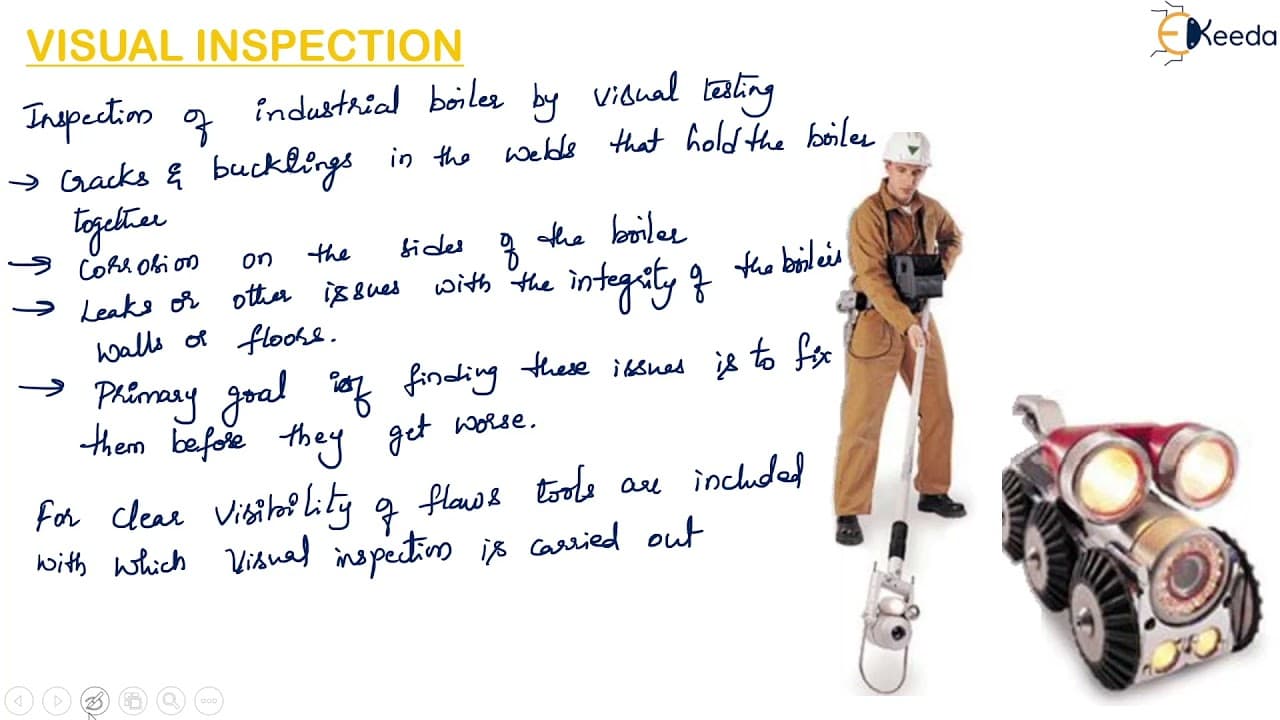
Visual inspection is a fundamental non-destructive testing method that examines components using the naked eye or aided by tools to identify surface flaws. While it is cost-effective and provides immediate results, it is limited in detecting hidden defects and requires an experienced inspector to interpret findings accurately.
Transcript
hello students today let us discuss the basic and most common ndt method that is the visual inspection so as the name is indicating visual inspection is nothing but inspection of a component or the asset which is done by using our naked eyes so visual inspection is an inspection of a component made using only the naked eyes so this type of inspecti... Read More
Key Insights
- 😃 Visual inspection is a fundamental NDT method relying on the naked eye or tools for defect detection.
- 🫢 It is extensively used in industries like oil and gas, power, and mining for regular maintenance.
- 🉐 Advantages include cost-effectiveness, immediate results, and minimal preparation requirements.
- 🕵️ Limitations of visual inspection include surface defect detection, potential misinterpretation of flaws, and inability to detect hidden defects.
- 🔍 Aided tools like fiberscopes, boroscopes, magnifying glasses, and mirrors enhance visual inspection capabilities.
- 🎮 Developments like portable video inspection units and robotic crawlers have improved inspection efficiency in hazardous conditions.
- 🕵️ Visual inspection is essential for identifying surface flaws but may not detect internal or hidden defects.
Install to Summarize YouTube Videos and Get Transcripts
Explore YouTube Video Summarizer or Get YouTube Transcript Extractor
Questions & Answers
Q: What is visual inspection, and how does it differ from other NDT methods?
Visual inspection is a method of examining components using the naked eye or aided tools to detect surface flaws. Unlike other NDT methods, it relies primarily on visual observation for defect identification.
Q: What are the industries that commonly use visual inspection for maintenance processes?
Visual inspection is widely used in industries such as oil and gas, power, chemical, mining, and food sectors as part of their regular maintenance processes to ensure component integrity.
Q: What are the advantages of visual inspection over other NDT methods?
Visual inspection is cost-effective, requires minimal equipment, provides immediate results, and does not need extensive preparation of the part being inspected, making it a portable and efficient method.
Q: What are the limitations of visual inspection in defect detection?
Visual inspection is limited to detecting surface defects and requires experienced inspectors for accurate interpretation. It may not detect hidden defects or internal flaws, leading to potential misinterpretation of flaws.
Summary & Key Takeaways
-
Visual inspection involves examining components with naked eyes or tools to detect flaws.
-
It is commonly used in various industries for regular maintenance.
-
Advantages include cost-effectiveness and immediate results, but limitations exist for detecting hidden defects.
Read in Other Languages (beta)
Share This Summary 📚
Summarize YouTube Videos and Get Video Transcripts with 1-Click
Try YouTube Summary with ChatGPT & Claude or YouTube Transcript Generator
Explore More Summaries from Ekeeda 📚






Summarize YouTube Videos and Get Video Transcripts with 1-Click
Try YouTube Summary with ChatGPT & Claude or YouTube Transcript Generator