The sounds of the Letter C in European Portuguese
TL;DR
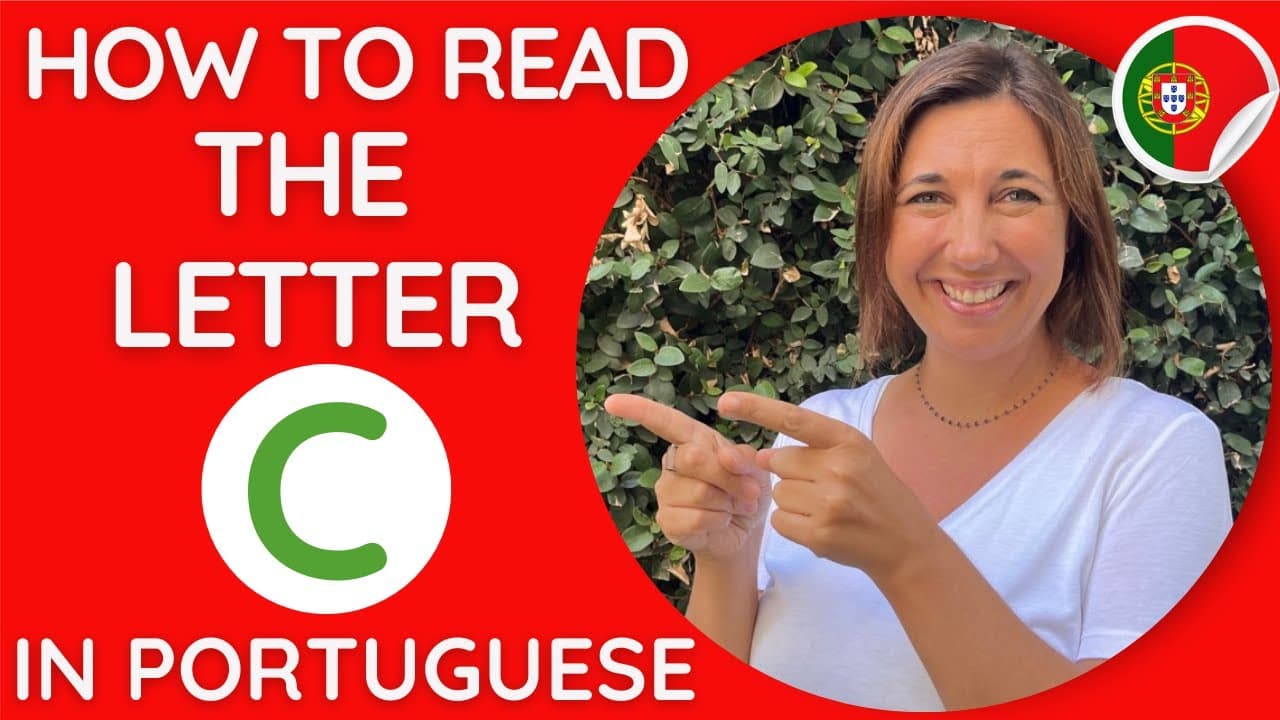
Learn the different sounds of the letter C in Portuguese.
Transcript
Olá a todos! I am back for another pronunciation video. If you are a beginner, mastering pronunciation should be your first focus to guarantee you are comfortable speaking in Portuguese. Today we will be covering the sounds of the letter C. I also wanted to share that my book club is back! We will be reading another book by Valter Hugo Mãe call... Read More
Key Insights
- The letter C in Portuguese can be pronounced as a soft 's' or a hard 'k', depending on the context and accompanying vowels.
- When C is followed by consonants like CL or CR, it maintains a hard 'k' sound, similar to English.
- C followed by vowels A, O, or U retains the 'k' sound, while followed by E or I, it shifts to a 's' sound.
- The cedilha (Ç) is used with A, O, or U and never with E or I, marking a soft 's' sound in specific words.
- The pronunciation rules for C are straightforward, aligning closely with English, making it easier for English speakers to learn.
- Common Portuguese words with C include cognates with English, where 'tion' converts to 'ção', aiding in vocabulary building.
- Understanding the nuances of C pronunciation is crucial for beginners to gain confidence in speaking Portuguese.
- The video also promotes a book club and offers various study options, including guided sessions via Zoom.
Install to Summarize YouTube Videos and Get Transcripts
Explore YouTube Video Summarizer or Get YouTube Transcript Extractor
Questions & Answers
Q: What are the two main sounds of the letter C in Portuguese?
The letter C in Portuguese can be pronounced as a hard 'k' sound or a soft 's' sound. The pronunciation depends on the vowels or consonants that follow it. When followed by A, O, or U, C is pronounced as 'k', and when followed by E or I, it is pronounced as 's'.
Q: How is the cedilha (Ç) used in Portuguese?
The cedilha (Ç) is used in Portuguese to give the letter C a soft 's' sound when combined with the vowels A, O, or U. It cannot be used with E or I, and its use is often dictated by the etymology of the word rather than strict rules.
Q: What are some common consonant clusters with the letter C?
In Portuguese, common consonant clusters with the letter C include CL and CR. These clusters maintain a hard 'k' sound similar to English. Examples include words like 'claro' (clear) and 'crime' (crime), where the C retains its hard pronunciation.
Q: How does the pronunciation of C change with different vowels?
The pronunciation of C changes based on the vowels it is combined with. When C is followed by A, O, or U, it sounds like 'k'. However, when followed by E or I, it changes to a 's' sound. This rule helps in correct pronunciation and understanding of Portuguese words.
Q: What are some examples of Portuguese words with the letter C?
Examples of Portuguese words with the hard 'k' sound include 'carro' (car) and 'costa' (coast). Words with the soft 's' sound include 'cinema' (cinema) and 'ciência' (science). These examples illustrate how the pronunciation changes with different vowel combinations.
Q: Why is mastering the pronunciation of C important for beginners?
Mastering the pronunciation of C is crucial for beginners as it builds confidence in speaking and understanding Portuguese. Correct pronunciation aids in communication and reduces misunderstandings. It also helps learners recognize patterns and apply rules across different words, enhancing language proficiency.
Q: How does the video support further learning beyond pronunciation?
The video supports further learning by promoting a book club and offering resources like a pronunciation playlist. It provides options for independent and guided study, including Zoom sessions to discuss books in Portuguese, thus enhancing both reading and speaking skills.
Q: What resources are offered for learning Portuguese pronunciation?
The video offers a pronunciation playlist packed with useful videos covering challenging sounds in Portuguese. It also encourages joining a book club for reading practice and provides guided study options, including Zoom calls for interactive learning. These resources are designed to improve pronunciation and overall language skills.
Summary & Key Takeaways
-
This video focuses on the pronunciation of the letter C in European Portuguese, explaining its different sounds and when to use each. It covers the hard 'k' and soft 's' sounds, along with the use of the cedilha.
-
The content provides clear rules for when C sounds like 'k' or 's', based on the vowels or consonants that follow it. It also highlights common pitfalls and offers tips for mastering these pronunciations.
-
In addition to pronunciation tips, the video promotes a book club and offers resources for further learning, including a pronunciation playlist and opportunities for guided study through Zoom calls.
Read in Other Languages (beta)
Share This Summary 📚
Summarize YouTube Videos and Get Video Transcripts with 1-Click
Try YouTube Summary with ChatGPT & Claude or YouTube Transcript Generator
Explore More Summaries from Learn European Portuguese Online 📚


Summarize YouTube Videos and Get Video Transcripts with 1-Click
Try YouTube Summary with ChatGPT & Claude or YouTube Transcript Generator