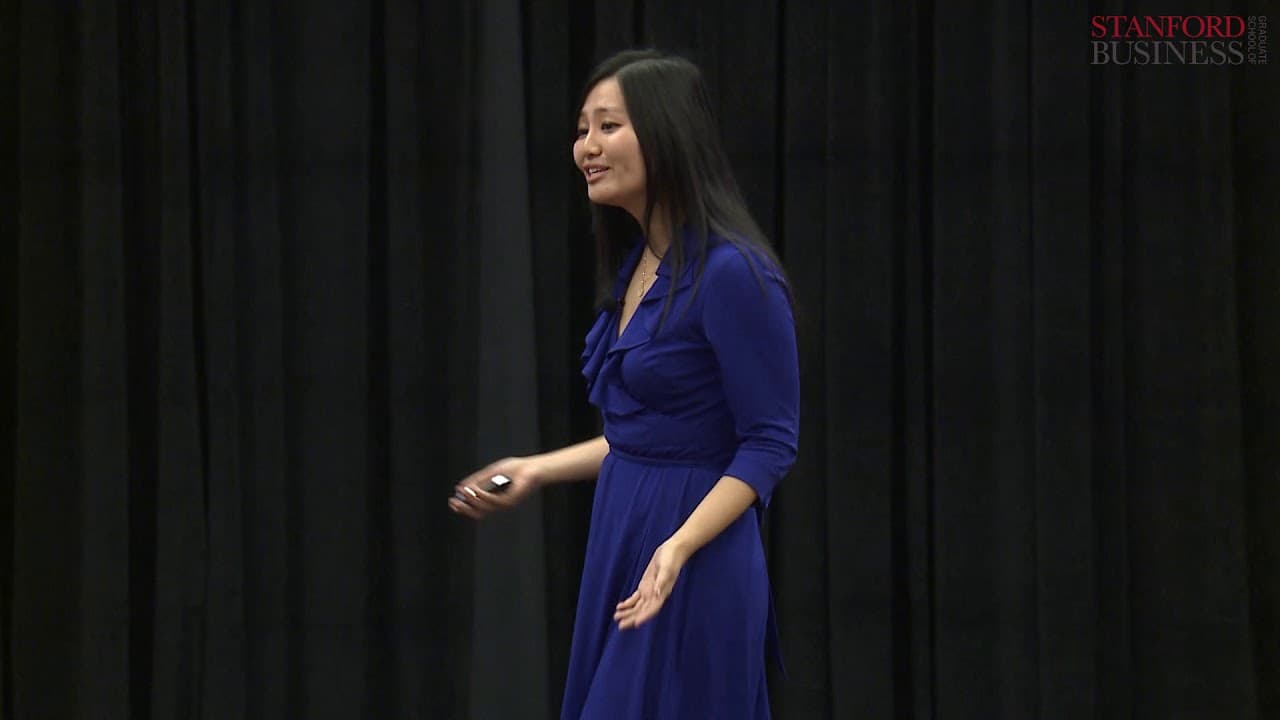
Julianne “JZ” Zhang, MBA ’19: Tabling the Conversation
TL;DR
Consistent family dinners have numerous benefits for children, and it is our responsibility as future leaders and parents to prioritize and save this art.
Transcript
[MUSIC] This is a picture of my family from 20 years ago. I know what you're thinking, I was a super cute kid. >> [LAUGH]
My mom is an incredible chef. Every time I go home, she makes all of my favorites, from springrolls to roasted pork. Ever since I can remember, my family ate dinner together every single night. You see, my parents wanted some... Read More
Key Insights
- 👪 Consistent family dinners have proven benefits for children's academic performance and overall well-being.
- 😅 Eating alone and distractions from technology have become prevalent during meal times, hindering genuine connection and engagement.
- 💦 Achieving work-life balance is challenging, but individuals can make an effort to leave work on time and prioritize family dinners.
- 👪 Policies within organizations can promote family time and prioritize family dinners.
- 👻 Gathering at the table for dinner allows for conversation, connection, and stronger relationships within the family.
- 🥰 Prioritizing family dinners is an art that requires moving beyond everyday distractions and being present for one another.
- 👪 Returning home for family dinners brings a sense of bliss and happiness that should be cherished and maintained.
Install to Summarize YouTube Videos and Get Transcripts
Explore YouTube Video Summarizer or Get YouTube Transcript Extractor
Questions & Answers
Q: How does frequent family dinners benefit children?
According to Columbia University, children who eat dinner with their parents at least five times a week are more likely to excel in school and are less likely to engage in unhealthy behaviors like smoking. These children also report feeling proud of their parents and confiding in them more.
Q: How has technology affected family dinners?
Smartphones have become a constant distraction during meal times, with people using them to watch shows, catch up on emails, and engage in various activities. This hinders genuine engagement and conversation during family dinners, which require everyone's presence and attention.
Q: How does work-life balance impact family dinners?
Achieving work-life balance is difficult, and many employees often find themselves staying at work longer to complete tasks. This can negatively affect family dinners, as they require individuals to leave work on time to spend quality time with their loved ones.
Q: What are some potential solutions to prioritize family dinners?
Policies within organizations can be implemented to prioritize family dinners, similar to how companies have maternity and paternity leave policies. Promoting family time and setting aside specific dinner hours can help employees balance work and family life.
Summary & Key Takeaways
-
The speaker reflects on their childhood experiences of consistent family dinners and how it fostered stronger relationships and provided stability amidst frequent moves.
-
Research from Columbia University shows that children who frequently eat dinner with their parents perform better in school, are less likely to smoke, and have closer relationships with their parents.
-
The speaker examines three challenges to the traditional family dinner: eating alone, distractions from smartphones, and the difficulty of achieving work-life balance.
Read in Other Languages (beta)
Share This Summary 📚
Summarize YouTube Videos and Get Video Transcripts with 1-Click
Try YouTube Summary with ChatGPT & Claude or YouTube Transcript Generator
Explore More Summaries from Stanford Graduate School of Business 📚






Summarize YouTube Videos and Get Video Transcripts with 1-Click
Try YouTube Summary with ChatGPT & Claude or YouTube Transcript Generator