How to Balance Uneven Leg Strength Effectively
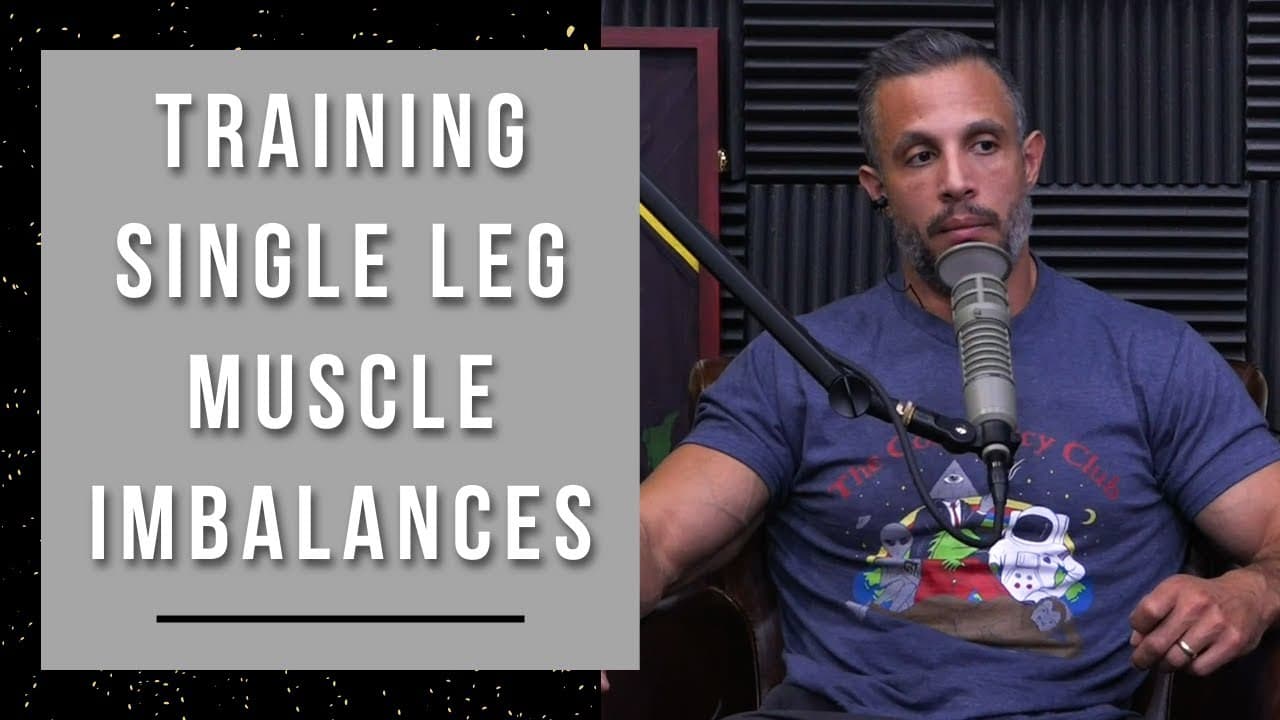
TL;DR
To correct imbalances between the right and left side of the body, focus on unilateral exercises. Start with the weaker side, using moderate intensity daily, then gradually reduce frequency while increasing workout duration. Avoid bilateral leg exercises to prevent reinforcing existing imbalances. Incorporate mobility exercises and use tools like suspension trainers for support.
Transcript
all right our next caller is nicole from california hey nicole how can we help you hey guys how's it going good so i will try to sum up um my whole uh story here in less than two minutes not take up too much time so um when i was about six months old i was diagnosed with spinal meningitis um what did actually happen was i was in stanford hospital f... Read More
Key Insights
- Unilateral exercises are crucial for correcting leg imbalances.
- Start with the weaker side to ensure balanced strength development.
- Avoid bilateral exercises to prevent reinforcing existing imbalances.
- Incorporate daily moderate-intensity unilateral training sessions.
- Gradually reduce frequency and increase workout duration as strength improves.
- Use tools like suspension trainers to support and guide movements.
- Include mobility exercises to enhance flexibility and stability.
- Focus on form and control over depth and range of motion initially.
Install to Summarize YouTube Videos and Get Transcripts
Explore YouTube Video Summarizer or Get YouTube Transcript Extractor
Questions & Answers
Q: How to correct leg imbalances effectively?
To correct leg imbalances, focus on unilateral exercises, starting with the weaker side. Engage in daily moderate-intensity workouts, gradually reducing frequency while increasing duration as strength improves. Avoid bilateral exercises to prevent reinforcing imbalances, and include mobility exercises to enhance flexibility and stability. Use tools like suspension trainers for support.
Q: Why are unilateral exercises important for imbalances?
Unilateral exercises are essential for correcting imbalances as they target each side of the body independently, allowing the weaker side to develop strength without interference from the stronger side. This approach helps prevent further imbalances and promotes even strength development, ensuring balanced muscle growth and improved overall function.
Q: What role does mobility play in correcting imbalances?
Mobility exercises enhance flexibility and stability, which are crucial for correcting imbalances. They help improve the range of motion and joint health, allowing for better execution of strength exercises. By incorporating mobility work, individuals can ensure that their movements are more controlled and effective, aiding in the overall correction of imbalances.
Q: How can suspension trainers help with leg imbalances?
Suspension trainers provide support and guidance during exercises, helping maintain proper form and control. They are especially useful for unilateral exercises, allowing individuals to focus on the weaker side without risking injury or reinforcing imbalances. By using suspension trainers, users can perform exercises with better stability and effectiveness.
Q: What is the importance of focusing on form over depth?
Focusing on form over depth ensures that exercises are performed correctly, reducing the risk of injury and promoting effective muscle activation. Proper form is crucial for targeting the right muscles and preventing compensatory movements that can exacerbate imbalances. As form improves, depth and range of motion can gradually increase without compromising technique.
Q: How does frequency affect imbalance correction?
High frequency of moderate-intensity unilateral training allows for consistent practice, helping to build strength and correct imbalances over time. As strength improves, frequency can be reduced, and workout duration increased to maintain progress. This approach ensures that the weaker side receives adequate attention, promoting balanced muscle development.
Q: Why avoid bilateral exercises for imbalances?
Bilateral exercises can reinforce existing imbalances by allowing the stronger side to compensate for the weaker side. This can lead to further disparity in strength and muscle development. By focusing on unilateral exercises, each side is worked independently, ensuring that the weaker side is adequately challenged and able to develop strength without reliance on the stronger side.
Q: What additional exercises can support imbalance correction?
In addition to unilateral exercises, incorporating single-leg calf raises, tibialis raises, and exercises targeting all muscles on the weaker side can support imbalance correction. These exercises ensure comprehensive muscle development, addressing all areas that may contribute to imbalance. Consistent practice and attention to form will lead to significant improvements over time.
Summary & Key Takeaways
-
To address leg imbalances, prioritize unilateral exercises, beginning with the weaker side. This approach prevents further imbalance and promotes even strength development. Use moderate intensity daily, then adjust frequency and duration as strength improves. Avoid bilateral exercises to prevent reinforcing existing imbalances and integrate mobility exercises to support flexibility and stability.
-
Using tools like suspension trainers can aid in maintaining proper form and control during exercises. Focus on slow, controlled movements, especially during the negative phase of exercises, to enhance stability and muscle activation. Ensure that the stronger leg mirrors the weaker leg's performance to maintain balance.
-
Incorporate a variety of exercises targeting all muscles on the weaker side, including single-leg calf raises and tibialis raises. Emphasize form and control over range of motion, and gradually increase the depth of exercises as strength and stability improve. Consistent practice and attention to form will lead to significant improvements over time.
Read in Other Languages (beta)
Share This Summary 📚
Summarize YouTube Videos and Get Video Transcripts with 1-Click
Try YouTube Summary with ChatGPT & Claude or YouTube Transcript Generator
Explore More Summaries from Mind Pump Show 📚

Summarize YouTube Videos and Get Video Transcripts with 1-Click
Try YouTube Summary with ChatGPT & Claude or YouTube Transcript Generator