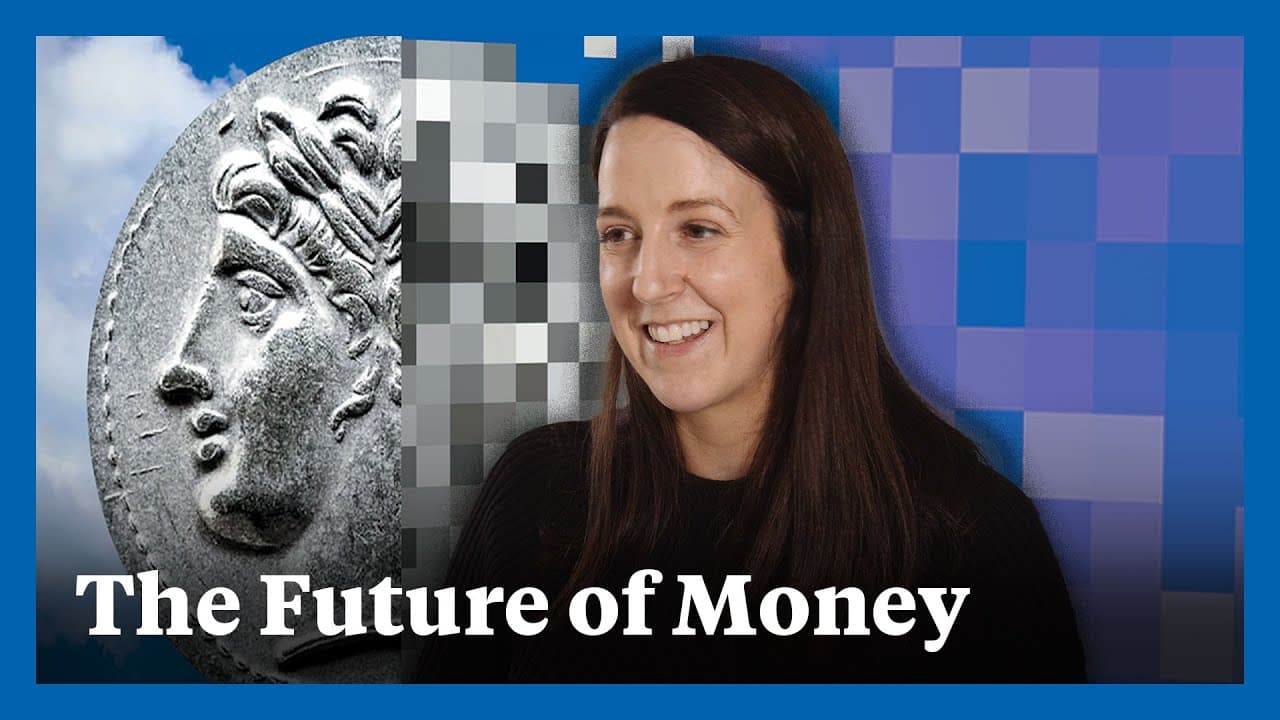
Platform capitalism is coming for your money | Rachel O'Dwyer on Tokens, NFTs, and Bitcoin
TL;DR
Tokens challenge traditional notions of money and expose the worthlessness of many aspects of our economy, serving as a platform for a new kind of financial system.
Transcript
a lot of people were getting very very kind of vexed or angry about nfts instead of saying I can't believe you know people are buying these things that have no intrinsic value like this they're they're worthless so much of our economy today is is just kind of worthless derivatives are worthless and fat money is worthless and so much of our our good... Read More
Key Insights
- 🤑 Tokens challenge the traditional definitions of money, serving as both more and less than traditional currency.
- 🥰 Art and money are belief systems that challenge existing systems of representation and trust.
- 🤑 Historical attempts to redefine money and create utopian societies share similarities with the current crypto and NFT movements.
Install to Summarize YouTube Videos and Get Transcripts
Explore YouTube Video Summarizer or Get YouTube Transcript Extractor
Questions & Answers
Q: What are tokens and how do they differ from money?
Tokens are both more and less than money, serving as imperfect means of exchange with strings attached regarding what or who can be bought with them. They can only be redeemed for specific goods or services and often have unique properties that differentiate them from traditional currency.
Q: What is the relationship between money and tokens in the art world?
Both money and tokens challenge traditional systems of representation in the art world. Tokens create new dynamics of value and sociality within the art market, while money is often seen as an exceptional economy within the cultural sphere.
Q: What historical influences can be seen in the current crypto and NFT movements?
The current crypto and NFT movements have historical parallels in anarchist and communal movements that sought to redesign money and create utopian societies. These movements often sought to bypass traditional governance and replace it with decentralized systems.
Q: How has the pandemic influenced the popularity of NFTs and cryptocurrencies?
The pandemic, along with societal disillusionment and lost faith in traditional economic systems, may have contributed to the popularity of NFTs and cryptocurrencies as alternative pathways to financial stability and success.
Key Insights:
- Tokens challenge the traditional definitions of money, serving as both more and less than traditional currency.
- Art and money are belief systems that challenge existing systems of representation and trust.
- Historical attempts to redefine money and create utopian societies share similarities with the current crypto and NFT movements.
- The popularity of NFTs and cryptocurrencies may be driven by a sense of lost faith in traditional economic systems and a search for alternative financial pathways.
Summary & Key Takeaways
-
Tokens are more and less than money, serving as imperfect means of exchange with strings attached regarding what or who can be bought with them.
-
Money and tokens are belief systems, challenging traditional systems of representation and trust in both the financial and art worlds.
-
The history of alternative money systems repeats itself, with previous attempts to redefine money and create utopian societies facing similar challenges as recent cryptocurrency movements.
Read in Other Languages (beta)
Share This Summary 📚
Summarize YouTube Videos and Get Video Transcripts with 1-Click
Try YouTube Summary with ChatGPT & Claude or YouTube Transcript Generator
Explore More Summaries from Verso Books 📚




Summarize YouTube Videos and Get Video Transcripts with 1-Click
Try YouTube Summary with ChatGPT & Claude or YouTube Transcript Generator