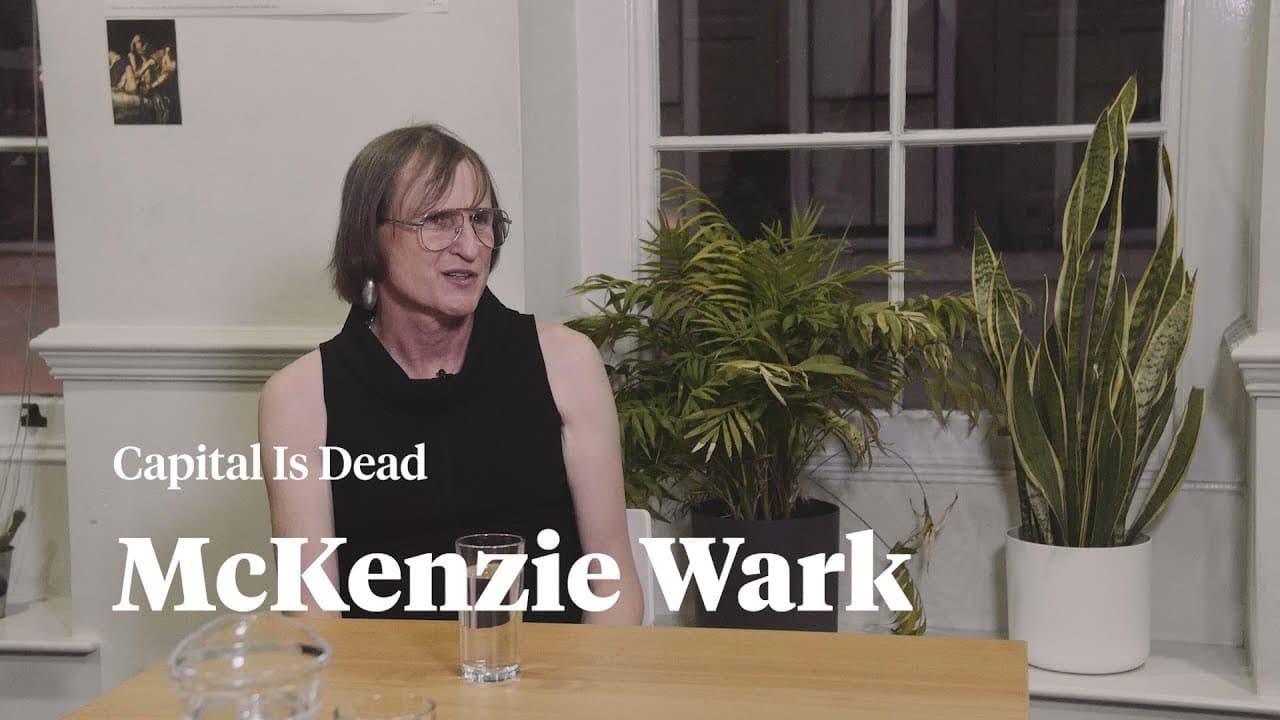
Capital Is Dead | McKenzie Wark in conversation with Verso Books
TL;DR
The content explores the need to question the concept of capitalism and introduces the idea of a new ruling class that controls information as a form of exploitation.
Transcript
one of the things I think is symptomatic of a kind of blockage in thinking is when the language starts to feel like it's not really doing the work and so we talked about capitalism but then we keep putting modifiers on the front of it so and the latest is to call it neoliberal capitalism so it's like wait a minute you're using a modifier that itsel... Read More
Key Insights
- ✊ Modifiers like "neoliberal capitalism" hinder our understanding of the changing dynamics of power and control.
- 💁 The ruling class in today's society is characterized by its control over the vector of information, such as storage, brands, and copyrights.
- 💁 The commodification of information has led to a new form of exploitation, where users unknowingly trade their personal information for apparently free services.
- 💁 Traditional forms of labor exploitation still exist, but the rise of information production adds a new layer of exploitation based on information asymmetry.
- 📳 Analyzing and understanding the forces of production, including the analysis of technics, is crucial to demystifying and challenging the dominant mode of production.
- 🌚 Labor movements and strikes face new challenges in an era where capital has found ways to outflank traditional labor power.
- 🏛️ The analysis of multiple ruling and subordinate classes and their internal hierarchies is essential in understanding the complexity of societal dynamics.
- 🌍 Language and theory need to be more creative and exploratory to capture the nuances of the modern world.
Install to Summarize YouTube Videos and Get Transcripts
Explore YouTube Video Summarizer or Get YouTube Transcript Extractor
Questions & Answers
Q: Why does the speaker argue against the use of modifiers like "neoliberal capitalism"?
The speaker believes that attaching modifiers to capitalism only serves to obscure the true nature of a new form of exploitation. Viewing it as capitalism limits our understanding of the changing dynamics of power and control.
Q: How does the speaker define the ruling class in today's society?
In today's society, the ruling class is not defined by ownership of the means of production but by their control and ownership of the vector of information. They have the power to control information, its storage, logistics, copyrights, and brands.
Q: How does the production of information contribute to exploitation?
The production of information, such as online search results or social media content, may seem free to users, but in reality, users are the products. Companies like Google or Apple collect and utilize users' information for their own gains, perpetuating information asymmetry and exploitation.
Q: What is the role of language in understanding and explaining the current world?
The speaker emphasizes the need for a more exploratory and creative approach to language to generate concepts that explain the complexities of the modern world. Borrowing from figures like Pasolini, they argue for a more poetic and playful use of language in theory and analysis.
Key Insights:
- Modifiers like "neoliberal capitalism" hinder our understanding of the changing dynamics of power and control.
- The ruling class in today's society is characterized by its control over the vector of information, such as storage, brands, and copyrights.
- The commodification of information has led to a new form of exploitation, where users unknowingly trade their personal information for apparently free services.
- Traditional forms of labor exploitation still exist, but the rise of information production adds a new layer of exploitation based on information asymmetry.
- Analyzing and understanding the forces of production, including the analysis of technics, is crucial to demystifying and challenging the dominant mode of production.
- Labor movements and strikes face new challenges in an era where capital has found ways to outflank traditional labor power.
- The analysis of multiple ruling and subordinate classes and their internal hierarchies is essential in understanding the complexity of societal dynamics.
- Language and theory need to be more creative and exploratory to capture the nuances of the modern world.
Note: Due to the content's nature and lack of a clear structure, the key insights may vary depending on the interpretation of the text.
Summary & Key Takeaways
-
The language used to describe capitalism, such as "neoliberal capitalism," is causing a blockage in thinking and obscuring the reality of a new form of exploitation.
-
The ruling class in today's society is defined by its control over information and the ability to manipulate and exploit it.
-
The rise of information production has led to the commodification of information as a new form of exploitation, adding to traditional labor exploitation.
Read in Other Languages (beta)
Share This Summary 📚
Summarize YouTube Videos and Get Video Transcripts with 1-Click
Try YouTube Summary with ChatGPT & Claude or YouTube Transcript Generator
Explore More Summaries from Verso Books 📚
Summarize YouTube Videos and Get Video Transcripts with 1-Click
Try YouTube Summary with ChatGPT & Claude or YouTube Transcript Generator