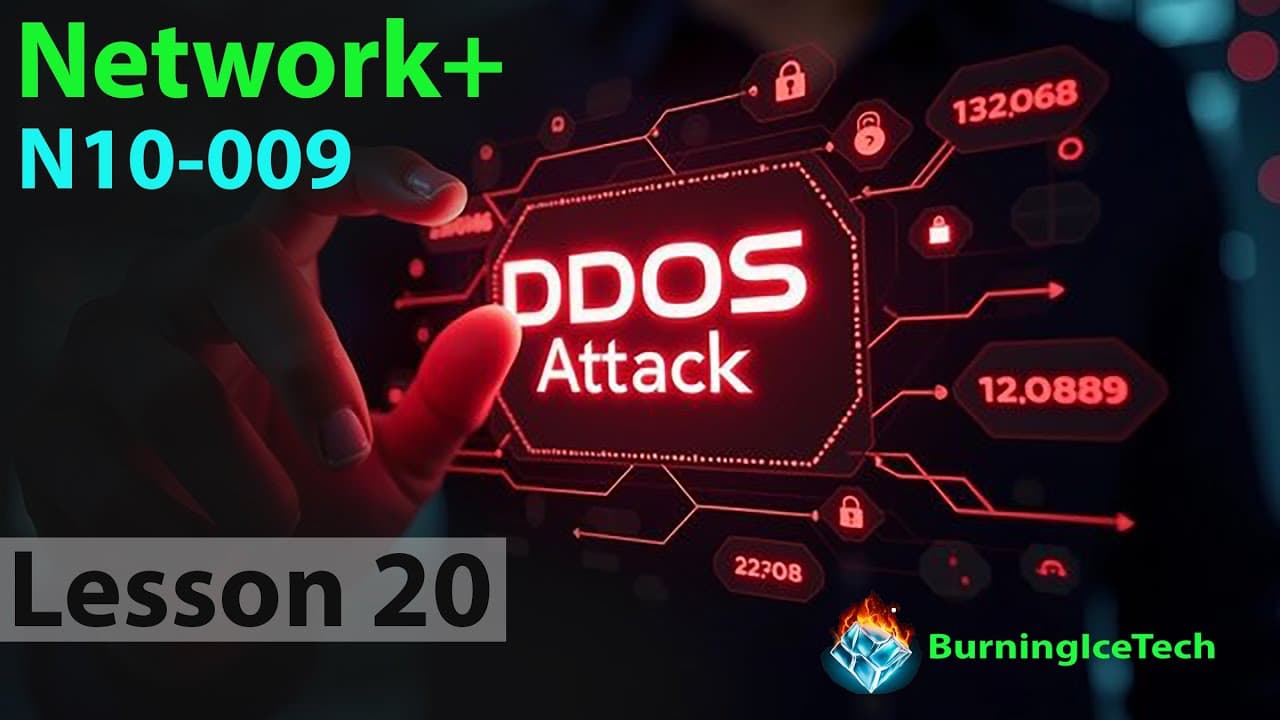
CompTIA Network+ N10-009 | Lesson 20 - Denial of Service (DoS)
TL;DR
Denial of Service attacks disrupt services by overwhelming systems.
Transcript
howy folks welcome to lesson 20 of network plus as you can see this lesson is about denial of service so let's start you guys off with what is denial of service now for those of you that don't know denial of service is often referred to as do for short so if you've got a manual or maybe if you've been doing some practice test anything along those l... Read More
Key Insights
- Denial of Service (DoS) attacks aim to deny users access to services by overwhelming the system with traffic, causing it to crash or become unresponsive.
- A common target for DoS attacks is the Print Spooler service, which can disrupt printing capabilities in organizations if overloaded.
- Distributed Denial of Service (DDoS) attacks involve multiple machines, often part of a botnet, to amplify the attack's scale and impact.
- Botnets consist of infected machines, known as bots or zombie PCs, which are controlled remotely by threat actors to perform malicious activities.
- DoS and DDoS attacks can be initiated by disgruntled employees, competitors, or hackers seeking to disrupt services for various reasons, including as a diversion for other attacks.
- Botnets can be used for multiple purposes, such as sending spam, relaying traffic, conducting DDoS attacks, or cracking passwords through brute force.
- The scale of botnets can be enormous, sometimes larger than the population of entire countries, posing significant challenges to cybersecurity.
- To protect against these attacks, it is crucial to maintain updated security software, use complex passwords, and employ anti-DDoS technologies.
Install to Summarize YouTube Videos and Get Transcripts
Explore YouTube Video Summarizer or Get YouTube Transcript Extractor
Questions & Answers
Q: What is a Denial of Service (DoS) attack?
A Denial of Service (DoS) attack is a malicious attempt to disrupt the normal functioning of a service by overwhelming it with a flood of traffic, causing it to crash or become unresponsive. This attack can target various services, such as servers, websites, or specific applications like the Print Spooler service.
Q: How does a Distributed Denial of Service (DDoS) attack differ from a DoS attack?
A Distributed Denial of Service (DDoS) attack is a type of DoS attack that involves multiple machines working together to amplify the attack's impact. These machines, often part of a botnet, are remotely controlled by hackers to overwhelm the target with an enormous volume of traffic, making it more challenging to defend against compared to a single-source DoS attack.
Q: What is a botnet and how is it used in cyber attacks?
A botnet is a network of infected machines, known as bots or zombie PCs, that are remotely controlled by threat actors. Botnets are used in cyber attacks to perform various malicious activities, such as sending spam, conducting Distributed Denial of Service (DDoS) attacks, relaying traffic, or cracking passwords through brute force. The combined resources of the botnet make it a powerful tool for hackers.
Q: What are some common reasons for initiating a DoS attack?
Common reasons for initiating a DoS attack include disgruntled employees seeking revenge, competitors aiming to disrupt services, hackers creating diversions for other attacks, or exploiting design flaws in systems. Additionally, some attacks may occur accidentally due to poor planning or system overloads from normal traffic.
Q: How can organizations protect themselves from DoS and DDoS attacks?
Organizations can protect themselves from DoS and DDoS attacks by implementing robust cybersecurity measures, such as using updated security software, employing anti-DDoS technologies, maintaining complex passwords, and monitoring network traffic for unusual activity. Additionally, educating employees about potential threats and vulnerabilities is crucial for effective defense.
Q: What role do botnets play in executing DDoS attacks?
Botnets play a crucial role in executing DDoS attacks by providing the necessary scale and resources to overwhelm a target system. By using a network of infected machines, hackers can generate massive volumes of traffic, making it difficult for the target to handle the load and increasing the likelihood of a successful attack.
Q: Why is it challenging to detect and mitigate botnet activities?
Detecting and mitigating botnet activities is challenging because the malware controlling the bots often uses minimal resources, making it difficult to notice. Additionally, botnets can consist of thousands or millions of machines, distributed globally, complicating efforts to identify and neutralize the threat. Cybersecurity measures must be continuously updated to address evolving tactics used by threat actors.
Q: What measures can individuals take to prevent their devices from becoming part of a botnet?
Individuals can prevent their devices from becoming part of a botnet by regularly updating their security software, using strong and unique passwords, avoiding suspicious downloads and links, and maintaining awareness of potential cybersecurity threats. It's also important to configure firewalls and network settings to prevent unauthorized access and monitor for signs of infection.
Summary & Key Takeaways
-
Denial of Service attacks, often abbreviated as DoS, aim to disrupt services by overwhelming them with traffic, causing systems to crash or become unresponsive. These attacks can target various services, including print spoolers, servers, and websites, and are often carried out by threat actors using botnets.
-
Distributed Denial of Service (DDoS) attacks involve multiple machines, known as bots or zombie PCs, which are remotely controlled by hackers. These botnets can consist of thousands or millions of infected machines, combining their resources to execute large-scale attacks.
-
DoS and DDoS attacks can be motivated by various factors, such as disgruntled employees, competitors, or hackers seeking to create diversions for other malicious activities. To mitigate these threats, organizations must employ robust cybersecurity measures and stay vigilant against potential vulnerabilities.
Read in Other Languages (beta)
Share This Summary 📚
Summarize YouTube Videos and Get Video Transcripts with 1-Click
Try YouTube Summary with ChatGPT & Claude or YouTube Transcript Generator
Explore More Summaries from BurningIceTech 📚


![CompTIA A+ Full Video Course for Beginners - Course Overview [1100 Series] thumbnail](/_next/image?url=https%3A%2F%2Fi.ytimg.com%2Fvi%2FYi3L8ZCX8zc%2Fhqdefault.jpg&w=750&q=75)
Summarize YouTube Videos and Get Video Transcripts with 1-Click
Try YouTube Summary with ChatGPT & Claude or YouTube Transcript Generator