What Is Senator Warren's Wealth Tax Proposal?
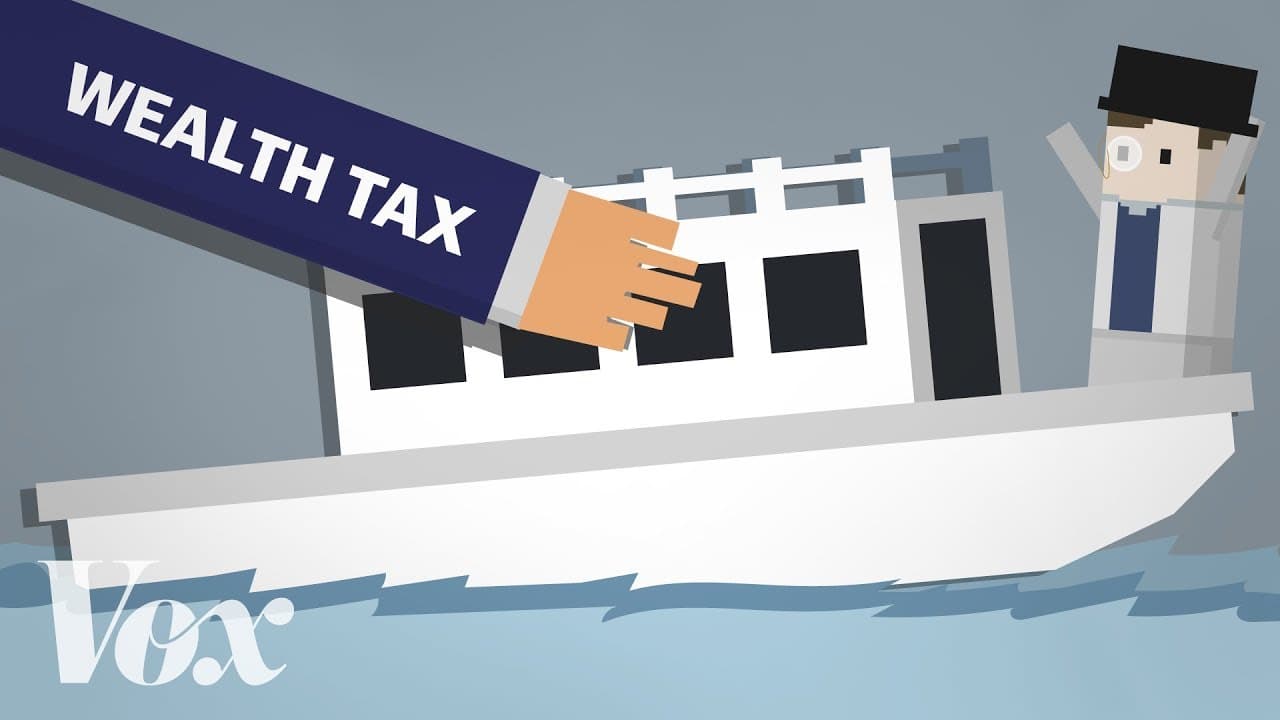
TL;DR
Senator Elizabeth Warren's wealth tax proposes a 2% tax on wealth over $50 million and a 3% tax on wealth over $1 billion, targeting the ultra-rich to reduce inequality. This policy could generate an estimated $200 billion annually, potentially funding large-scale social programs like free public college tuition and significantly reducing child poverty.
Transcript
That includes cars, houses, yachts, jewelry — and even cold, hard cash. It also includes things we owe other people, like student loans. So let's take a quick tour of American household wealth. We can start over here, where we see people who owe way more than they have. As we move further right, we can see — oh, that's me. And there's my doctor, wh... Read More
Key Insights
- The current tax system primarily taxes income when it is earned or spent, not the wealth people already possess, leading to disparities.
- Senator Elizabeth Warren's wealth tax proposal targets individuals with wealth exceeding $50 million, taxing at 2% annually.
- For wealth over $1 billion, the proposed tax rate increases to 3% annually, impacting the ultra-rich.
- The wealth tax is designed to address economic inequality by redistributing wealth from the richest 0.05% of Americans.
- In 2016, this tax could have generated $200 billion, funding substantial social programs such as free public college tuition.
- The revenue from the wealth tax could also double federal food assistance programs or significantly reduce child poverty.
- The wealth tax proposal highlights the concentration of wealth at the top and the potential for redistributive policies.
- Vox's Video Lab membership offers exclusive content and supports their journalism, providing insights into their work.
Install to Summarize YouTube Videos and Get Transcripts
Explore YouTube Video Summarizer or Get YouTube Transcript Extractor
Questions & Answers
Q: What is the main problem with the current tax system?
The main problem with the current tax system is that it primarily taxes income when it is earned or spent, rather than taxing the wealth that individuals already possess. This approach leads to significant disparities, as it does not address the concentration of wealth held by the ultra-rich, allowing wealth inequality to persist.
Q: What is Senator Elizabeth Warren's wealth tax proposal?
Senator Elizabeth Warren's wealth tax proposal is designed to tax individuals with fortunes exceeding $50 million at an annual rate of 2%, and those with wealth over $1 billion at 3%. This plan targets the ultra-rich, aiming to redistribute wealth and address economic inequality by taxing the existing wealth of the richest Americans.
Q: Who would be affected by the wealth tax proposal?
The wealth tax proposal would affect the ultra-rich, specifically the top 0.05% of Americans, who possess significant wealth. Individuals with fortunes over $50 million and $1 billion would be subject to the proposed tax rates of 2% and 3%, respectively. This targets those with substantial wealth, aiming to reduce economic inequality.
Q: How much revenue could the wealth tax generate?
The wealth tax could potentially generate around $200 billion in revenue, based on 2016 data. This substantial amount of money could fund significant social programs, such as making public college tuition free, doubling federal food assistance programs, or reducing child poverty by 60%, showcasing the potential impact of the tax.
Q: What social programs could the wealth tax fund?
The wealth tax could fund a variety of social programs, including making public college tuition free, doubling federal food assistance programs like food stamps, and significantly reducing child poverty by up to 60%. These programs would benefit millions of Americans, highlighting the redistributive potential of the wealth tax proposal.
Q: Why is the wealth tax considered necessary?
The wealth tax is considered necessary to address the staggering economic inequality in the United States, where a significant portion of wealth is concentrated among the ultra-rich. By taxing existing wealth rather than just income, the proposal aims to redistribute wealth, reduce disparities, and fund social programs that benefit the broader population.
Q: What does the wealth tax proposal highlight about American wealth distribution?
The wealth tax proposal highlights the extreme concentration of wealth at the top of the economic spectrum in the United States. It underscores the disparity between the ultra-rich and the rest of the population, showcasing the potential for redistributive policies to address economic inequality and fund programs that benefit society as a whole.
Q: What is Vox's Video Lab membership?
Vox's Video Lab membership is a paid program that supports their journalism while providing members with access to exclusive content. This includes behind-the-scenes insights into Vox's work, offering members a deeper understanding of their journalistic processes and the opportunity to engage with content that goes beyond their standard offerings.
Summary & Key Takeaways
-
The wealth tax proposed by Senator Elizabeth Warren aims to tax fortunes over $50 million at 2% annually and those over $1 billion at 3%. This targets the ultra-rich, who hold a significant portion of American wealth, addressing inequality and potentially funding large-scale social programs.
-
The current tax system focuses on income rather than existing wealth, allowing significant wealth disparities to persist. Warren's proposal seeks to rectify this by taxing the actual wealth of the richest 0.05% of Americans, potentially raising $200 billion to fund programs like free college tuition.
-
The wealth tax could provide financial resources to double food assistance programs or reduce child poverty by 60%. By focusing on the ultra-rich, the proposal aims to redistribute wealth and tackle the staggering inequality present in the United States.
Read in Other Languages (beta)
Share This Summary 📚
Summarize YouTube Videos and Get Video Transcripts with 1-Click
Try YouTube Summary with ChatGPT & Claude or YouTube Transcript Generator
Explore More Summaries from Vox 📚




Summarize YouTube Videos and Get Video Transcripts with 1-Click
Try YouTube Summary with ChatGPT & Claude or YouTube Transcript Generator