What Is the Difference Between Atoms and Molecules?
TL;DR
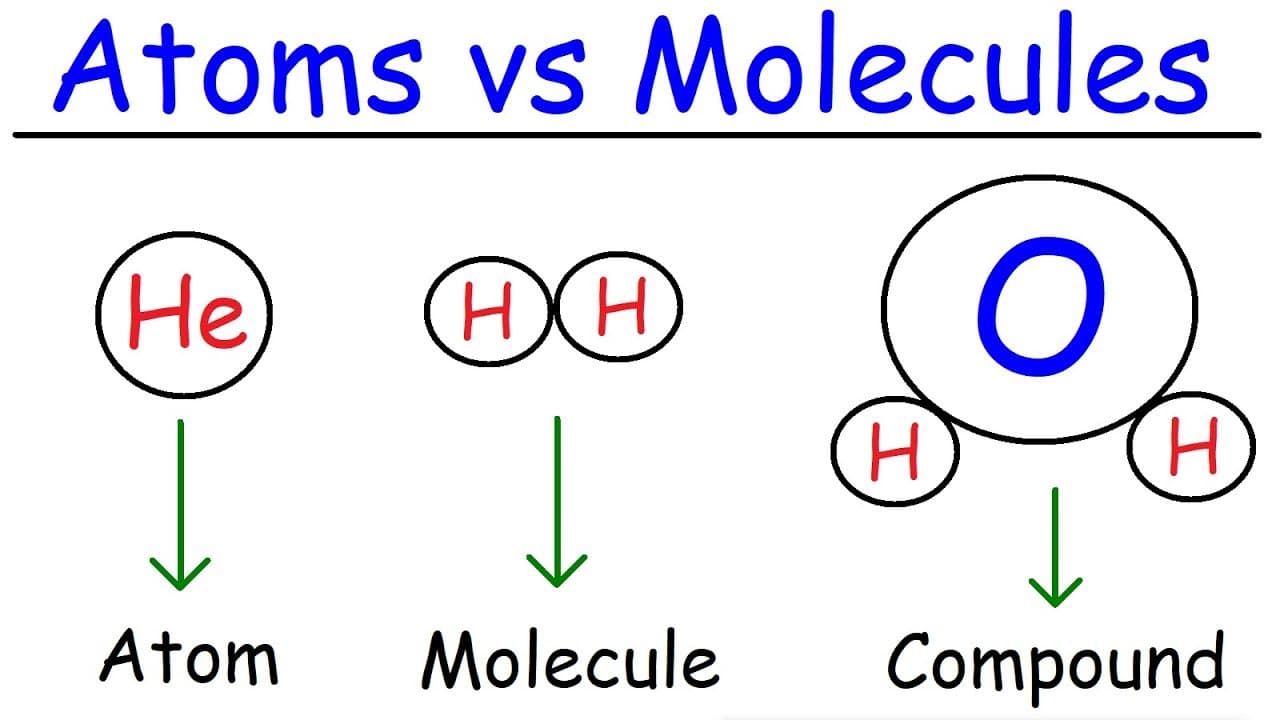
Atoms are individual particles, while molecules are made up of two or more atoms. Helium is an atom, hydrogen gas is a molecule formed by two hydrogen atoms, and water is a molecule comprised of different types of atoms (hydrogen and oxygen), making it a compound. Compounds can be ionic or covalent, depending on whether they involve transfer or sharing of electrons.
Transcript
what is the difference between an atom and a molecule so take a look at these three substances helium hydrogen gas and h2o which of these substances are composed of atoms and which ones are composed of molecules helium is composed of atoms each particle of helium is made up of one atom of helium a particle of hydrogen gas is a molecule one particle... Read More
Key Insights
- 🫀 Atoms are individual particles, while molecules consist of multiple atoms.
- 🫢 Helium is a pure element composed of atoms, while hydrogen gas and water are molecules.
- 💦 Water is a compound due to the presence of different types of atoms.
- 😑 Atoms and ions differ in the number of protons and electrons they contain.
- ❓ Ionic compounds involve a transfer of electrons, while covalent compounds involve electron sharing.
- 🤘 The presence of metals and nonmetals determines whether a compound is ionic or covalent, with exceptions like ammonium chloride.
Install to Summarize YouTube Videos and Get Transcripts
Explore YouTube Video Summarizer or Get YouTube Transcript Extractor
Questions & Answers
Q: What is the difference between an atom and a molecule?
Atoms are singular particles, while molecules consist of multiple atoms. Atoms are the building blocks of matter, while molecules are formed when atoms bond together.
Q: Is helium a pure element?
Yes, helium is considered a pure element because it is composed of only one type of atom. Each particle of helium is made up of one helium atom.
Q: Why is water considered a compound but not a pure element?
Water is composed of two different types of atoms, hydrogen and oxygen. While it is made up of atoms, the presence of multiple types of atoms classifies it as a compound rather than a pure element.
Q: How can we determine if a substance is composed of atoms or molecules?
If a substance is composed of individual particles that are identical, it is composed of atoms. If a substance is made up of multiple atoms bonded together, it is composed of molecules.
Q: What is the difference between an atom and an ion?
Atoms are electrically neutral, containing equal numbers of protons and electrons. Ions, on the other hand, contain different numbers of protons and electrons, resulting in a net positive or negative charge.
Q: What is the difference between an ionic compound and a covalent compound?
Ionic compounds are composed of metals and nonmetals, involving a transfer of electrons between atoms. Covalent compounds, also known as molecular compounds, are composed of nonmetals and involve the sharing of electrons between atoms.
Q: How can we determine if a compound is ionic or covalent?
If a compound is composed of a metal and a nonmetal, it is typically ionic. If a compound is composed of two nonmetals, it is typically covalent.
Q: Are there any exceptions to the general rules for determining compound types?
Yes, there can be exceptions. For example, ammonium chloride is composed of two nonmetals but is still considered an ionic compound due to the presence of ions.
Summary & Key Takeaways
-
Atoms are individual particles, while molecules consist of multiple atoms.
-
Helium is an example of an element composed of atoms, while hydrogen gas and water are examples of molecules.
-
Water is a mixture of hydrogen and oxygen atoms, making it a compound.
Read in Other Languages (beta)
Share This Summary 📚
Summarize YouTube Videos and Get Video Transcripts with 1-Click
Try YouTube Summary with ChatGPT & Claude or YouTube Transcript Generator
Explore More Summaries from The Organic Chemistry Tutor 📚


Summarize YouTube Videos and Get Video Transcripts with 1-Click
Try YouTube Summary with ChatGPT & Claude or YouTube Transcript Generator