How Do Infant Self-Rescue Swimming Classes Work?
TL;DR
Infant self-rescue swimming classes, such as those by Infant Swimming Resource (ISR), teach infants survival skills like floating and breathing. These classes use operant conditioning to help babies master crucial skills to stay safe in water, despite concerns from the American Academy of Pediatrics regarding their effectiveness. Many families feel these classes are essential, especially in areas with high drowning rates.
Transcript
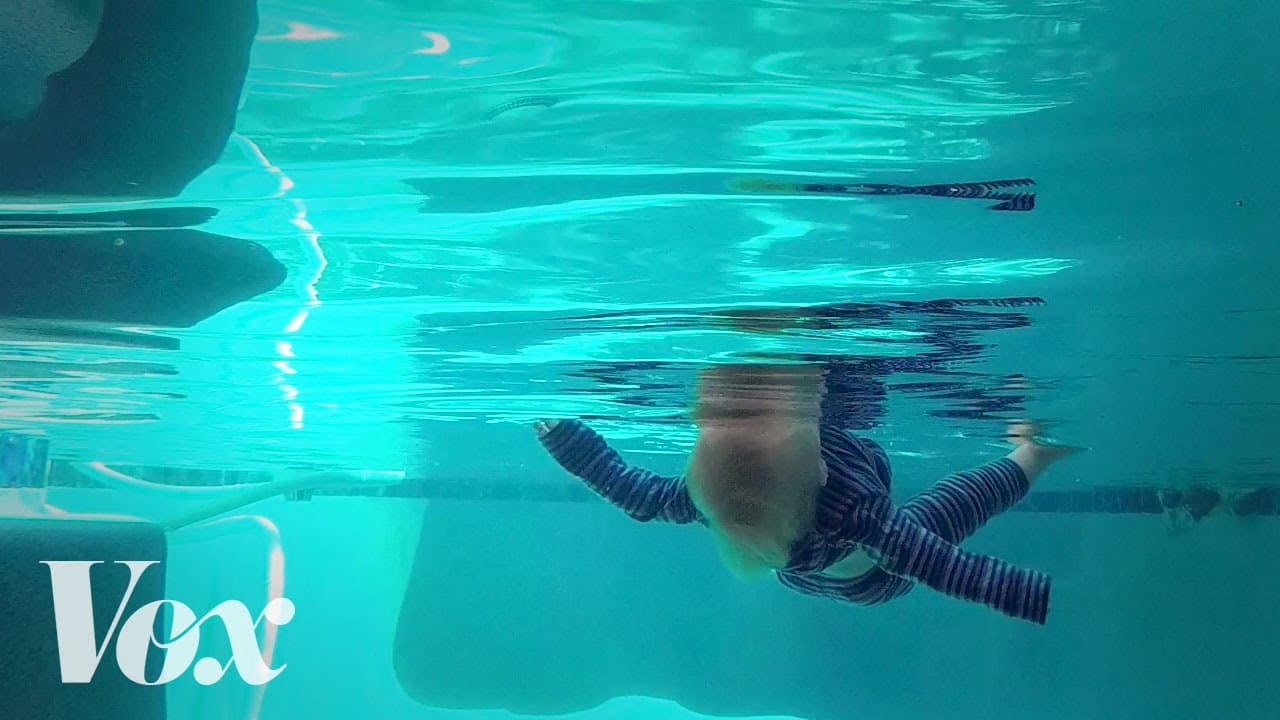
What is the earliest age that a baby can learn how to swim? My family has been testing this with my nephew. He was only 6 months old when we enrolled him in classes with a group called Infant Swimming Resource. Now, of course he's not "swimming." babies this young aren’t developmentally ready to move themselves forward through the water. Instead t... Read More
Key Insights
- Infant Swimming Resource (ISR) classes focus on survival skills rather than traditional swimming techniques, aiming to equip infants with the ability to float and breathe if they fall into water.
- Drowning is the leading cause of death for children aged 1-4, making these classes a crucial intervention in areas with high swimming pool ownership, like Phoenix, Arizona.
- The ISR method uses operant conditioning to teach infants to float on their backs, reinforcing correct behavior with positive feedback like a breath of air.
- Lessons are kept short, around 10 minutes daily, to minimize the potential health risks associated with prolonged water exposure for infants.
- While the American Academy of Pediatrics supports swimming lessons for children over one year old, they express concerns about the effectiveness and safety of programs for younger infants.
- Critics worry that these classes might give parents a false sense of security, possibly leading to reduced vigilance around water.
- Despite skepticism, families participating in ISR classes often prioritize personal experiences and anecdotal evidence over scientific data to justify their decision.
- The emotional response of infants during lessons, such as crying, is compared to other common childhood experiences and is not seen as indicative of trauma.
Install to Summarize YouTube Videos and Get Transcripts
Explore YouTube Video Summarizer or Get YouTube Transcript Extractor
Questions & Answers
Q: What is the primary goal of Infant Swimming Resource (ISR) classes?
The primary goal of Infant Swimming Resource (ISR) classes is to teach infants survival skills that enable them to float and breathe if they accidentally fall into water. These classes focus on equipping infants with the ability to position themselves to float, rather than teaching them to swim traditionally.
Q: Why are ISR classes particularly important in areas like Phoenix, Arizona?
ISR classes are crucial in areas like Phoenix, Arizona, because of the high prevalence of swimming pools in homes, with 43% of homes in the Phoenix area having a pool. Given that drowning is a leading cause of death for children aged 1-4, these classes provide an essential layer of safety for young children.
Q: How does the ISR method teach infants to float?
The ISR method employs operant conditioning to teach infants to float. Instructors reinforce correct floating behavior by allowing the infant to take a breath of air and then picking them up. This positive reinforcement helps infants learn to position themselves to float on their backs after being placed face-down in water.
Q: What are the concerns of the American Academy of Pediatrics regarding infant swimming classes?
The American Academy of Pediatrics is concerned about the lack of scientific evidence supporting the effectiveness and safety of infant swimming classes for children under one year old. They worry that these classes might give parents a false sense of security, potentially leading to decreased vigilance around water.
Q: How do families justify enrolling their infants in ISR classes despite skepticism?
Families often rely on personal experiences and anecdotal evidence to justify enrolling their infants in ISR classes. Despite skepticism from some experts, these families prioritize the perceived benefits and safety provided by the classes, especially in areas with high drowning rates among young children.
Q: What measures are taken to minimize health risks during ISR classes?
To minimize health risks, ISR classes are kept short, with each session lasting around 10 minutes. This duration helps reduce the potential risks associated with prolonged water exposure for infants, ensuring that the lessons are safe while still being effective in teaching survival skills.
Q: How do instructors handle infants' emotional responses during ISR lessons?
Instructors acknowledge that infants may cry during ISR lessons, but they compare these emotional responses to other common childhood experiences, such as not wanting to take a nap. The focus remains on ensuring that infants successfully learn the survival skills being taught, rather than on their temporary emotional discomfort.
Q: What is the long-term goal for infants who complete ISR classes?
The long-term goal for infants who complete ISR classes is to ensure that they have the necessary skills to survive if they accidentally fall into water. By learning to float and breathe, these infants are better prepared to navigate emergency situations, potentially reducing the risk of drowning.
Summary & Key Takeaways
-
Infant Swimming Resource (ISR) classes aim to teach infants survival skills in water, focusing on floating and breathing rather than traditional swimming. These classes are particularly relevant in areas with high drowning rates among young children, such as Phoenix, Arizona, where many homes have swimming pools.
-
The ISR method involves operant conditioning, where infants are encouraged to float on their backs after being placed face-down in water. Positive reinforcement is provided through a breath of air and being picked up, helping infants learn crucial survival skills over a few weeks.
-
Despite concerns from the American Academy of Pediatrics about the effectiveness of infant swimming classes, many families rely on personal experiences to support their decision to enroll infants in ISR programs. The classes are kept short to reduce health risks, and emotional responses are likened to other typical childhood experiences.
Read in Other Languages (beta)
Share This Summary 📚
Summarize YouTube Videos and Get Video Transcripts with 1-Click
Try YouTube Summary with ChatGPT & Claude or YouTube Transcript Generator
Explore More Summaries from Vox 📚




Summarize YouTube Videos and Get Video Transcripts with 1-Click
Try YouTube Summary with ChatGPT & Claude or YouTube Transcript Generator