What Are Pointers in C++ and How Do They Work?
TL;DR
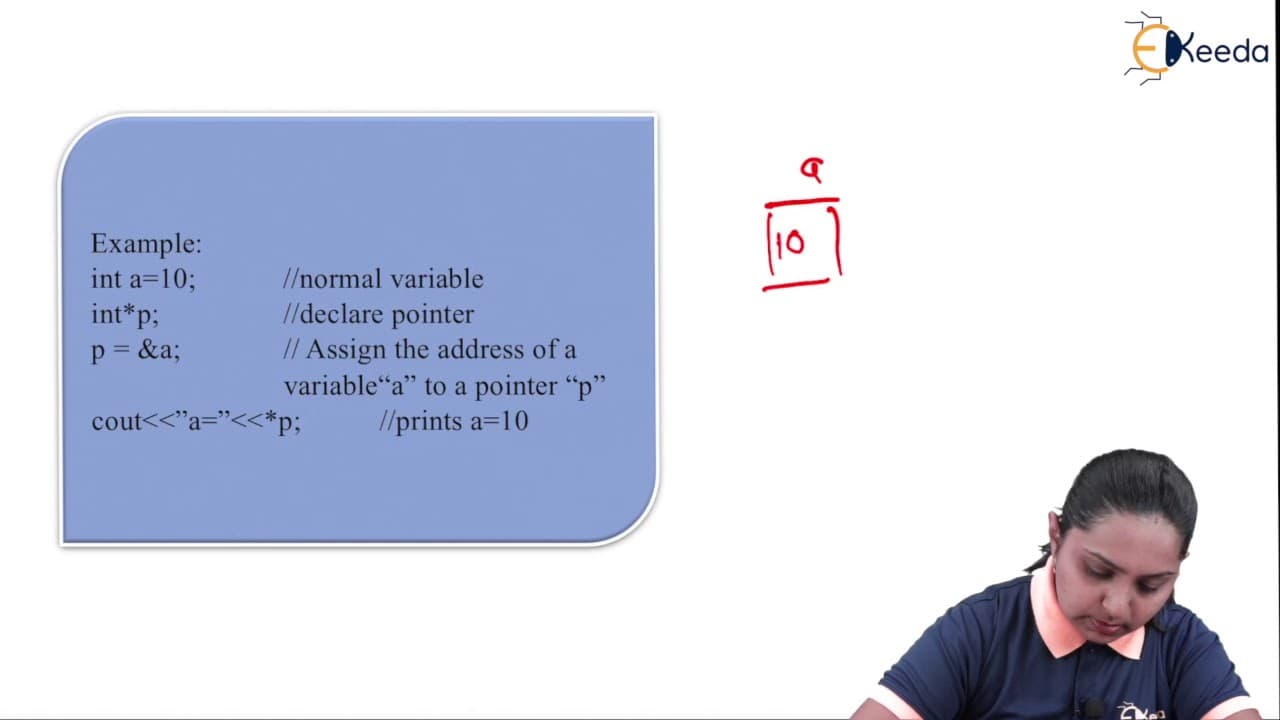
Pointers in C++ are reference variables that store the memory addresses of other variables, enabling indirect access to their values. To use pointers, you must declare them, assign addresses of variables, and dereference them when accessing the stored values. Mastering pointers is essential for effective memory management and data manipulation in C++.
Transcript
hello friends now we are going to discuss the topic that is pointers when we say a pointers pointers is nothing but a variable but it is called as a reference variable pointers pointers is nothing but a reference variable which is pointing to the another variable when we see another variable that means the value of that variable will get accessed w... Read More
Key Insights
- 🏪 Pointers in programming are reference variables storing memory addresses.
- 👻 They allow indirect access to data by referencing variable locations.
- ❓ Declaring, assigning, and dereferencing pointers are crucial operations.
- ❓ Pointers facilitate dynamic memory allocation and efficient data manipulation.
- 😒 Incorrect use of pointers can lead to memory access violations and program errors.
- 🤙 Pointers enable pass-by-reference mechanisms in function calls.
- ❓ Understanding pointers is essential for memory management in programming.
Install to Summarize YouTube Videos and Get Transcripts
Explore YouTube Video Summarizer or Get YouTube Transcript Extractor
Questions & Answers
Q: What is a pointer in programming?
In programming, a pointer is a reference variable that stores the memory address of another variable, allowing indirect access to data.
Q: How do you declare and use pointers?
Pointers are declared with a data type followed by an asterisk and the variable name to hold memory addresses, and they are used to access variable values indirectly.
Q: Why are pointers useful in programming?
Pointers are useful in programming as they enable dynamic memory allocation, efficient data manipulation, and pass-by-reference mechanisms for functions.
Q: What happens if a pointer is not assigned a valid memory address?
If a pointer is not assigned a valid memory address, it may lead to memory access violations, segmentation faults, or unexpected program behavior.
Summary & Key Takeaways
-
Pointers in programming are reference variables that hold memory addresses of other variables.
-
They allow indirect access to data by referencing the memory addresses of variables.
-
Pointers must be declared, assigned variable addresses, and can be dereferenced to access variable values.
Read in Other Languages (beta)
Share This Summary 📚
Summarize YouTube Videos and Get Video Transcripts with 1-Click
Try YouTube Summary with ChatGPT & Claude or YouTube Transcript Generator
Explore More Summaries from Ekeeda 📚






Summarize YouTube Videos and Get Video Transcripts with 1-Click
Try YouTube Summary with ChatGPT & Claude or YouTube Transcript Generator