What Caused the Black Death's High Death Toll?
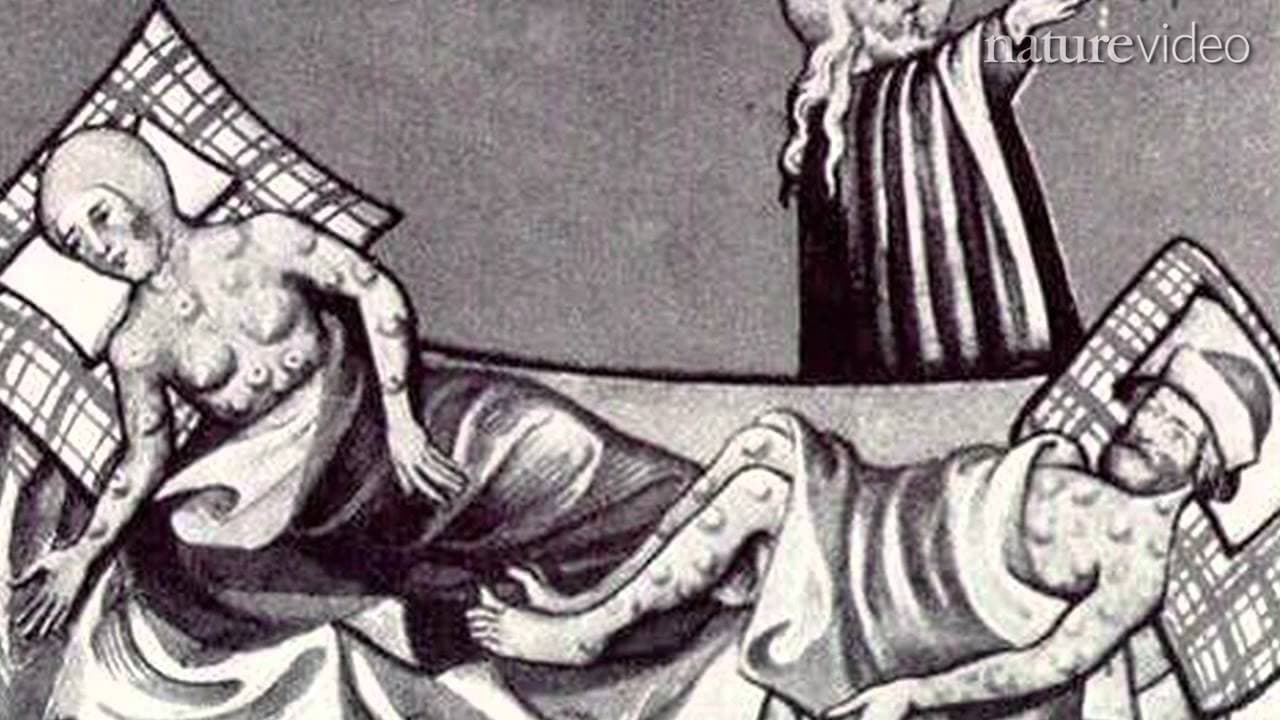
TL;DR
The Black Death, caused by the bacterium Yersinia pestis, killed up to 50% of Europe's population in the 14th century due to its rapid spread via fleas on rats. While modern strains of Yersinia pestis resemble those from the medieval period, improved human immunity and societal changes today result in less severe infections, although managing a similar outbreak could prove more challenging due to our complex societal interconnections.
Transcript
Behold the chad. Well, the black death is an epidemic on an unimaginable scale which swept across Europe in the mid-4th century, killing we now believe, and the records are very good, up to half of the population, one in two of the population in the space of 7 years. It's caused by a bacterium um which is called theia pestis. The bacterium evolved ... Read More
Key Insights
- 🥺 The Black Death significantly reduced Europe’s population in the 14th century, leading to societal and economic shifts.
- 🧍 The historical strains of Yersinia pestis closely resemble modern variants, indicating long-standing evolutionary connections.
- 🧑🏭 Increased human immunity over time may be a critical factor in combating infectious diseases today compared to historical outbreaks.
- 💱 Climate and social changes over the centuries have influenced how humans interact with pathogens, altering susceptibility to infections.
- 🖐️ The response mechanisms to infections have changed significantly, with knowledge and healthcare advancements playing crucial roles today.
- 🙈 The complex nature of modern society could pose greater challenges in managing substantial health crises, as seen during the medieval plague.
- 👨🔬 The process of bacteria evolving pathogenicity underscores the need for vigilance and research in understanding emerging infectious diseases.
Install to Summarize YouTube Videos and Get Transcripts
Explore YouTube Video Summarizer or Get YouTube Transcript Extractor
Questions & Answers
Q: How did Yersinia pestis evolve into a pathogenic bacterium?
Yersinia pestis originated from a benign soil bacterium that evolved into a disease-causing organism capable of infecting humans. This evolution allowed Y. pestis to be transmitted through fleas, which thrived on rats, fostering the spread of the Plague across medieval Europe.
Q: What methodology was used to analyze the ancient genome of Yersinia pestis?
Researchers utilized advanced sequencing techniques to analyze ancient DNA obtained from teeth and bones found in the East Smithfield burial ground in London. This method allowed them to reconstruct the genome of Yersinia pestis and compare it to existing strains.
Q: What factors contribute to the reduced severity of plague infections today?
The reduced severity of plague infections in modern times is attributed to a combination of improved immunity among populations, environmental and societal changes, and better understanding and management of infectious diseases, which have collectively altered the impact of Yersinia pestis.
Q: Why were medieval societies more capable of coping with high death tolls?
Medieval societies had a more self-sufficient lifestyle and independence, which enabled them to manage high mortality rates effectively. In contrast, contemporary society relies on complex interconnections, making large-scale deaths today potentially more chaotic and challenging to handle.
Q: Is there a possibility of a new pandemic similar to the Black Death today?
While it is unlikely that the traditional plague would resurge to the same extent, the emergence of new pathogens remains a concern. Continuous evolution in bacteria could lead to novel, potentially pathogenic strains, emphasizing the importance of monitoring infectious diseases.
Summary & Key Takeaways
-
The Black Death, caused by Yersinia pestis, swept through Europe in the mid-14th century, killing up to 50% of the population in just seven years due to its spread via fleas on rats.
-
Recent genetic analysis shows that contemporary strains of Yersinia pestis closely resemble those from the medieval epidemic, yet present infections tend to be less severe, suggesting other factors influence disease impact.
-
Societal changes and improved human immunity over centuries may explain why modern society could handle a similar death toll from a new pathogen less effectively than those in the past.
Read in Other Languages (beta)
Share This Summary 📚
Summarize YouTube Videos and Get Video Transcripts with 1-Click
Try YouTube Summary with ChatGPT & Claude or YouTube Transcript Generator
Explore More Summaries from nature video 📚





Summarize YouTube Videos and Get Video Transcripts with 1-Click
Try YouTube Summary with ChatGPT & Claude or YouTube Transcript Generator