What Are Next.js Server Actions and How Do They Work?
TL;DR
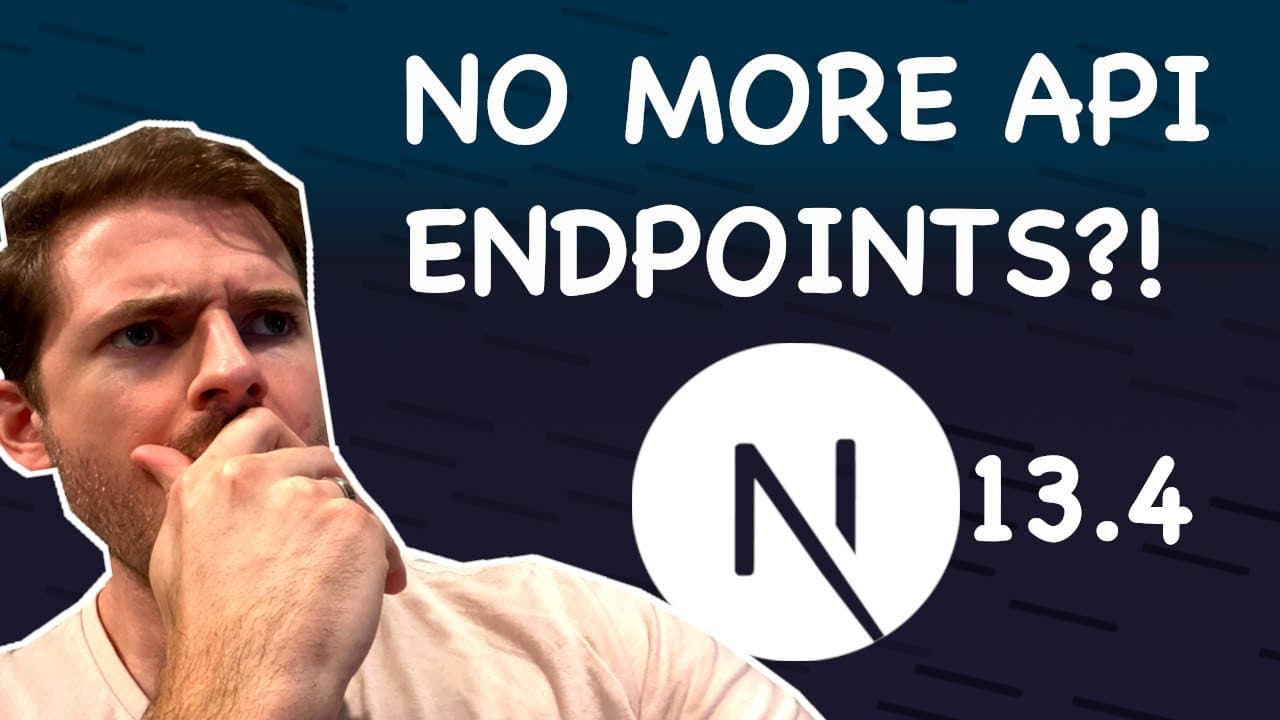
Next.js server actions allow developers to handle form submissions directly on the backend, eliminating the need for APIs. This feature, still in alpha, enables server components to perform database operations and manage data without full page reloads, improving performance and user experience. Developers must enable experimental server actions in their Next.js configuration to utilize this functionality.
Transcript
all right so I've been kind of playing around a little bit with uh react server components and this new server actions that next provides if you guys aren't aware there is a new approach that is in version Alpha where basically you can take forms and call methods directly in your next application and it's going to run that code in your backend righ... Read More
Key Insights
- 💨 Server actions in Next.js provide a streamlined way to connect form inputs to backend processes with minimal overhead.
- 🥺 By using server components, developers can avoid traditional full page reloads, leading to improved user experience and faster interactions.
- 😚 This experimental feature indicates a shift in how developers may structure applications, moving closer to integrated backend operations within frontend frameworks.
- 🍔 The alpha status means features are still being tested and may undergo significant changes, urging developers to stay updated and flexible.
- 🦾 Understanding the underlying mechanics of server actions is crucial for optimizing performance and functionality within Next.js applications.
- 🥶 The approach of co-locating business logic and UI components in the same file can simplify development and improve project structure.
- 😄 The ease of directly manipulating database files without complex API setups represents a major evolution in frontend development strategies with React.
Install to Summarize YouTube Videos and Get Transcripts
Explore YouTube Video Summarizer or Get YouTube Transcript Extractor
Questions & Answers
Q: What are server actions in Next.js and how do they work?
Server actions in Next.js allow developers to execute backend functions directly from form submissions without the need for traditional APIs. When a form is submitted, it sends data alongside an action ID to the server, which maps it to the associated backend function for processing. This streamlines handling user input and can directly manipulate databases.
Q: How do server components differ from client components in handling forms?
Server components in Next.js can handle form submissions directly in the backend, keeping logic centralized and avoiding the need for separate APIs. In contrast, client components rely on user events and need to utilize methods like start transitions to interact with backend functions, adding complexity.
Q: What are the advantages of using server actions over traditional methods?
Server actions reduce the overhead of managing separate API endpoints for actions, significantly simplifying the development workflow. They also enhance user experience by eliminating full page reloads during form submissions, thus allowing for a more seamless and interactive interface compared to traditional server-side languages like PHP.
Q: What changes need to be made in Next.js to utilize server actions?
To utilize server actions, developers must add or modify the Next.js configuration file to set the experimental server actions feature to true. This enables the functionality required to handle form submissions directly within the server components, allowing for smoother operations and code organization.
Summary & Key Takeaways
-
Next.js is currently in an alpha phase for server actions, allowing forms to run backend code directly, simplifying data handling in applications.
-
Server components differ from client components as they manage form submissions and data processing directly on the server side, improving performance without full page reloads.
-
Developers need to enable experimental server actions in the Next.js configuration for this feature to work, which promises to enhance future application development.
Read in Other Languages (beta)
Share This Summary 📚
Summarize YouTube Videos and Get Video Transcripts with 1-Click
Try YouTube Summary with ChatGPT & Claude or YouTube Transcript Generator
Explore More Summaries from Web Dev Cody 📚
Summarize YouTube Videos and Get Video Transcripts with 1-Click
Try YouTube Summary with ChatGPT & Claude or YouTube Transcript Generator