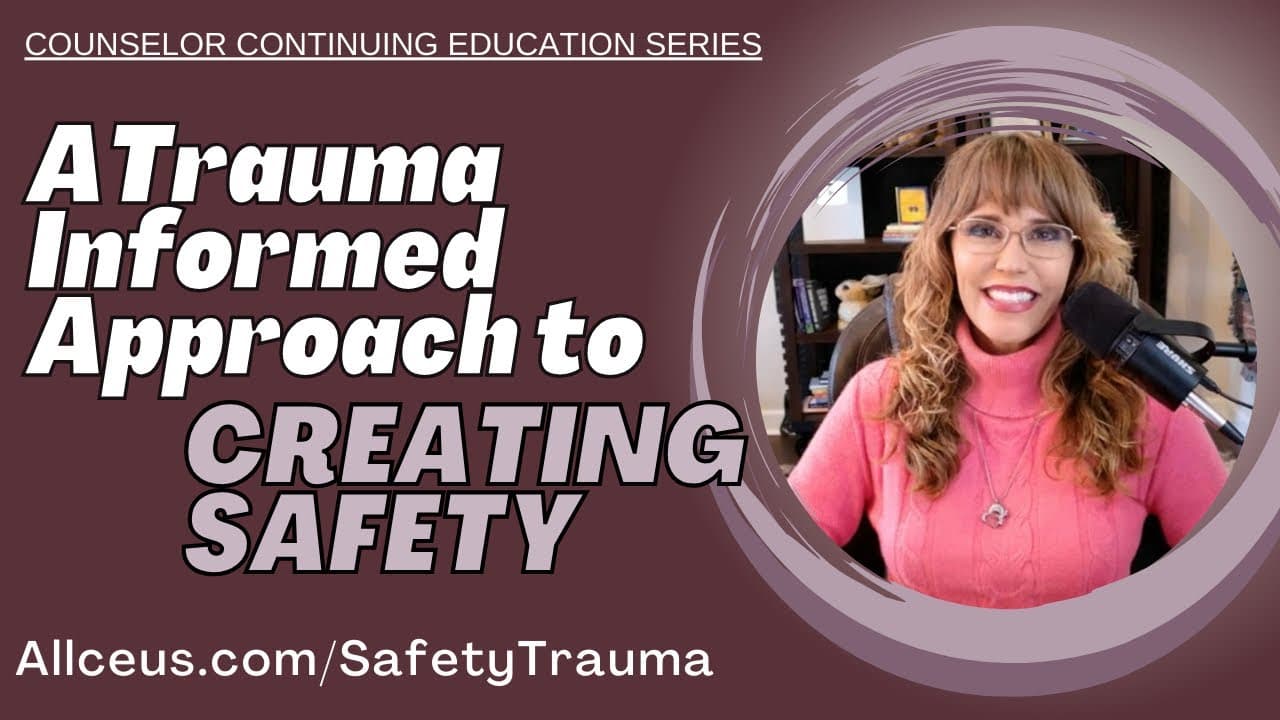
A Trauma Informed Approach to Creating Safety
TL;DR
Understanding trauma's impact and creating safety through psychodynamics.
Transcript
Unlimited CEUs and Live Webinars $59 @ALLCEUS I'd like to welcome everybody to today's presentation on creating safety from a psychodynamic perspective I'm your host Dr Dawn-Elise Snipes. In this presentation we will review the basics of psychodynamics and phenomenological reality we'll talk about transference learn how to help people compare ... Read More
Key Insights
- Trauma significantly impacts mood, development, and addiction, affecting physical, emotional, and cognitive aspects of life.
- Feelings of unsafety stem from vulnerability and past experiences, influencing current perceptions and behaviors.
- Psychodynamic theory emphasizes unconscious motives developed in childhood to survive chaotic environments.
- Transference involves projecting past experiences onto current situations, affecting emotions and reactions.
- Attachment styles formed in childhood influence adult relationships, leading to clinginess or avoidance.
- Cognitive symptoms of feeling unsafe include attention deficits, emotional reasoning, and hypervigilance.
- Behavioral responses to feeling unsafe can include addiction, impulsivity, and social withdrawal.
- Creating safety involves mindfulness, assertiveness, and understanding personal triggers and boundaries.
Install to Summarize YouTube Videos and Get Transcripts
Explore YouTube Video Summarizer or Get YouTube Transcript Extractor
Questions & Answers
Q: What is the impact of trauma on mental health?
Trauma affects mental health by contributing to mood disorders, developmental issues, and addiction. It impacts individuals physically, emotionally, and cognitively, often leading to feelings of unsafety and vulnerability. Trauma can disrupt sleep, increase stress and inflammation, and impair interpersonal relationships, necessitating a comprehensive approach to healing.
Q: How does psychodynamic theory explain trauma responses?
Psychodynamic theory suggests that trauma responses are rooted in unconscious motives developed during childhood to survive chaotic or unsafe environments. These responses include coping mechanisms and attachment styles that influence adult behavior. Understanding these unconscious processes helps individuals recognize and address trauma's impact on their current lives.
Q: What is transference and how does it relate to trauma?
Transference involves projecting past experiences and emotions onto current situations or people. In the context of trauma, individuals may transfer feelings of fear or distrust from past traumatic events onto new situations, impacting their reactions and relationships. Recognizing transference helps individuals differentiate between past and present experiences.
Q: How do attachment styles influence adult relationships?
Attachment styles, formed in childhood based on caregiver interactions, influence adult relationships. Secure attachment leads to healthy relationships, while insecure attachment styles, such as avoidant or anxious, can result in clinginess, fear of abandonment, or difficulty trusting others. Understanding attachment styles aids in improving relationship dynamics.
Q: What are common cognitive symptoms of feeling unsafe?
Common cognitive symptoms of feeling unsafe include attention deficits, learning difficulties, emotional reasoning, and hypervigilance. These symptoms arise from the body's stress response, which prioritizes survival over cognitive processing, leading to challenges in concentration, problem-solving, and rational thinking.
Q: What behavioral responses are associated with feeling unsafe?
Behavioral responses to feeling unsafe include addiction, impulsivity, social withdrawal, and self-sabotage. These behaviors serve as coping mechanisms to manage feelings of vulnerability and distress. Understanding these responses helps individuals develop healthier coping strategies and improve their overall well-being.
Q: How can individuals create a sense of safety?
Creating a sense of safety involves mindfulness, assertiveness, and understanding personal triggers and boundaries. Individuals can practice grounding techniques, establish clear boundaries, and engage in activities that promote relaxation and contentment. Building supportive relationships and enhancing self-esteem also contribute to a sense of safety.
Q: How does mindfulness help in addressing trauma?
Mindfulness helps individuals become aware of their thoughts, emotions, and physical sensations in the present moment, reducing the influence of past trauma on current experiences. By practicing mindfulness, individuals can better regulate their emotions, decrease anxiety, and develop a greater sense of control and safety in their lives.
Summary & Key Takeaways
-
The presentation explores the impact of trauma on various aspects of life, including mood and development, and offers strategies for creating safety from a psychodynamic perspective. It emphasizes understanding past experiences and their influence on current perceptions and behaviors.
-
Key concepts include transference, attachment styles, and the development of coping mechanisms in response to trauma. The presentation highlights the importance of recognizing and addressing feelings of unsafety and vulnerability to promote healing and well-being.
-
Strategies for creating safety involve mindfulness, assertiveness, and understanding personal triggers and boundaries. The presentation also discusses the role of cognitive and behavioral responses in managing feelings of unsafety and promoting a sense of security.
Read in Other Languages (beta)
Share This Summary 📚
Summarize YouTube Videos and Get Video Transcripts with 1-Click
Try YouTube Summary with ChatGPT & Claude or YouTube Transcript Generator
Explore More Summaries from Doc Snipes 📚






Summarize YouTube Videos and Get Video Transcripts with 1-Click
Try YouTube Summary with ChatGPT & Claude or YouTube Transcript Generator