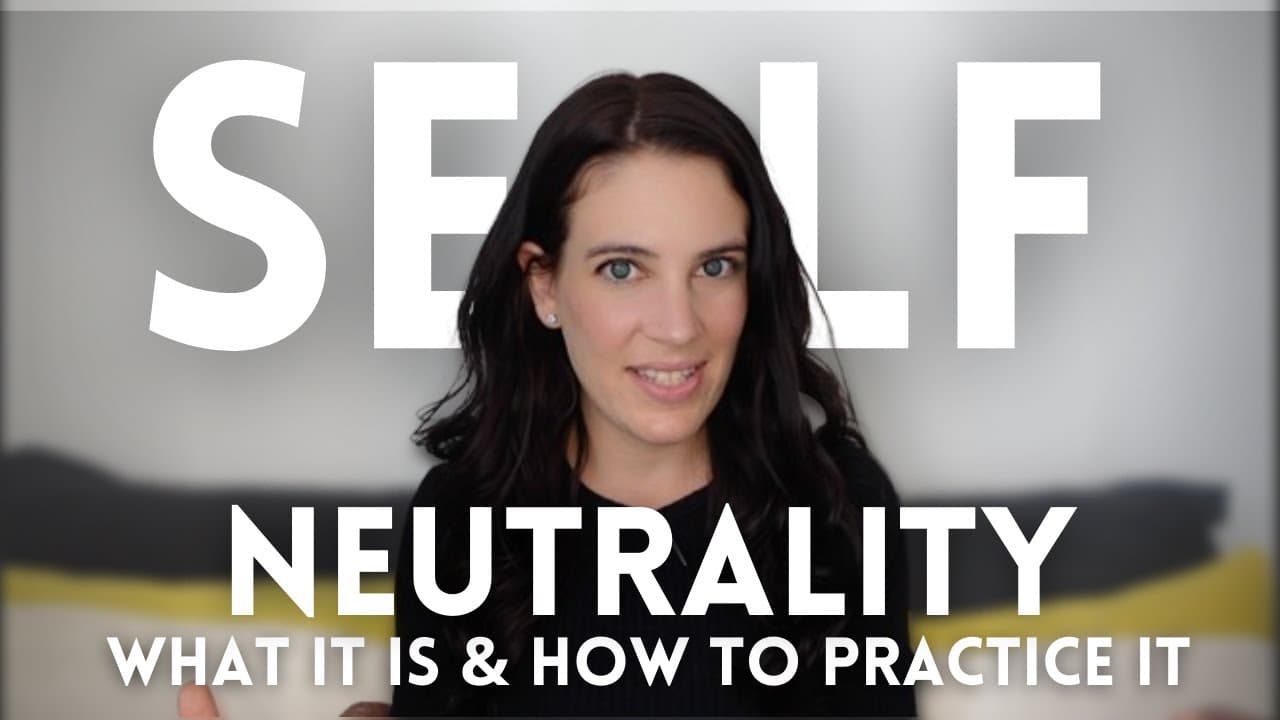
Self-Neutrality: What It Is And How To Practice It
TL;DR
Self-neutrality bridges the gap between toxic shame and self-love.
Transcript
hey guys I'm Heidi PRI welcome back to my Channel or welcome if this is your first time here today we are talking about a term that I call self- neutrality so I want to be clear from the get-go if you Google the word self- neutrality I think you get about 25 different definitions of it and in this video I will be referencing absolutely no e... Read More
Key Insights
- Self-neutrality serves as a middle ground between toxic shame and self-love, helping individuals view themselves as neither exceptional nor inherently flawed.
- Developing a shame-bound identity can lead to compensatory mechanisms, such as ego-building, to counter feelings of inadequacy.
- Healing requires integrating core shame rather than escaping it through personal development or external validation.
- Self-neutrality involves understanding that differences from others are due to experiences, not inherent flaws or exceptional qualities.
- By fostering curiosity about emotional responses and behaviors, individuals can better understand themselves without judgment.
- Applying non-judgmental reasoning to others helps improve self-esteem and reduces the tendency to take negative interactions personally.
- Rejecting magical thinking and being present with one's authentic self aids in overcoming toxic shame and fostering self-love.
- Accepting the normality of emotions and experiences is crucial for developing true self-esteem and authentic connections with others.
Install to Summarize YouTube Videos and Get Transcripts
Explore YouTube Video Summarizer or Get YouTube Transcript Extractor
Questions & Answers
Q: What is the main concept discussed in the video?
The main concept discussed in the video is self-neutrality, a psychological approach that serves as a middle ground between toxic shame and self-love. It encourages individuals to view themselves as neither exceptional nor inherently flawed, helping them integrate their core shame and develop authentic self-love.
Q: How does self-neutrality help with self-esteem?
Self-neutrality helps with self-esteem by encouraging individuals to view themselves as inherently normal and similar to others. By understanding that their differences are due to experiences rather than inherent flaws, individuals can reduce feelings of inadequacy and shame, fostering a healthier self-concept and true self-esteem.
Q: What role does curiosity play in self-neutrality?
Curiosity plays a crucial role in self-neutrality by encouraging individuals to explore their emotional responses and behaviors without judgment. This non-judgmental curiosity allows for a deeper understanding of oneself, reducing shame and fostering empathy, which are essential for developing authentic self-love and acceptance.
Q: Why is rejecting magical thinking important in self-neutrality?
Rejecting magical thinking is important in self-neutrality because it encourages individuals to be present with their authentic selves rather than escaping into fantasies of a better future. By confronting and integrating core shame, individuals can develop a healthier self-concept and foster genuine self-love and acceptance.
Q: How does self-neutrality affect relationships with others?
Self-neutrality positively affects relationships with others by promoting a non-judgmental and empathetic view of others. By understanding that everyone is a product of their experiences, individuals can reduce personalizing negative interactions, fostering healthier relationships and improving their overall self-esteem and self-concept.
Q: What is the connection between self-neutrality and self-respect?
The connection between self-neutrality and self-respect lies in the acceptance of one's inherent normality and the understanding that differences are due to experiences. By fostering self-neutrality, individuals can develop a base sense of self-respect, which is essential for authentic self-love and personal growth.
Q: How does self-neutrality help in overcoming toxic shame?
Self-neutrality helps in overcoming toxic shame by encouraging individuals to integrate their core shame rather than escaping it. By viewing themselves as inherently normal and similar to others, individuals can reduce feelings of inadequacy and develop a healthier self-concept, fostering authentic self-love and acceptance.
Q: What is the ultimate goal of practicing self-neutrality?
The ultimate goal of practicing self-neutrality is to develop authentic self-love and acceptance by integrating core shame and fostering a healthier self-concept. By understanding one's inherent normality and viewing differences as products of experiences, individuals can improve their self-esteem, relationships, and overall well-being.
Summary & Key Takeaways
-
The concept of self-neutrality provides a balanced perspective between toxic shame and self-love, helping individuals understand their inherent normality. It emphasizes that differences from others are due to experiences rather than inherent flaws or exceptional qualities. By fostering self-neutrality, individuals can better integrate their shame and develop authentic self-love.
-
Self-neutrality involves understanding that everyone is a product of their experiences, and no one is inherently better or worse than others. By adopting a non-judgmental curiosity about oneself and others, individuals can improve their self-esteem and reduce personalizing negative interactions. This approach fosters empathy, understanding, and authentic self-acceptance.
-
Practicing self-neutrality requires rejecting magical thinking and being present with one's authentic self. By accepting the normality of emotions and experiences, individuals can overcome toxic shame and foster true self-esteem. This approach encourages self-respect, self-love, and authentic connections with others, ultimately leading to a healthier self-concept.
Read in Other Languages (beta)
Share This Summary 📚
Summarize YouTube Videos and Get Video Transcripts with 1-Click
Try YouTube Summary with ChatGPT & Claude or YouTube Transcript Generator
Explore More Summaries from Heidi Priebe 📚


Summarize YouTube Videos and Get Video Transcripts with 1-Click
Try YouTube Summary with ChatGPT & Claude or YouTube Transcript Generator