What we'll learn about the brain in the next century | Sam Rodriques
TL;DR
The introduction provides an overview of how neuroscience research is currently being conducted and highlights the need for new methods to study the human brain.
Transcript
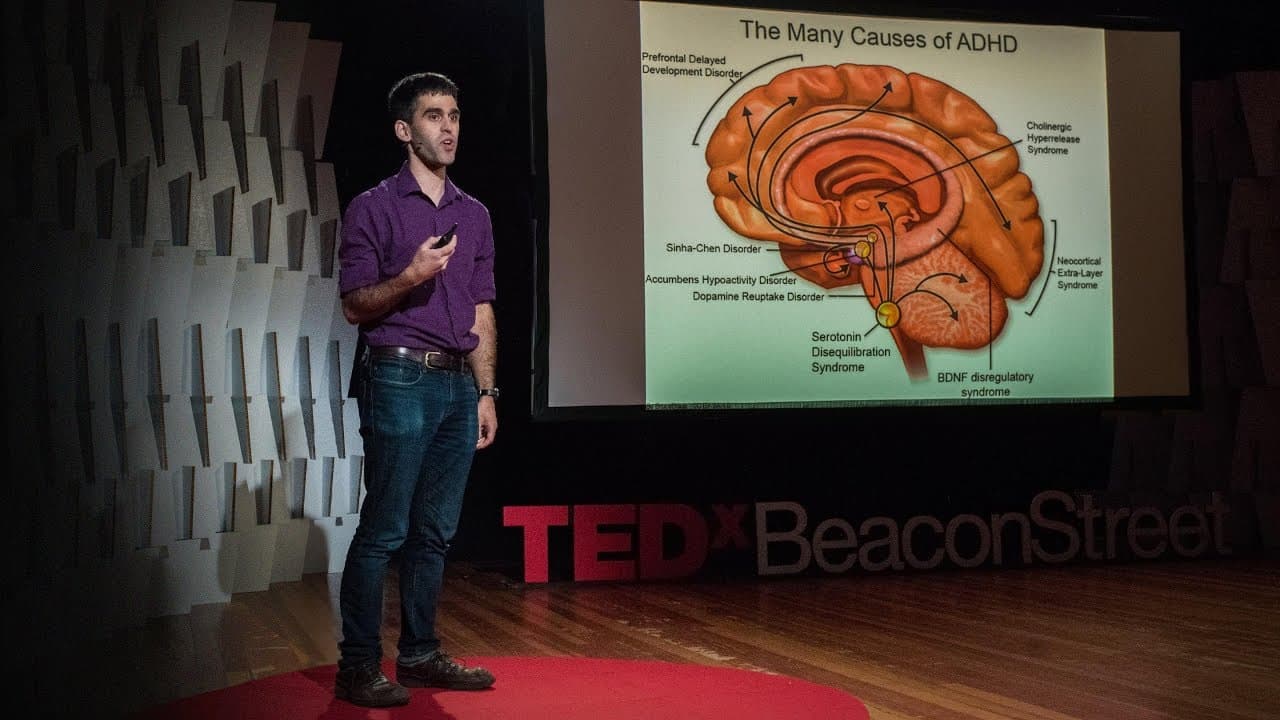
I want to tell you guys something about neuroscience. I'm a physicist by training. About three years ago, I left physics to come and try to understand how the brain works. And this is what I found. Lots of people are working on depression. And that's really good, depression is something that we really want to understand. Here's how you do it: you t... Read More
Key Insights
- 🧠 Neuroscience research on depression and emotion often relies on animal models like mice due to the limitations of studying these concepts in humans.
- 🐭 However, the mouse brain is not sophisticated enough to fully replicate human psychology or brain diseases, resulting in limited advancements in patient outcomes.
- 🔎 Current technologies like functional MRI and electroencephalography provide proxies for measuring brain activity but do not directly measure neural activity.
- 🧪 Future advancements in neuroscience could involve using lasers to drill microscopic holes in the skull for risk-free access to measure the electrical activity of neurons.
- 🧠 Flexible probes could be used to record neural activity in the brain tissue without damaging blood vessels, enabling the study of neuroscience at the single human level.
- 💡 These advancements could lead to breakthroughs in understanding the root causes of diseases like Alzheimer's and the ability to deliver targeted genetic therapies or drugs to prevent degeneration.
- 🧠 The ability to measure and study neural activity in healthy humans through brain-computer interfaces could lead to major insights in mental diseases, personalized treatments, and improved patient outcomes. ⏳ It is key for the scientific community to prioritize research on understanding the human brain and diseases and invest in developing new technologies to study the electrical activity of neurons.
Install to Summarize YouTube Videos and Get Transcripts
Explore YouTube Video Summarizer or Get YouTube Transcript Extractor
Questions & Answers
Q: What is the speaker's background and what did they set out to understand?
The speaker is a physicist who left physics to understand how the brain works.
Q: What is the model used to study depression?
The model used to study depression involves filling a jar halfway with water, putting a mouse in the jar, and observing when the mouse stops swimming.
Q: Why is it difficult to study emotion in mice or monkeys?
Studying emotions in mice or monkeys is challenging because researchers cannot directly ask them how they feel or what they are experiencing.
Q: What are some limitations of current neuroscience technologies?
Current neuroscience technologies, such as fMRI and electroencephalography, measure neural activity indirectly or do not provide the necessary resolution to understand specific brain diseases like Parkinson's.
Q: How did the speaker envision a potential solution to better understand the human brain?
The speaker envisions a future where safe and non-invasive methods for measuring the electrical activity of neurons in the human brain are developed, allowing for more precise and personalized neuroscience research.
Q: What major insights were gained from studying individual human brains with the new technology?
The ability to study individual human brains using advanced neural interfaces led to major insights in understanding emotions, social behaviors, and abstract reasoning. This allowed for a better understanding of mental diseases and the development of targeted treatments.
Q: How did advancements in neuroscience improve the treatment of brain diseases?
Advancements in neuroscience allowed for a shift from treating brain diseases based on symptoms to defining them based on the observed pathology at the neural level. This led to more accurate diagnoses and personalized treatment approaches, greatly improving outcomes for patients.
Q: What is the speaker's call to action for neuroscientists?
The speaker urges neuroscientists to move away from solely relying on animal models, such as mice, and to invest more thought and resources into developing methods that allow for the direct measurement of electrical activity in the human brain. This is crucial for advancing our understanding of the human brain and brain diseases.
Summary & Key Takeaways
-
The speaker left physics to study the brain and found that current methods of studying depression and emotions using mice and monkeys are insufficient.
-
The speaker describes the limitations of current neuroscience technologies like fMRI and electroencephalography in measuring neural activity accurately.
-
The speaker envisions a future in which technology allows for easy and risk-free measurement of neural activity in healthy humans, leading to advancements in understanding brain diseases like Alzheimer's and more personalized treatments.
Read in Other Languages (beta)
Share This Summary 📚
Summarize YouTube Videos and Get Video Transcripts with 1-Click
Try YouTube Summary with ChatGPT & Claude or YouTube Transcript Generator
Explore More Summaries from TED 📚




Summarize YouTube Videos and Get Video Transcripts with 1-Click
Try YouTube Summary with ChatGPT & Claude or YouTube Transcript Generator