How to Calculate Volume and Surface Area of Triangular Prisms
TL;DR
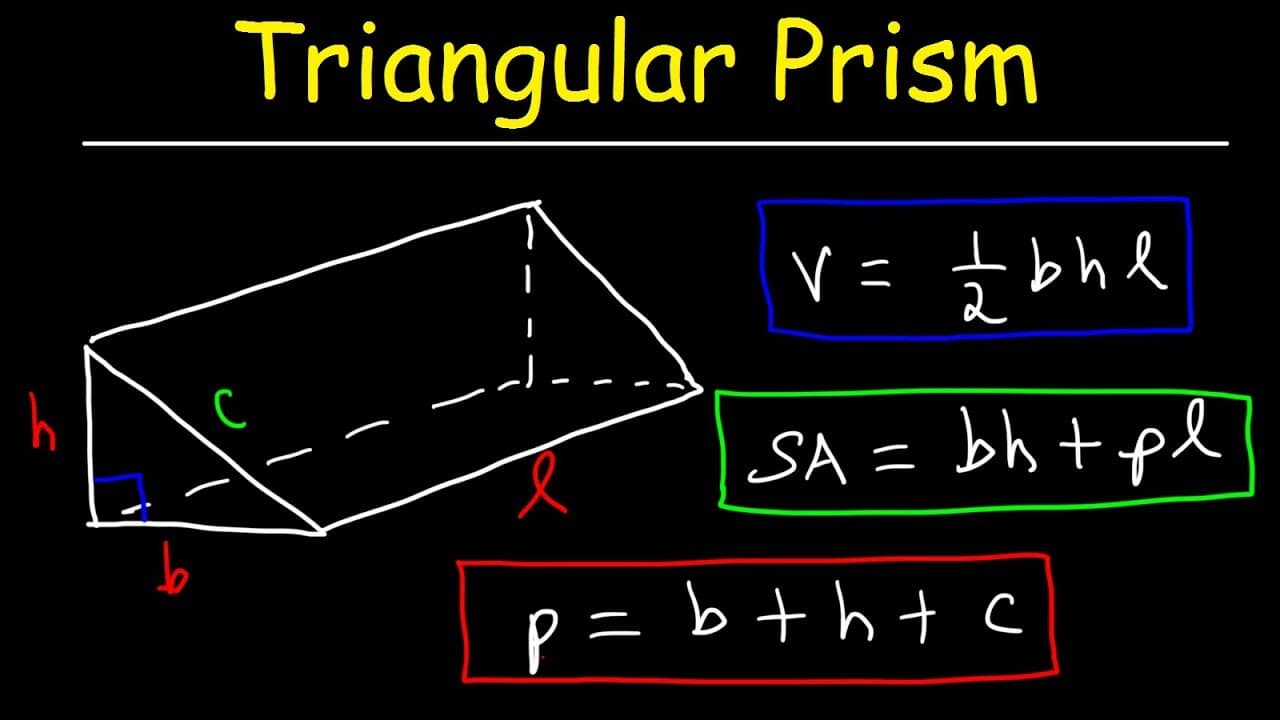
To calculate the volume of a triangular prism, use the formula Volume = 1/2(base * height * length). For surface area, add the area of the triangular base to the lateral area, which is calculated as Perimeter * length. The perimeter is found by adding the sides of the triangle together.
Transcript
in this video we're going to talk about how to calculate the volume and the surface area of a triangular prism but first let's draw a picture my picture is not perfect but you can see what i'm trying to draw and let's draw a rectangular prism now if you recall maybe from a previous video that the volume of a rectangular prism is the length times th... Read More
Key Insights
- 🔇 The volume of a triangular prism is half the volume of a rectangular prism.
- ⚾ The formulas for calculating volume and surface area of triangular prisms involve the dimensions of the base and the height of the prism.
- 🍹 The surface area of a triangular prism is the sum of the area of the base and the lateral area.
Install to Summarize YouTube Videos and Get Transcripts
Explore YouTube Video Summarizer or Get YouTube Transcript Extractor
Summary & Key Takeaways
-
The volume of a triangular prism is half the volume of a rectangular prism, calculated using the formula 1/2(length)(width)(height).
-
The surface area of a triangular prism is the sum of the area of the base (a triangle) and the lateral area (perimeter of the base multiplied by the height).
Read in Other Languages (beta)
Share This Summary 📚
Summarize YouTube Videos and Get Video Transcripts with 1-Click
Try YouTube Summary with ChatGPT & Claude or YouTube Transcript Generator
Explore More Summaries from The Organic Chemistry Tutor 📚



Summarize YouTube Videos and Get Video Transcripts with 1-Click
Try YouTube Summary with ChatGPT & Claude or YouTube Transcript Generator