Products
Features
YouTube Video Summarizer
Summarize YouTube videos
Web & PDF Highlighter
Highlight web pages & PDFs
Chat with PDF
Ask any PDF questions with AI
Ask AI Clone
Chat with your highlights & memories
Audio Transcriber
Transcribe audio files to text
Glasp Reader
Read and highlight articles
Kindle Highlight Export
Export your Kindle highlights
Idea Hatch
Hatch ideas from your highlights
Integrations
Obsidian Plugin
Notion Integration
Pocket Integration
Instapaper Integration
Medium Integration
Readwise Integration
Snipd Integration
Hypothesis Integration
Apps & Extensions
Chrome Extension
Safari Extension
Edge Add-ons
Firefox Add-ons
iOS App
Android App
Discover
Discover
Ideas
Discover new ideas and insights
Articles
Curated articles and insights
Books
Book recommendations by great minds
Posts
Essays and notes from readers
Quotes
Inspiring quotes collection
Videos
Curated videos and summaries
Explore Glasp
Glasp Newsletter
Weekly insights and updates
Glasp Talk
Interview series with great minds
Glasp Blog
Latest news and articles
Glasp Use Cases
Learn how others use Glasp
Build & Support
Glasp API
Access Glasp's API for developers
MCP Connector
Connect Glasp to Claude & ChatGPT
Community
Glasp Reddit Community
Students
Student discount and benefits
FAQs
Frequently Asked Questions
AboutPricing
DashboardLog inSign up

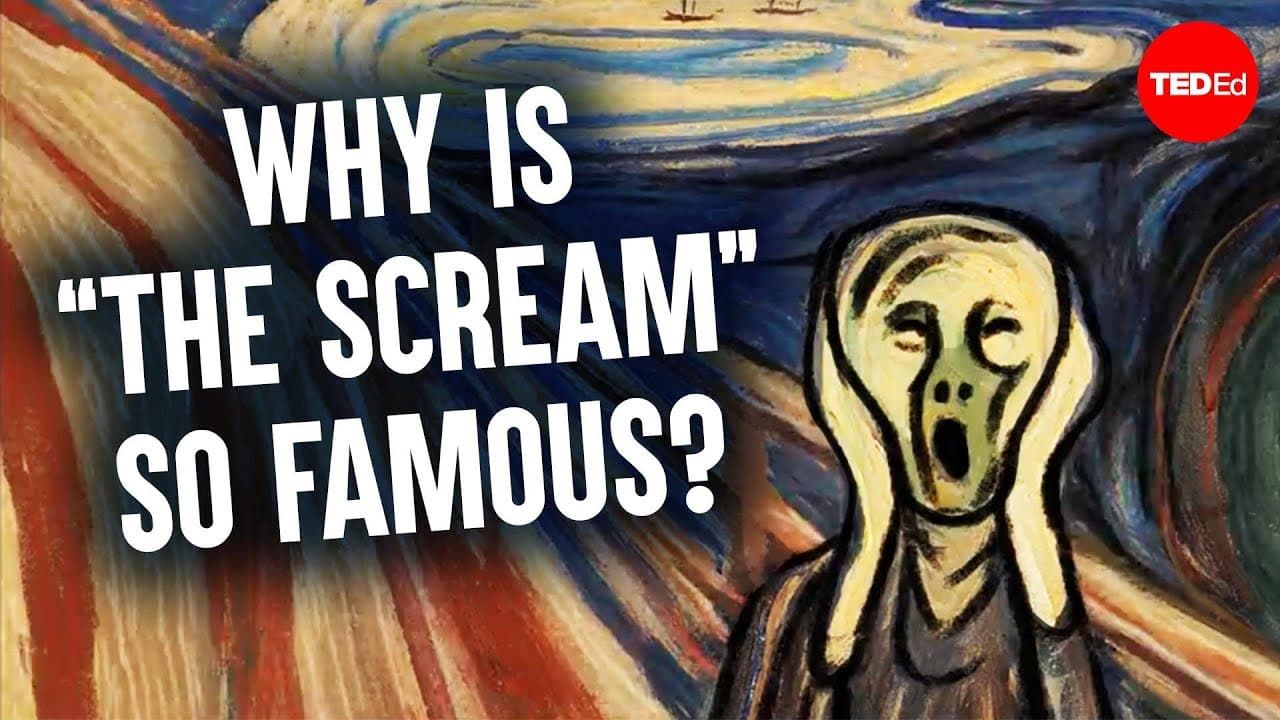
This person isn't actually screaming - Noah Charney
44.2K views
•
April 4, 2024
by
TED-Ed
YouTube video player
This person isn't actually screaming - Noah Charney

TL;DR

The iconic artwork "The Scream" by Edvard Munch has endured for over a century due to its powerful expression of personal suffering and its ability to resonate with universal emotions of horror and angst.

Transcript

An undulating sky melds into the landscape, two silhouettes move along a balustraded walkway, and a ghostly figure’s features extend in agony. Since Norwegian artist Edvard Munch created “The Scream” in 1893, it’s become one of the world’s most famous artworks. But why has its cry traveled so far and endured so long? Munch was born in 1863, one of ... Read More

Key Insights

  • 👪 Edvard Munch's personal experiences, including illness and death within his family, greatly influenced his artistic style.
  • 🍓 Munch embraced "soul painting," prioritizing raw emotions and subjective affect over realism.
  • 😱 "The Scream" became a symbol for horror and angst, fueling the Expressionist movement and resonating with a universal audience.
  • 😱 The figure in "The Scream" is often interpreted as reacting to an infinite scream passing through nature.
  • ❓ Multiple versions and reproductions of "The Scream" have contributed to its enduring fame.
  • ❓ The artwork has been featured in popular culture and even inspired its own emoji.
  • 😱 "The Scream" has become an archetypal symbol, representing personal suffering and universal emotions.

Install to Summarize YouTube Videos and Get Transcripts

Explore YouTube Video Summarizer or Get YouTube Transcript Extractor

Summary & Key Takeaways

  • Edvard Munch's personal experiences with illness, death, and mental illness heavily influenced his artwork, including "The Scream."

  • Munch broke away from academic tradition and embraced "soul painting," prioritizing raw emotions over realistic representation.

  • "The Scream" was inspired by a moment of anguish and has become an archetypal symbol for horror and angst.


Read in Other Languages (beta)

English

Share This Summary 📚

Summarize YouTube Videos and Get Video Transcripts with 1-Click

Download browser extensions on:

Try YouTube Summary with ChatGPT & Claude or YouTube Transcript Generator

Explore More Summaries from TED-Ed 📚

How do pregnancy tests work? - Tien Nguyen thumbnail
How do pregnancy tests work? - Tien Nguyen
TED-Ed
What makes the Great Wall of China so extraordinary - Megan Campisi and Pen-Pen Chen thumbnail
What makes the Great Wall of China so extraordinary - Megan Campisi and Pen-Pen Chen
TED-Ed
The language of lying — Noah Zandan thumbnail
The language of lying — Noah Zandan
TED-Ed
A brief history of chess - Alex Gendler thumbnail
A brief history of chess - Alex Gendler
TED-Ed
Why can't you divide by zero? - TED-Ed thumbnail
Why can't you divide by zero? - TED-Ed
TED-Ed
What are those floaty things in your eye? - Michael Mauser thumbnail
What are those floaty things in your eye? - Michael Mauser
TED-Ed

Summarize YouTube Videos and Get Video Transcripts with 1-Click

Download browser extensions on:

Try YouTube Summary with ChatGPT & Claude or YouTube Transcript Generator

Apps & Extensions

  • Chrome Extension
  • Safari Extension
  • Edge Add-ons
  • Firefox Add-ons
  • iOS App
  • Android App

Key Features

  • YouTube Video Summarizer
  • Web & PDF Summarizer
  • Web & PDF Highlighter
  • Chat with PDF
  • Ask AI Clone
  • Audio Transcriber
  • Glasp Reader
  • Kindle Highlight Export
  • Idea Hatch

Integrations

  • Obsidian Plugin
  • Notion Integration
  • Pocket Integration
  • Instapaper Integration
  • Medium Integration
  • Readwise Integration
  • Snipd Integration
  • Hypothesis Integration

More Features

  • APIs
  • MCP Connector
  • Blog & Post
  • Embed Links
  • Image Highlight
  • Personality Test
  • Quote Shots

Company

  • About us
  • Blog
  • Community
  • FAQs
  • Job Board
  • Newsletter
  • Pricing
Terms

•

Privacy

•

Guidelines

© 2026 Glasp Inc. All rights reserved.