Why Is Losing Weight So Hard for Our Bodies?
TL;DR
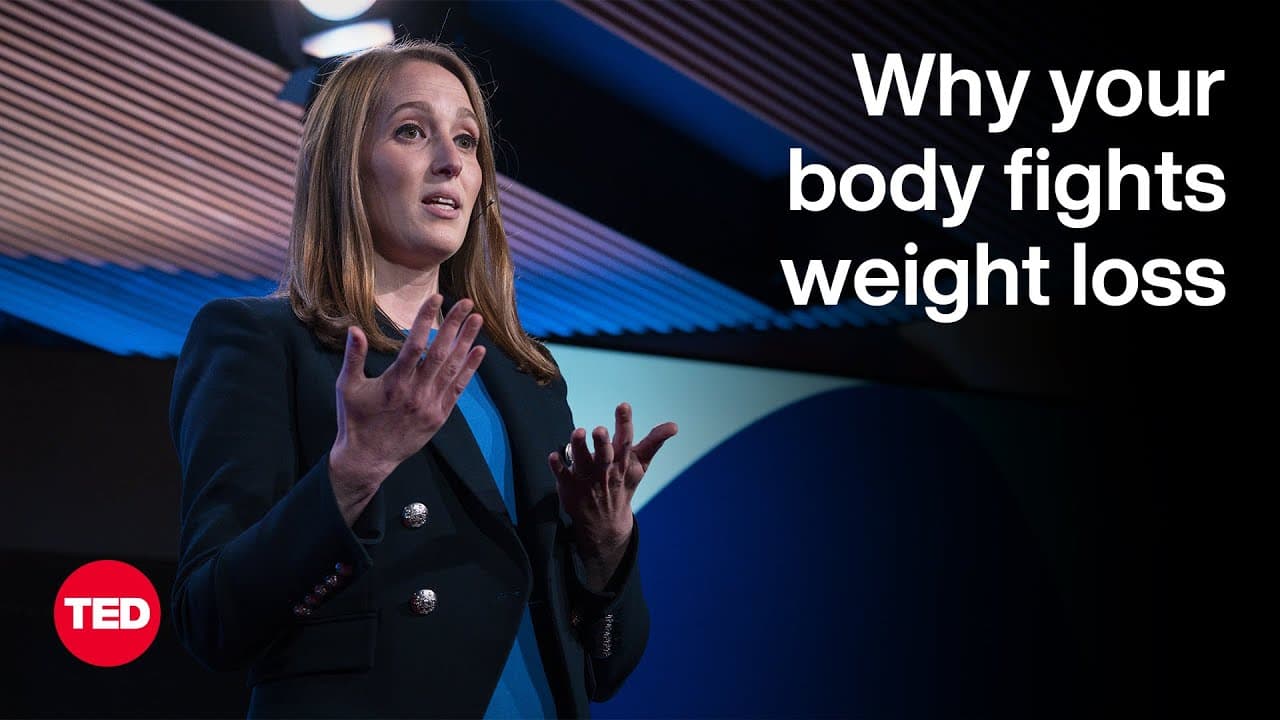
Losing weight is challenging because our bodies are evolutionarily designed to gain and retain weight as a survival mechanism. This biological predisposition complicates weight loss efforts, especially in today's environment of abundant, high-calorie foods. Effective treatment of obesity requires a personalized, multi-faceted approach that considers the complex interplay of genetics, biology, and societal factors.
Transcript
I'm going to tell you something that's going to surprise you. It might be upsetting. And for some of you, it might explain a lot. And maybe I can convince you that it's liberating. Your body is evolutionarily conditioned to gain weight, which means that your body is also evolutionarily conditioned not to lose weight — and definitely not to keep wei... Read More
Key Insights
- 🏋️ Evolution has conditioned human bodies to gain weight, which complicates modern efforts to lose weight in an environment rich in high-calorie foods.
- 😋 The prevalence of obesity is partly due to societal changes that diminish the need for physical activity while increasing food availability.
- 😅 The brain's inability to accurately register hunger cues can lead to maladaptive eating behaviors that perpetuate weight gain.
- 🧑⚕️ Individuals often experience weight bias and stigma, which can further impact their mental health and ability to manage obesity.
- 🏋️ Traditional weight loss methods like dieting often lead to metabolic adaptation, making it harder to maintain weight loss after dieting.
- ❓ A one-size-fits-all approach to obesity treatment is ineffective; personalized strategies are crucial for success.
- 👶 Advances in obesity medications have provided new opportunities for people to manage their weight and improve health outcomes.
Install to Summarize YouTube Videos and Get Transcripts
Explore YouTube Video Summarizer or Get YouTube Transcript Extractor
Questions & Answers
Q: What is the thrifty gene hypothesis and how does it relate to obesity?
The thrifty gene hypothesis suggests that our ancestors evolved to store calories efficiently during times of scarce food availability to survive. In today's obesogenic environment, where food is abundant and high in calories, this advantageous adaptation contributes to the difficulty many face in losing weight and maintaining a healthy weight.
Q: How does the hypothalamus influence hunger and weight management?
The hypothalamus functions as a regulatory center for hunger and energy use. When nerve cells in this region become damaged or inflamed, often due to high-fat diets, the brain receives inaccurate signals about fullness and calorie storage. This leads to overeating and increased fat storage, complicating attempts to achieve weight loss.
Q: Why is obesity considered a disease rather than a failure of willpower?
Obesity is classified as a disease due to the complex interplay of genetic, biological, environmental, and societal factors that contribute to it. Treating obesity requires understanding that individuals may struggle with their weight due to factors beyond their control, such as hormonal changes and metabolic adaptations, rather than solely a lack of personal willpower.
Q: What role do medications play in treating obesity?
Medications for obesity serve as tools to help manage biological responses to food and hunger in today's environment. They work by reducing food cravings and aiding weight loss efforts. However, they should be part of a comprehensive treatment plan that includes lifestyle changes and medical support rather than being viewed as a standalone solution.
Summary & Key Takeaways
-
The human body is evolutionarily designed to gain weight for survival, which conflicts with the modern environment of easily accessible, high-calorie food.
-
Obesity is a complex disease affected by biological responses, genetic predisposition, and societal factors, making weight loss a challenging and often unsuccessful effort for many.
-
Effective treatment for obesity requires a multifaceted approach, including lifestyle changes, personalized medical attention, and a reduction in stigma surrounding the condition.
Read in Other Languages (beta)
Share This Summary 📚
Summarize YouTube Videos and Get Video Transcripts with 1-Click
Try YouTube Summary with ChatGPT & Claude or YouTube Transcript Generator
Explore More Summaries from TED 📚



Summarize YouTube Videos and Get Video Transcripts with 1-Click
Try YouTube Summary with ChatGPT & Claude or YouTube Transcript Generator