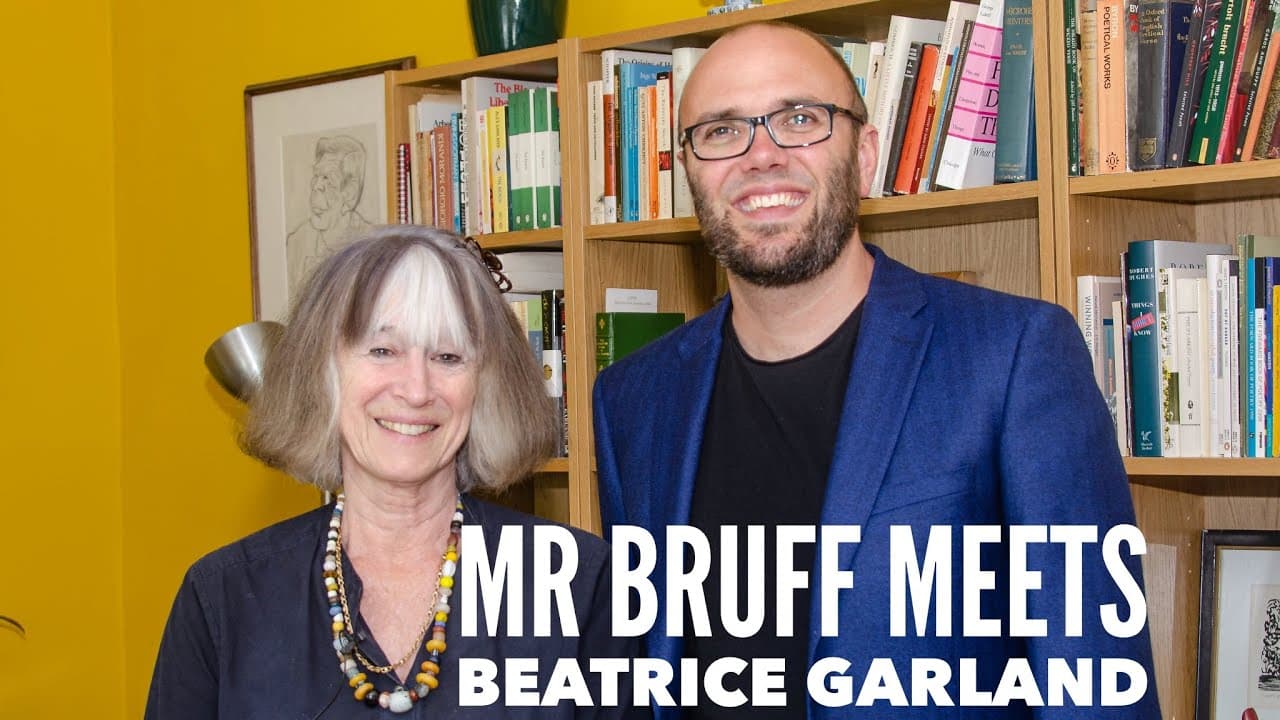
Mr Bruff meets: Beatrice Garland (discussing ‘Kamikaze’)
TL;DR
Beatrice Garland discusses her poem 'Kamikaze' and its themes.
Transcript
Hello and welcome to this very special video. Today, we're joined by the poet Beatrice Garland, and we're going to talk about Kamikaze. Thank you for having us. Pleasure Well, an amazing poem. And I would love to start off by asking what inspired you to write a poem about a kamikaze pilot. Yes, I know that you thought, maybe, a I had some particula... Read More
Key Insights
- Beatrice Garland was inspired to write 'Kamikaze' by the events of 9/11, exploring the idea of self-sacrifice for a cause.
- The poem 'Kamikaze' draws parallels between kamikaze pilots in World War II and modern-day terrorists, highlighting the theme of sacrifice.
- Garland's poem is a work of imagination, focusing on a pilot who chooses life over duty, resulting in personal and familial conflict.
- The narrative perspective of the poem is significant, as it is told from the daughter’s viewpoint, reflecting on her father's decision and its impact on the family.
- The poem fits into the 'power and conflict' theme, examining both the internal conflict of the pilot and the societal pressures of war.
- Garland emphasizes the importance of personal power, as the pilot makes a choice against societal expectations, highlighting individual agency.
- The writing process for 'Kamikaze' involved extensive research and reflection, with Garland focusing on the power of nature and memory in influencing the pilot's decision.
- Garland discusses the importance of imagination and creativity, encouraging aspiring writers to disconnect from distractions and allow ideas to develop organically.
Install to Summarize YouTube Videos and Get Transcripts
Explore YouTube Video Summarizer or Get YouTube Transcript Extractor
Questions & Answers
Q: What inspired Beatrice Garland to write 'Kamikaze'?
Beatrice Garland was inspired to write 'Kamikaze' by the events of 9/11, which led her to explore the concept of self-sacrifice for a cause. She drew parallels between kamikaze pilots in World War II and modern-day terrorists, focusing on the willingness to die for a belief, a theme that deeply intrigued her.
Q: How does 'Kamikaze' fit into the theme of power and conflict?
The poem 'Kamikaze' fits into the theme of power and conflict by exploring both the internal conflict of the pilot and the external societal pressures of war. The pilot faces a personal dilemma between following orders and valuing life, while the societal expectation of honor and duty adds another layer of conflict.
Q: Why did Garland choose to write 'Kamikaze' from the daughter's perspective?
Garland chose to write 'Kamikaze' from the daughter's perspective because it felt more natural for her to explore the familial and emotional impact of the pilot's decision through the lens of a child. This perspective highlights the generational repercussions of the pilot's choice and the societal shunning he faces.
Q: What role does nature play in influencing the pilot's decision in 'Kamikaze'?
Nature plays a significant role in influencing the pilot's decision in 'Kamikaze.' As the pilot observes the beauty of the sea and the life below, he is reminded of the preciousness of life, which ultimately sways him to choose life over duty. Garland uses vivid imagery to convey this pivotal moment of reflection.
Q: How does Garland view the concept of personal power in the poem?
Garland views personal power as a crucial element in 'Kamikaze,' emphasizing the pilot's ability to make a choice against societal and military expectations. This individual agency is portrayed as immensely powerful, even though it results in personal loss and societal shunning, highlighting the complexity of moral decisions.
Q: What was Garland's writing process for 'Kamikaze'?
Garland's writing process for 'Kamikaze' involved extensive research and reflection. She carried the story in her mind, allowing it to evolve organically before writing it down. Garland emphasizes the importance of structure, word choice, and editing, as well as creating space for imagination by minimizing distractions.
Q: What advice does Garland offer to aspiring writers?
Garland advises aspiring writers to disconnect from distractions, such as social media, to allow their imagination to flourish. She suggests observing the world around them and letting ideas develop naturally. Garland emphasizes the importance of creativity and finding the right structure and words to convey their message effectively.
Q: How does Garland address the theme of regret in 'Kamikaze'?
Garland addresses the theme of regret in 'Kamikaze' by exploring the pilot's emotional turmoil after choosing life over duty. Although the pilot is shunned by society and cut off from his family, Garland suggests that he does not regret his decision, as it was the right choice for him, despite the personal sacrifices involved.
Summary & Key Takeaways
-
Beatrice Garland discusses the inspiration behind her poem 'Kamikaze,' linking it to the events of 9/11 and the theme of self-sacrifice for a cause. She explores the historical context of kamikaze pilots and modern-day parallels.
-
The poem 'Kamikaze' is told from the perspective of the pilot's daughter, reflecting on her father's decision to return home and the resulting familial and societal conflict. Garland emphasizes the power of personal choice and its consequences.
-
Garland shares insights into her writing process, highlighting the role of imagination and the importance of structure and word choice in poetry. She encourages aspiring writers to create space for creativity by minimizing distractions.
Read in Other Languages (beta)
Share This Summary 📚
Summarize YouTube Videos and Get Video Transcripts with 1-Click
Try YouTube Summary with ChatGPT & Claude or YouTube Transcript Generator
Explore More Summaries from Mr Bruff 📚

Summarize YouTube Videos and Get Video Transcripts with 1-Click
Try YouTube Summary with ChatGPT & Claude or YouTube Transcript Generator