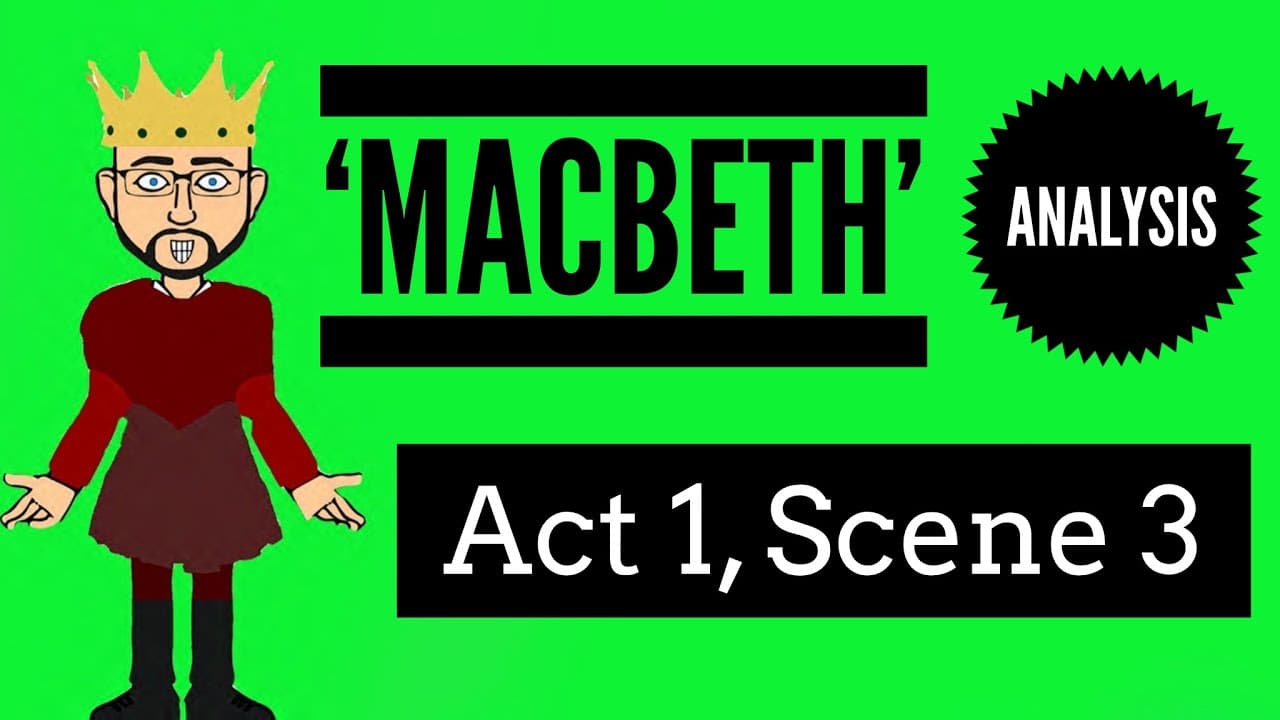
Macbeth: Act 1, Scene 3 Updated Analysis
TL;DR
Analysis of witches' role and foreshadowing in Macbeth.
Transcript
act 1 scene 3 marks a return to the witches the language Shakespeare uses when the witches are speaking is always rude vulgar and shocking animals are referred to frequently which can be seen as symbolizing The Witch's links to Nature and lower level animals the second witch has been killing swine the first mentions a rat without a tail and... Read More
Key Insights
- Shakespeare uses animal imagery to emphasize the witches' connection to nature and their separation from humanity, enhancing their mystical aura.
- The witches' powers are limited, as evidenced by their inability to take lives, which contrasts their ominous presence with their actual capabilities.
- Macbeth's infatuation with the witches reveals more about his ambitions and character than it does about the witches' power.
- Foreshadowing is a key element in this scene, hinting at Macbeth's eventual moral and spiritual downfall through the sailor's fate.
- Shakespeare links Macbeth to the supernatural by echoing the witches' words, suggesting his alignment with evil from his first appearance.
- Banquo serves as a foil to Macbeth, responding to the witches with skepticism and highlighting Macbeth's ambitious nature and susceptibility.
- Dramatic irony is employed as the audience is aware of Macbeth's promotion before him, diminishing the witches' perceived power.
- The witches' reduced role as the play progresses suggests their lack of true power, despite their initial ominous presence.
Install to Summarize YouTube Videos and Get Transcripts
Explore YouTube Video Summarizer or Get YouTube Transcript Extractor
Questions & Answers
Q: What role does animal imagery play in Act 1, Scene 3?
Animal imagery in Act 1, Scene 3 emphasizes the witches' connection to nature and their separation from humanity. Shakespeare uses references to animals like swine, rats, and cats to highlight the witches' mystical aura and underscore their otherworldly presence, setting them apart from the human characters.
Q: How does Shakespeare use foreshadowing in this scene?
Shakespeare uses foreshadowing through the witches' interaction with the sailor, hinting at Macbeth's eventual downfall. The sailor's fate of being drained and unable to sleep mirrors Macbeth's future moral and spiritual exhaustion, suggesting the consequences of his ambition and unnatural deeds.
Q: What is the significance of Macbeth's reaction to the witches?
Macbeth's reaction to the witches reveals his ambitious nature and susceptibility to their prophecies. His fear rather than surprise at the news of becoming king suggests he has previously considered such thoughts, highlighting his inner conflict and foreshadowing his eventual moral decline.
Q: How does Banquo serve as a foil to Macbeth in this scene?
Banquo serves as a foil to Macbeth by responding to the witches with skepticism and disinterest, contrasting Macbeth's eager acceptance of their prophecies. This highlights Macbeth's ambition and susceptibility, emphasizing the differences in their characters and foreshadowing the divergent paths they will take.
Q: What does the use of dramatic irony reveal about the witches?
Dramatic irony reveals the witches' limited power, as the audience is aware of Macbeth's promotion before him, diminishing their perceived omnipotence. This irony underscores the gap between the witches' ominous presence and their actual capabilities, suggesting their role as interlopers in human actions.
Q: Why is the witches' reduced role significant as the play progresses?
The witches' reduced role as the play progresses suggests their lack of true power, despite their initial ominous presence. This reduction emphasizes that the real driving force behind the plot is Macbeth's ambition and choices, highlighting the human elements of the tragedy over supernatural influences.
Q: What is the importance of the witches' limitations in power?
The witches' limitations in power are crucial as they highlight the contrast between their ominous presence and actual capabilities. By showing their inability to take lives, Shakespeare emphasizes that their influence is more psychological, affecting characters like Macbeth through suggestion rather than direct action.
Q: How does Shakespeare link Macbeth to the supernatural?
Shakespeare links Macbeth to the supernatural through his use of language that echoes the witches' words, such as 'so foul and fair a day I have not seen.' This connection suggests Macbeth's alignment with the play's evil elements from his first appearance, foreshadowing his eventual moral decline.
Summary & Key Takeaways
-
Act 1, Scene 3 of 'Macbeth' explores the witches' limited power, using animal imagery to highlight their connection to nature and separation from humanity. The scene foreshadows Macbeth's downfall, linking him to the supernatural through his reaction to the witches.
-
Shakespeare uses Banquo as a foil to Macbeth, emphasizing Macbeth's ambition and susceptibility to the witches' prophecies. The witches' limitations are highlighted through their inability to take lives, contrasting their ominous presence with their actual power.
-
Dramatic irony is employed as the audience is aware of Macbeth's promotion before him, diminishing the witches' perceived power. The witches' reduced role as the play progresses further suggests their lack of true power, despite their initial ominous presence.
Read in Other Languages (beta)
Share This Summary 📚
Summarize YouTube Videos and Get Video Transcripts with 1-Click
Try YouTube Summary with ChatGPT & Claude or YouTube Transcript Generator
Explore More Summaries from Mr Bruff 📚




Summarize YouTube Videos and Get Video Transcripts with 1-Click
Try YouTube Summary with ChatGPT & Claude or YouTube Transcript Generator