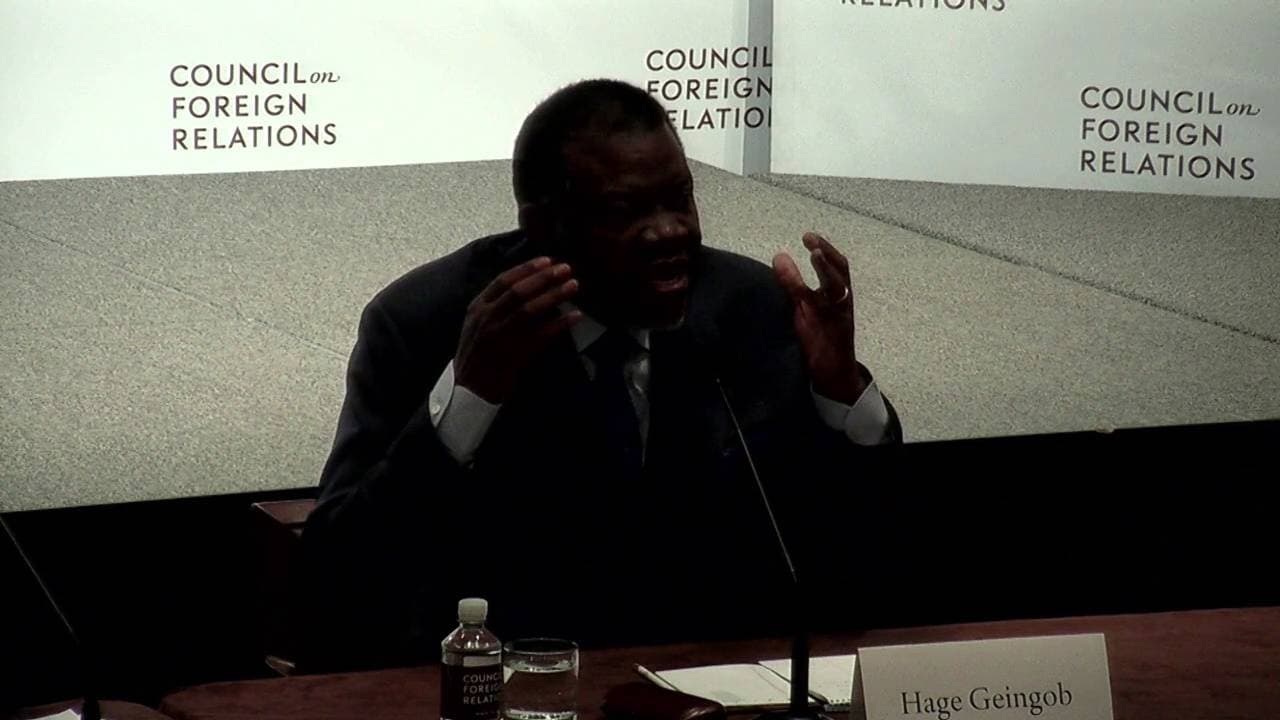
A Conversation With Hage Geingob
TL;DR
President Geingob outlines Namibia's development goals and regional influence.
Transcript
GAVIN: (In progress)-in service to his country, both as part of Namibia's struggle for independence and one of the most prominent and thoughtful thinkers about what prosperity would look like for an independent Namibia. And so I want to welcome him here to the Council, to welcome him back to New York. And the president knows this city very, very we... Read More
Key Insights
- Namibia's governance is characterized by true democracy, with regular free and fair elections, but faces challenges in social architecture, particularly in providing basic needs like food and housing.
- The Harambee Prosperity Plan aims to unite Namibia's diverse tribes and races by building a 'Namibian house' where no one feels left out, emphasizing inclusivity and shared prosperity.
- Namibia's status as an upper-middle-income country limits its access to international assistance, despite its history of apartheid and ongoing economic inequalities.
- The country has a rich pool of human and natural resources, but attracting foreign investment is essential to accelerate development, with a focus on trade and partnerships.
- Namibia's small population and resource wealth make it a significant player in regional and global forums, with a focus on maintaining independence and leveraging its resources for development.
- The youth, or 'born-frees,' are a significant demographic, demanding jobs and education rather than historical narratives, pushing for policies that address unemployment and economic opportunities.
- Namibia's foreign policy emphasizes being a friend to all and enemy to none, ensuring a balanced approach to international relations and economic partnerships.
- Corruption and poverty are key areas of focus, with the government aiming to become the most accountable country in Africa and eliminate hunger as part of its development agenda.
Install to Summarize YouTube Videos and Get Transcripts
Explore YouTube Video Summarizer or Get YouTube Transcript Extractor
Questions & Answers
Q: What is the significance of the Harambee Prosperity Plan?
The Harambee Prosperity Plan is significant as it aims to unite Namibia's diverse population by building a 'Namibian house' where all citizens feel included. It addresses socioeconomic challenges through pillars focusing on economic transformation, governance, infrastructure, and social development. The plan seeks to create a cohesive society and foster shared prosperity among all Namibians.
Q: How does Namibia's upper-middle-income status affect its development?
Namibia's upper-middle-income status limits its access to international assistance, such as grants and soft loans, which are often reserved for poorer countries. This status poses challenges given the country's historical inequalities and the need to address economic disparities. Despite these challenges, Namibia strives to rely on its own resources, maintain transparency, and attract foreign investment to support its development goals.
Q: What role does foreign investment play in Namibia's development?
Foreign investment is crucial for Namibia's development as it helps to bridge the gap left by limited international assistance. The country seeks to create a conducive environment for investors, emphasizing the importance of trade and partnerships. By attracting investment, particularly in sectors like mining and infrastructure, Namibia aims to stimulate economic growth, create jobs, and enhance its competitiveness on the global stage.
Q: How does Namibia engage its youth in development plans?
Namibia engages its youth, known as 'born-frees,' by focusing on education, job creation, and vocational training. Recognizing the generational gap, the government emphasizes the importance of addressing the aspirations of young people who demand economic opportunities rather than historical narratives. Initiatives like town hall meetings and social media engagement ensure that youth voices are heard and considered in shaping the nation's future.
Q: What is Namibia's approach to international relations?
Namibia's foreign policy is based on being a friend to all and enemy to none. This approach ensures a balanced and neutral stance in international relations, allowing the country to maintain independence while leveraging its resources for development. Namibia seeks to build partnerships with various countries, emphasizing mutual respect and win-win situations in economic and diplomatic engagements.
Q: How does Namibia address corruption and poverty?
Namibia is committed to fighting corruption and poverty as key priorities. The government aims to become the most accountable country in Africa by enhancing transparency and service delivery. Efforts to eliminate hunger poverty are underway, with initiatives focused on ensuring no Namibian dies from hunger. These measures are part of the broader Harambee Prosperity Plan, which seeks to improve governance and economic conditions.
Q: What challenges does Namibia face in achieving its development goals?
Namibia faces challenges such as economic inequalities, limited access to international assistance, and the need to engage a young population demanding jobs and education. The country's small population and resource wealth require strategic management to ensure sustainable development. Additionally, balancing foreign relations and attracting investment while maintaining independence is a complex task that Namibia continues to navigate.
Q: How does Namibia's history influence its current development strategy?
Namibia's history of apartheid and colonialism influences its current development strategy by highlighting the need for inclusivity and social cohesion. The government emphasizes building a unified society where all citizens, regardless of race or tribe, feel included. This historical context drives Namibia's commitment to democracy, peace, and economic development, as it seeks to overcome past inequalities and create a prosperous future for all.
Summary & Key Takeaways
-
President Hage Geingob discusses Namibia's journey towards prosperity, focusing on democratic governance, economic challenges, and the need for social development. He highlights the importance of inclusivity and unity in building a prosperous future for all Namibians.
-
The Harambee Prosperity Plan is a central strategy for Namibia, aiming to unite the country's diverse population and address socioeconomic issues. Geingob emphasizes the need for international partnerships and investment to overcome the limitations posed by Namibia's upper-middle-income status.
-
Geingob outlines the challenges faced by Namibia's youth, known as 'born-frees,' who demand jobs and education. He stresses the importance of engaging this demographic in development plans and ensuring their voices are heard in shaping the nation's future.
Read in Other Languages (beta)
Share This Summary 📚
Summarize YouTube Videos and Get Video Transcripts with 1-Click
Try YouTube Summary with ChatGPT & Claude or YouTube Transcript Generator
Explore More Summaries from Council on Foreign Relations 📚
Summarize YouTube Videos and Get Video Transcripts with 1-Click
Try YouTube Summary with ChatGPT & Claude or YouTube Transcript Generator