Oxidation and reduction review from biological point-of-view | Biomolecules | MCAT | Khan Academy
TL;DR
This video explains the concepts of oxidation and reduction in chemistry and biology, showing how they are related and how they are different in the two disciplines.
Transcript
What I want to do in this video is review what we learned from our chemistry classes about oxidation and the opposite of oxidation, reduction. And then see how what we learned in our chemistry class relates to the way that a biologist or biochemist might use these words. And hopefully we'll see that they're the same thing. So just as a bit of revie... Read More
Key Insights
- ❓ Oxidation and reduction have different definitions in chemistry and biology.
- 😚 Oxidation in chemistry is losing electrons, while in biology it is losing hydrogen atoms.
- 🉐 Reduction in chemistry is gaining electrons, while in biology it is gaining hydrogen atoms.
- ❓ The different definitions in biology and chemistry are consistent because hydrogen tends to transfer its electrons in biological systems.
- ❓ The example of hydrogen combustion highlights the differences between the two definitions.
- ⚾ The biological definition is based on the tendency of hydrogen to bond with electronegative elements.
- ❓ Understanding oxidation and reduction is important in the study of cellular respiration in biology.
Install to Summarize YouTube Videos and Get Transcripts
Explore YouTube Video Summarizer or Get YouTube Transcript Extractor
Questions & Answers
Q: What is the mnemonic for remembering oxidation and reduction in chemistry?
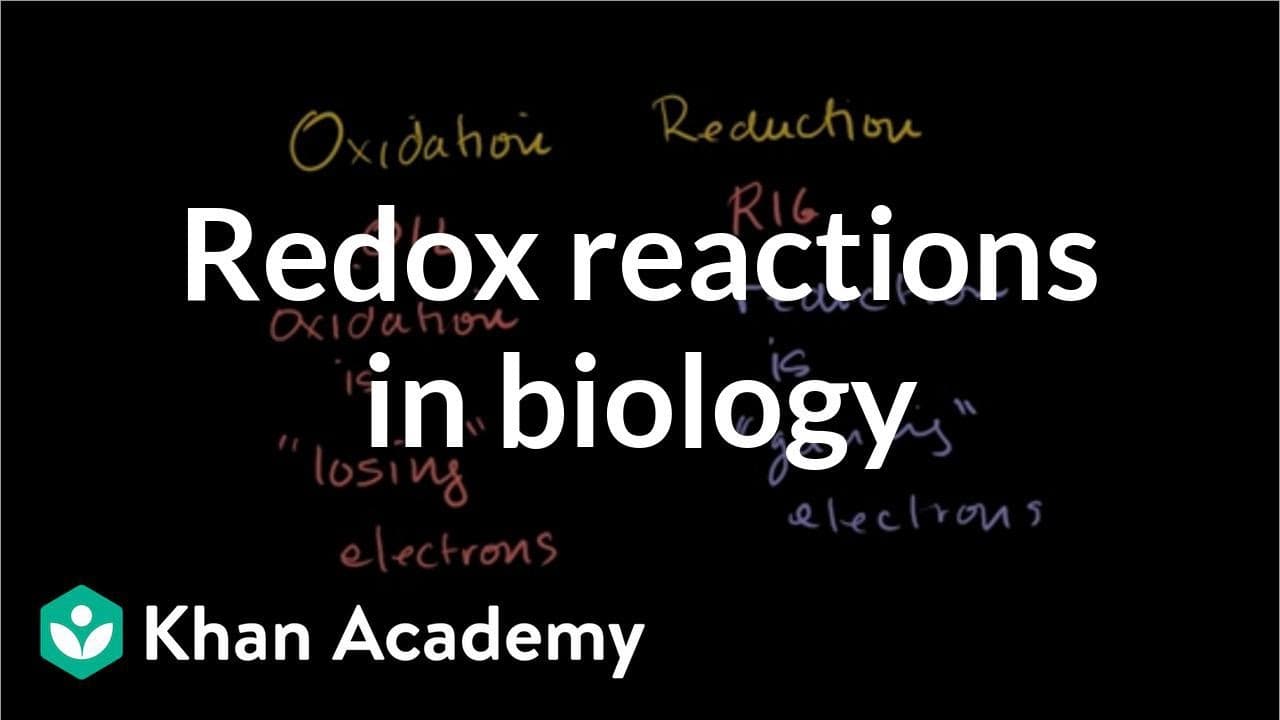
The mnemonic is "OIL RIG," where OIL stands for oxidation is losing and RIG stands for reduction is gaining.
Q: Why is it called reduction in chemistry?
Reduction is called reduction because if a molecule gains electrons, its notional charge is reduced.
Q: What happens to hydrogen and oxygen in the example of combustion?
In the example, hydrogen is oxidized because it loses electrons to oxygen, while oxygen is reduced because it gains electrons from hydrogen.
Q: How does the biological definition of oxidation and reduction differ from the chemical definition?
In biology, oxidation is losing hydrogen atoms, while reduction is gaining hydrogen atoms. This definition is based on the tendency of hydrogen to bond with electronegative elements in biological systems.
Summary & Key Takeaways
-
The video reviews the definitions of oxidation and reduction in chemistry, where oxidation is losing electrons and reduction is gaining electrons.
-
It introduces a different definition in biology, where oxidation is losing hydrogen atoms and reduction is gaining hydrogen atoms.
-
The example of hydrogen combustion with oxygen is used to illustrate the concepts and highlight the differences between the two definitions.
Read in Other Languages (beta)
Share This Summary 📚
Summarize YouTube Videos and Get Video Transcripts with 1-Click
Try YouTube Summary with ChatGPT & Claude or YouTube Transcript Generator
Explore More Summaries from Khan Academy 📚



Summarize YouTube Videos and Get Video Transcripts with 1-Click
Try YouTube Summary with ChatGPT & Claude or YouTube Transcript Generator