Light Energy to Kinetic Energy Using a Crookes Radiometer
TL;DR
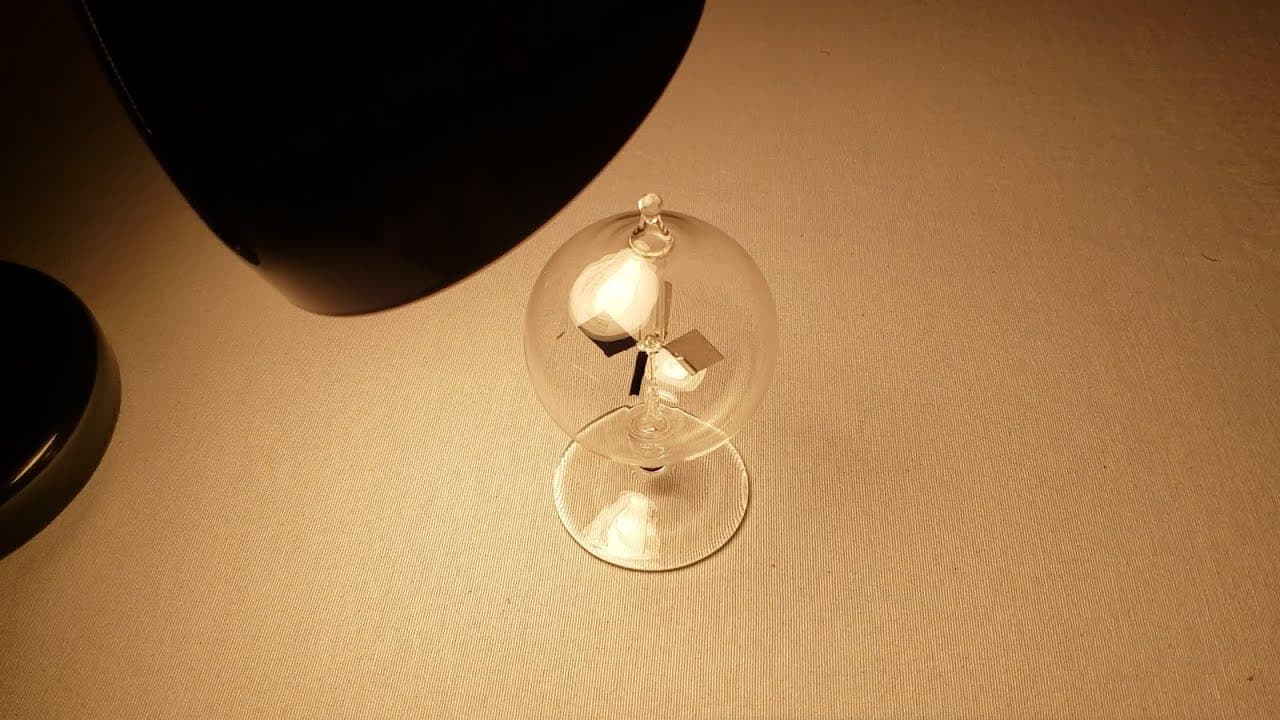
The Crooks Radiometer is a device that converts light energy into mechanical energy, measuring electromagnetic radiation intensity based on the speed of rotation.
Transcript
in this video we're going to talk about the crooks radiometer a device that can take the energy delivered by light and convert it into mechanical energy so this device contains a spindle that can rotate freely and it contains four veins each of it has two different sides a black side or a dark side and a reflective side and it's surrounded by a gla... Read More
Key Insights
- 😘 The Crooks Radiometer operates in a low-pressure environment to optimize rotation.
- 🖤 The device works by absorbing energy through the black side of the veins and reflecting rays on the reflective side.
- 🙃 Different temperatures between the black and reflective sides create air currents and pressure differentials, causing rotation.
- 🥶 The rotation direction of the Crooks Radiometer changes when exposed to a cold temperature environment.
- 🙃 The device's rotation eventually stops when both sides of the veins reach thermal equilibrium with the environment.
- 🙂 The Crooks Radiometer can be used to measure the intensity of light based on the speed of rotation.
- ⚡ High-intensity light leads to faster rotation, indicating higher light intensity.
Install to Summarize YouTube Videos and Get Transcripts
Explore YouTube Video Summarizer or Get YouTube Transcript Extractor
Questions & Answers
Q: How does the Crooks Radiometer measure electromagnetic radiation intensity?
The device measures intensity based on the speed of rotation. As light intensity increases, the rotation speed also increases, allowing for the measurement of light intensity.
Q: Why does the Crooks Radiometer rotate in the counterclockwise direction in a cold temperature environment?
In a cold environment, the reflective side of the veins cools slower than the black side, creating a temperature differential. This reversal in temperature gradient results in counterclockwise rotation.
Q: Why does the rotation of the Crooks Radiometer eventually stop in a cold temperature environment?
The rotation is driven by a temperature gradient. As both sides of the veins cool and reach thermal equilibrium with the environment, there is no more temperature difference to drive the rotation, causing it to stop.
Q: How does the Crooks Radiometer convert light energy into mechanical energy?
The device works by converting the temperature differential between the black and reflective sides into air currents and pressure differentials, resulting in mechanical energy and rotation.
Summary & Key Takeaways
-
The Crooks Radiometer consists of a spindle with four veins, each having a black and reflective side, surrounded by a glass container in a low-pressure environment.
-
When exposed to high-intensity light, the black side of the veins absorbs energy, causing the spindle to rotate clockwise.
-
Placing the device in a cold temperature environment leads to the rotation reversing direction counterclockwise.
Read in Other Languages (beta)
Share This Summary 📚
Summarize YouTube Videos and Get Video Transcripts with 1-Click
Try YouTube Summary with ChatGPT & Claude or YouTube Transcript Generator
Explore More Summaries from The Organic Chemistry Tutor 📚



Summarize YouTube Videos and Get Video Transcripts with 1-Click
Try YouTube Summary with ChatGPT & Claude or YouTube Transcript Generator