Cytotoxic T cells | Immune system physiology | NCLEX-RN | Khan Academy
TL;DR
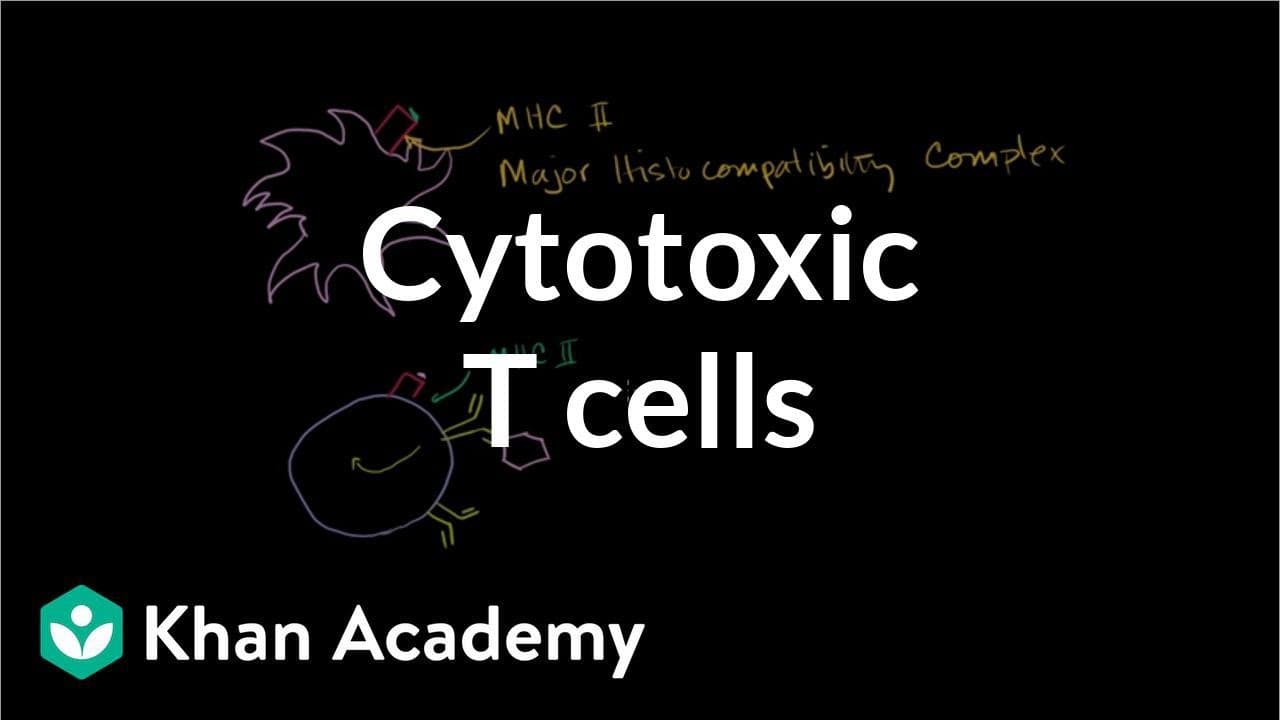
Antigen presenting cells, such as dendritic cells and B cells, play a crucial role in the immune response by cutting up pathogens and presenting antigens on MHC complexes. All nucleated cells in the body have MHC I complexes, which present abnormal proteins and trigger cytotoxic T cells to eliminate cancerous or infected cells.
Transcript
When we learned about antigen presenting cells, we learned that they can first digest something-- let me draw a dendritic cell right here-- my best version of a dendritic cell. Maybe I should draw them simpler than that. A dendritic cell is a phagocyte and it is an antigen presenting cell. So after phagocytoses some type of a pathogen, it'll cut it... Read More
Key Insights
- 🎁 Antigen presenting cells, such as dendritic cells and B cells, play a crucial role in the immune response by presenting antigens on MHC complexes.
- 🦖 MHC II complexes are found on professional antigen presenting cells and trigger helper T cells.
- 🎁 All nucleated cells in the body have MHC I complexes, which present abnormal proteins to attract cytotoxic T cells.
- 🤳 Cytotoxic T cells are responsible for eliminating cancerous or infected cells by releasing proteins that induce cell self-destruction.
- 🎁 B cells can act as antigen presenting cells and contribute to the immune response.
- 👻 The shuffling of DNA during T cell development leads to the variability in T cell receptors, allowing them to recognize different antigens.
- ♻️ Antibodies produced by B cells are effective at neutralizing pathogens in the extracellular environment.
Install to Summarize YouTube Videos and Get Transcripts
Explore YouTube Video Summarizer or Get YouTube Transcript Extractor
Questions & Answers
Q: How do antigen presenting cells present antigens to T cells?
Antigen presenting cells cut up pathogens and present antigens on MHC complexes, such as MHC II for professional antigen presenting cells and MHC I for all nucleated cells. T cells recognize these complexes and get activated accordingly.
Q: What is the role of cytotoxic T cells in the immune response?
Cytotoxic T cells are attracted to cells presenting abnormal proteins on MHC I complexes. They can kill cancerous or infected cells by releasing proteins that create holes in the cell membrane and initiate mechanisms for cell self-destruction.
Q: How are B cells involved in the immune response?
B cells, which have membrane-bound antibodies, can also act as antigen presenting cells. When a B cell encounters a virus or bacteria, it takes in the pathogen, cuts it up, and presents the antigens on MHC II complexes to trigger helper T cells.
Q: What is the difference between MHC II and MHC I complexes?
MHC II complexes are found on professional antigen presenting cells and present antigens to helper T cells. MHC I complexes are present on all nucleated cells in the body and present abnormal proteins to cytotoxic T cells, alerting them to cancerous or infected cells.
Summary & Key Takeaways
-
Antigen presenting cells like dendritic cells and B cells digest pathogens and present antigens on MHC complexes.
-
MHC II complexes are present on professional antigen presenting cells and trigger helper T cells.
-
MHC I complexes are found on all nucleated cells and present abnormal proteins to attract cytotoxic T cells.
Read in Other Languages (beta)
Share This Summary 📚
Summarize YouTube Videos and Get Video Transcripts with 1-Click
Try YouTube Summary with ChatGPT & Claude or YouTube Transcript Generator
Explore More Summaries from Khan Academy 📚



Summarize YouTube Videos and Get Video Transcripts with 1-Click
Try YouTube Summary with ChatGPT & Claude or YouTube Transcript Generator