The North Germanic Languages of the Nordic Nations (UPDATED)
TL;DR
Explores the North Germanic languages of the Nordic nations.
Transcript
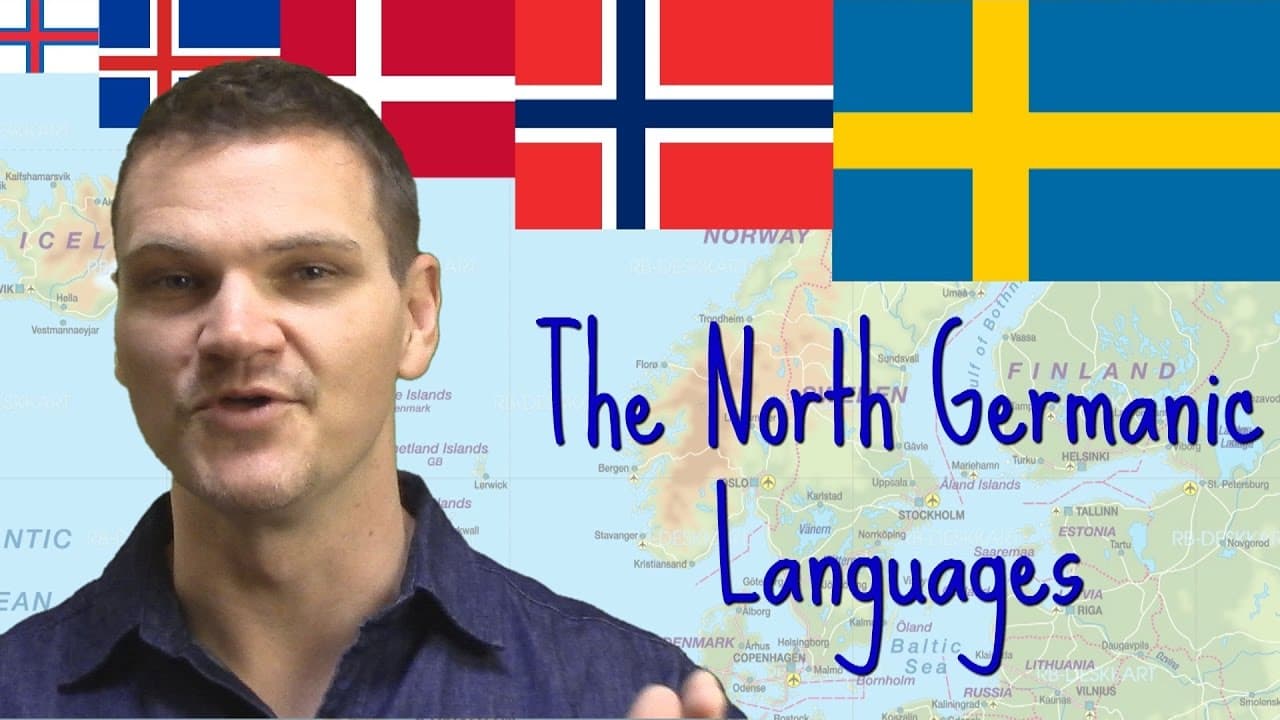
Okay, so I've had a lot of requests for a video on the North Germanic languages. So today, I present to you a video on Swedish, Norwegian, Danish and Finnish. [Crowd protestation] What? The North Germanic languages of the Nordic Nations And Finnish isn't one of them. Hello everyone. Welcome to the Langfocus channel and my name is Paul Today, I'... Read More
Key Insights
- The North Germanic languages include Swedish, Norwegian, Danish, Icelandic, and Faroese, all part of the Germanic language family.
- Finnish is not a North Germanic language; it belongs to a separate language family, although there's a Swedish-speaking minority in Finland.
- Proto-Germanic, spoken around 500 BCE, is the ancestor of all Germanic languages, with Proto-Norse being the precursor to North Germanic languages.
- Old Norse, divided into Old East Norse, Old West Norse, and Old Gutnish, evolved into modern North Germanic languages around the 14th century.
- Continental languages (Danish, Swedish, Norwegian) are more mutually intelligible than insular languages (Icelandic, Faroese), with Norwegian acting as a bridge.
- The Danish-Norwegian union (1536-1814) influenced Norwegian's development, making it more similar to Danish than Icelandic.
- Norwegian has two official written standards: Bokmål and Nynorsk, reflecting historical influences and regional dialects.
- Learning one North Germanic language can facilitate understanding others, and they are considered relatively easy for English speakers to learn.
Install to Summarize YouTube Videos and Get Transcripts
Explore YouTube Video Summarizer or Get YouTube Transcript Extractor
Questions & Answers
Q: What are the North Germanic languages discussed in the video?
The North Germanic languages discussed in the video include Swedish, Norwegian, Danish, Icelandic, and Faroese. These languages are part of the Germanic language family and are spoken in the Nordic nations. Finnish is mentioned but clarified as not being a North Germanic language, as it belongs to a different language family.
Q: How did Proto-Germanic evolve into the North Germanic languages?
Proto-Germanic, spoken around 500 BCE, evolved into different Germanic dialects as people migrated. In Scandinavia, it developed into Proto-Norse, which later became Old Norse. Old Norse split into Old East Norse, Old West Norse, and Old Gutnish, which gradually evolved into the modern North Germanic languages by the 14th century.
Q: What is the difference between continental and insular North Germanic languages?
Continental North Germanic languages include Danish, Swedish, and Norwegian, characterized by their mutual intelligibility. Insular languages, Icelandic and Faroese, are less mutually intelligible with the continental group. These categories are based on mutual intelligibility rather than genetic lineage, with Norwegian acting as a bridge between the continental languages.
Q: Why does Norway have two official written languages?
Norway has two official written languages, Bokmål and Nynorsk, due to historical influences. Bokmål, influenced by Danish, emerged during the Denmark-Norway union, while Nynorsk was developed to reflect Norway's more conservative Western dialects. The choice of written standard depends on the region, but Norwegians typically speak their local dialects.
Q: How does mutual intelligibility work among Swedish, Norwegian, and Danish?
Mutual intelligibility among Swedish, Norwegian, and Danish varies based on dialectal proximity. Norwegians generally understand Swedish better than Danish, while Swedes find Danish pronunciation challenging. Danes can understand Norwegian and some Swedish. Despite dialectal differences, the written forms are almost entirely intelligible among the three languages.
Q: What historical events influenced the development of Norwegian?
Norwegian development was significantly influenced by the political union with Denmark (1536-1814), during which Danish replaced Norwegian as the written language. This period affected Norwegian dialects, especially in the central and eastern regions, making Norwegian more similar to Danish than to Icelandic, despite its Old West Norse roots.
Q: Why is learning a North Germanic language beneficial?
Learning a North Germanic language is beneficial for understanding Nordic cultures and history. It can unlock access to other Scandinavian languages due to their similarities, especially in written form. Additionally, knowing these languages can enhance travel experiences and interactions with Scandinavians, who are often proficient in English.
Q: What challenges exist in defining language boundaries among Scandinavian languages?
Defining language boundaries among Scandinavian languages is challenging due to the dialect continuum. Dialects gradually change across regions, making it difficult to determine where one language ends and another begins. Mutual intelligibility varies, with some dialects being more understandable across borders than within the same country, complicating language classification.
Summary & Key Takeaways
-
The video discusses the North Germanic languages spoken in the Nordic nations, including their historical development from Proto-Germanic and Proto-Norse. It highlights the differences between continental and insular languages and touches on the mutual intelligibility among Swedish, Norwegian, and Danish.
-
The North Germanic languages evolved from Old Norse dialects, with modern languages categorized into continental and insular groups. Norwegian's unique position allows it to act as a bridge between Swedish and Danish due to historical influences.
-
Despite not being widely spoken globally, learning a North Germanic language can enrich one's understanding of Nordic cultures and history. The video encourages language learning as a gateway to exploring the region's linguistic and cultural diversity.
Read in Other Languages (beta)
Share This Summary 📚
Summarize YouTube Videos and Get Video Transcripts with 1-Click
Try YouTube Summary with ChatGPT & Claude or YouTube Transcript Generator
Explore More Summaries from Langfocus 📚
Summarize YouTube Videos and Get Video Transcripts with 1-Click
Try YouTube Summary with ChatGPT & Claude or YouTube Transcript Generator